|
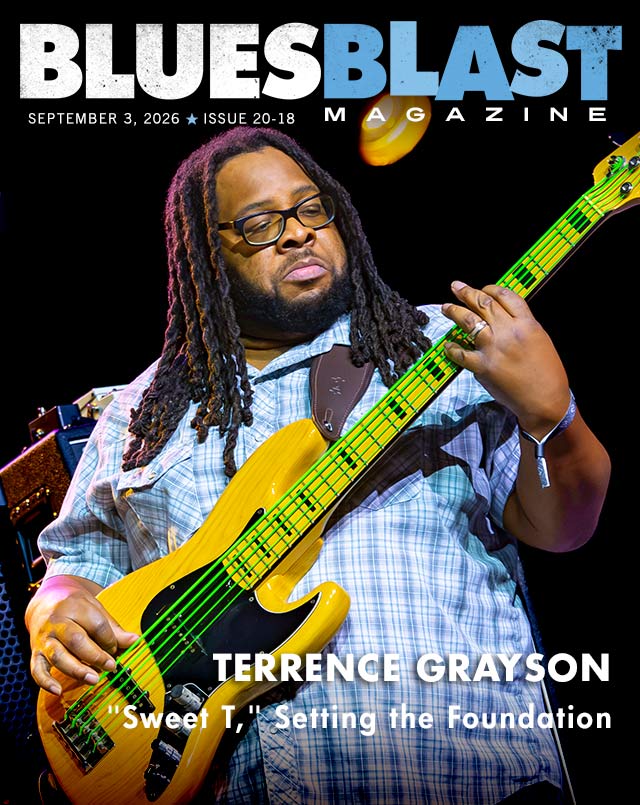
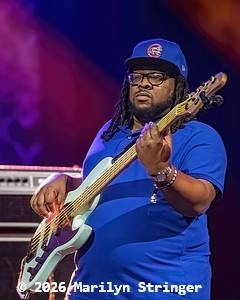
Cover photo © 2026 Marilyn Stringer
In This Issue
Mark Thompson has our feature interview with blues bass player Terrence “Sweet T” Grayson. We have ten Blues reviews for you this week including new music from Mark Hummel Allstars, Joanna Connor, Katie Knipp, Leeann Atherton, Kat Riggins and Her Blues Revival, Vaneese Thomas, Jake Soberlak, Sam Morrow, Janiva Magness, and Voodoo Ramble. Scroll down and check it out!
Featured Blues Review – 1 of 10
|
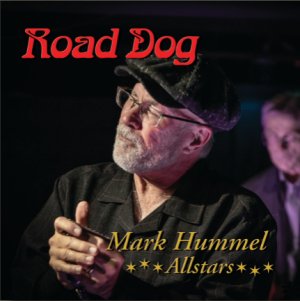 Mark Hummel Allstars – Road Dog Mark Hummel Allstars – Road Dog
Rockinitus Records
www.markhummel.com
14 tracks – 60 minutes
Mark Hummel was born on the East Coast but grew up in Los Angeles. He took an interest in the blues harmonica, in high school and became further enamored with the blues genre as he discovered the originators Muddy Waters, Sonny Boy Williamson, and Little Walter and many more. That was followed after seeing three blues legends, Charlie Musselwhite, Brownie McGhee, and James Cotton, perform. He would later work with all three in numerous performances.
IN 1976, Mark and Mississippi Johnny Waters formed The Blues Survivors in Berkley, California. By 1985, The Blues Survivors were a regularly touring band. The group has never stopped since, although the performers in the band have changed frequently. band members have included Sue Foley, Rusty Zinn, and Anthony Paule among many others. Mark has received two Blues Music Awards for Best Traditional Blues Album and Best Blues Album for his 2014 release Remembering Little Walter, which was also nominated for a Grammy Award for Best Blues Album. He was also nominated for a Blues Music Award Best Instrumental – Harmonica in 2019. Mark has been featured on over thirty recording since 1985.
The Allstars are exactly that. Eight songs were recorded in 2025, and one (track 4) in 2024. The remaining five are from previously unreleased session in 2015 (tracks 7,12, and 13) and two from 2008 (tracks 10 and 14). Mark plays the harp and lead vocals on all tracks. The 2025 sessions include Anson Funderburgh and Junior Watson on guitars, Wes Starr on drums, Bob Welsh on piano, Kedar Roy on bass. Eric Spaulding plays sax on a few cuts. The 2024 session includes Watson, Starr and Roy with Brett Brandstatt on piano. The 2015 sessions have Funderburgh and Little Charlie Baty on guitars, RW Grigsby on bass, and Starr on drums. Track 10 from 2008 has Rusty Zinn on guitar, Chris Burns on piano, Willie Panker on drums, and Grigsby on bass. The final track, which is from 2008, features Mark with only Randy Rattray on guitar.
The album opens with a cover of “Black Nights” which was written by piano player Fats Washington and first recorded by Lowell Fulson in 1965. The song deals with a failing relationship noting “It used to be I recall you were mine alone. But now I see you wanna be left on your own. You must have someone new to make me go through black nights”. “Jugglin'” is Mark’s story about being a mid-level blues performer who has to handle all of the management tasks of a traveling performer. He states, “I love the music that I make, the guys I play with rock. Makes no difference whether it is empty or lined around the block, that is why I’m jugglin’…my blues away. I work so hard, but I still have dues to pay.” He says, “Real Good Woman” is an ode to my sweetie, since a good mate is so hard to find.” Bob has an excellent piano solo in the middle of this song.
“I Got to Find My Baby” was first written and recorded by Peter Clayton in 1941. Mark’s cover is based on a Little Water version recorded in 1954. He declares “I ain’t had no real good loving since that gal said goodbye”. On Willie Mabon’s 1960 “Why Did It Happen”, Mark blends his chromatic harp with Eric’s sax for a unique sound. He begs her “to come on home”. “Road Dog” again deals with the life on the road for a traveling musician.
Little Walter Jacob’s 1954 song “You Better Watch Yourself” again deals with a failing relationship as Mark states, “Well the people are all talkin’ all over town you don’t love me”. “Rockin’ Blues” was written by and performed by Johnny Otis in 1950. Mark’s cover is based on a Charles Brown version as Mark declares ” I am trying to rock my blues away”. On “Say You Will”, he asks “Why did you say I do, when you meant I don’t?”
Van Morrison’s 2005 song “Gypsy in My Soul” again fits into Mark’s road dog premise of the musician’s lifestyle as a wandering soul and questioning that life on the road. Mark gets a little funky with a touch of jazz on this track. “You Are Right” is another tribute to his wife, Alexis. He compliments her “You fix everything even my broke down car.” and acknowledges the correct marriage response is “You are right and, baby, I am wrong”. Rice “Sonny Boy Williamson II” Miller’s 1965 song, “She’s My Baby” is a nice follow up to the previous song as he declares “She’s my heater when the world is cold”.
Mark says he wanted to do this cover of Jimmy Reed’s 1964 “When You’re Doin’ Alright” “after being backstabbed by a close friend and learned the hard way about keeping stuff to yourself.” He chastises ” Don’t say nothing if you don’t know what you’re talkin’ about”. “Gadjo’s Swing” finishes the album with a jazzy gypsy instrumental featuring Mark’s chromatic harp.
Mark has certainly enlisted a talented group for his Allstars. His ever- present harp is certainly the top attraction in his mastery of the traditional blues. Well-chosen covers mixed with his original songs fit his approach to the genre.
Writer John Sacksteder is a retired civil engineer in Louisville, Kentucky who has a lifelong love of music, particularly the blues. He is currently the Editor of the Kentuckiana Blues Society’s monthly newsletter.
|

Featured Blues Review – 2 of 10
|
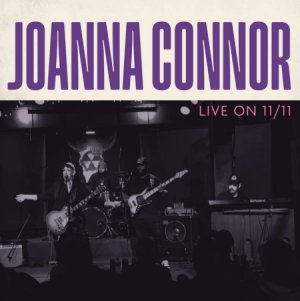 Joanna Connor – Live on 11/11 Joanna Connor – Live on 11/11
M.C. Records MC-0097
www.joannaconnorguitar.com
10 songs – 64 minutes
There are few guitarists in the world – male and female – who can hold their own on stage with blues-rock guitarist Joanna Connor, a native New Yorker who grew up in Worchester, Mass., and has been delivering incendiary riffs from the South Side of Chicago since the early ’80s. And she’s at her fiery best with this set, which – like the title states – was recorded at The Fallout Shelter in Norwood, a Boston suburb, last November.
She fell in love with the blues early and saw Buddy Guy live at age ten. Almost immediately after her arrival in the Windy City, Dion Payton, the leader of the 43rd Street Blues Band – a fixture at Buddy’s Checkerboard Lounge took her on as a student. And Guy’s been one of her instructors, too. A talented newcomer, she became a fret master who blazes. Every note she plays is powerful, tasteful and pretty much shred-free.
Connor formed her own band and made her recording debut in 1990 with Believe It, an instant hit on the Blind Pig label that quickly earned her a spot in the national and international blues scenes, on which she was active until 2005, when she took a hiatus from touring to care for her daughter while remaining busy on the local scene. But she maintained her international presence by recording for M.C. Records in the U.S. and two German labels, In-Akustik and Ruf, too.
Her career took off again in a big way thanks to 4801 South Indiana Avenue, a 2021 offering on Joe Bonamassa’s Keeping the Blues Alive imprint, which soared to the top spot on Billboard’s blues chart and earned her Blues Music Awards nominations in four different categories. This disc marks Joanna’s return to M.C. after Best of Me, which came out on Gulf Coast three years ago.
Running more than an hour, Joanna roars like a lioness one moment and drops to a whisper the next in front of an enthusiastic crowd throughout this one with backing from keyboard player Dan Souvigny, bassist Shaun Gotti Calloway and drummer Jason “JRoc” Edwards.
The familiar strains of Ziggy Modeliste’s Big Easy instrumental, “Cissy Strut,” open the action in with Joanna playing call-and-response with Souvigny, which immediately raises the temperature. Connor’s stinging single-note runs command the second half of the song in which the rhythm section gets to show their chops, too.
Two Elmore James numbers follow. A minute-plus, uptempo guitar solo sears to open seven-plus minute version of “Shake Your Moneymaker,” which bares no similarity to the warhorse original. Joanna keeps the heat on high before dropping to a whisper for a mid-song solo. An extended keyboard workout follows, and the simmer returns to a boil again to close. A take on James’ “The Sky Is Crying” is up next. It opens quiet at languorous pace. Connor’s vocal and fretwork tune the number into a torch song that builds in intensity and fury for the final minute of the six-minute run.
The pace changes for Joe Medwick’s “Further on up the Road,” opening with jazz-infused runs and building into a cautionary and powerful tale about love and loss. You feel the pain in every note of the extended solos Joanna and Dan share mid-tune. The sound turns to Chicago blues with a reading of Little Walter’s “You’re So Fine,” which is updated for 21st century ears. Then Connor takes you to New Orleans again for a funkified blues-rock take on Doctor John’s “Are You Going with Me.”
Chicago takes center stage again for a screaming cover of Willie Dixon’s “I Just Want to Make Love to You” and a driving take on Magic Sam’s “Magic Sam Boogie” before Steve Winwood’s “Can’t Find My Way Home” and Memphis Minnie and Kansas City Joe’s “When the Levee Breaks” bring the action to a close.
This one’s blues you can use. Strongly recommended.
Blues Blast Magazine Senior writer Marty Gunther has lived a blessed life. Now based out of Mason, Ohio, his first experience with live music came at the feet of the first generation of blues legends at the Newport Folk Festivals in the 1960s. A former member of the Chicago blues community, he’s a professional journalist and blues harmonica player who co-founded the Nucklebusters, one of the hardest working bands in South Florida.
|

Featured Blues Review – 3 of 10
|
 Katie Knipp – Live at Theater 5150 Katie Knipp – Live at Theater 5150
Self-Released
www.katieknipp.com
16 Tracks – 73 minutes
Katie Knipp was born in Alameda, California. She received a Bachelor of Arts Degree in music from the California State University. Her first album, Violent in Here, was released in 2003. While focused on the blues, her songs shift into roots, Americana and soul. On her 2025 album, Dance Me, she took a plunge into electronica. This album is her tenth.
A regular performer in the Sacramento area, she has won two Sacramento Music Awards for Best Blues Artist. Her albums have landed in the Top Ten on the Billboard Blues Charts four times. She is a multi-instrumentalist playing guitar, harmonica, piano and lead vocals on this album. Her band consists of Pancho Tomaselli (War, Tower of Power) on bass, Steve Utstein (Bo Diddley, Junior Wells, Lonnie Brooks) on the B3 and Wurlitzer, Chris Martinez on guitar, and Neil Campisano on drums. The album was recorded live at Theater 5150 in Carmichael, California and features songs from across her lengthy catalog. She cites that the live release is a “celebration of something that cannot be replicated by algorithms, artificial intelligence or automation”.
The album opens with “Santa Cruz Blues”. After a brief introduction, Katie asks, “Hey everybody, is it okay if we blast your face off a little bit?” and launches with her harmonica before jumping into a driving, rocking blues number letting the whole band playing into the sound. She tells him, ” I Don’t Sing for You” “anymore” with her piano featured. She notes “our love is like a “Bullet Train”, “Call it what it is – irresponsible love”. Her unique voice, sometimes warbly but always powerful and driving is supported by Steve’s B3 as she ultimately declares “I want to hear you talk shit when you’re eighty-five.”
Justin Townes Earle’s “If I Was the Devil” is the first of three cover songs. Some nice acoustic guitar shifts into slide as she moves into a sultry vocal with Steve’s B3 sliding in. On “Dirty Cables” she learns some bad news on her phone while playing in a bar with an hour to go in her show noting “a rock grew heavy in my gut”. “I don’t want to sing”, “Dirty cables, dirty hands, calloused fingers and a broken heart. That’s how it starts, you are in it for the haul”. She introduces the next song as being about addiction as she warns “When you sit in “The Devil’s Armchair” soft woven fire burns”. Her voice clearly expresses the pain she feels as she identifies “a moment of bliss, another empty kiss.” as the music builds in intensity and the guitar swirls into a raging finale.
“Metro in Paris” is a jazzy song with some fine keyboard work as she sings “We’ll take off to my room and you’ll be satisfied.” “You can’t deny what you need. When you looked away but then smiled to yourself, it told me everything” “By the end of the night, you are going to be mine.” She explains that “Outlaw Doc” is the story of Tom Bell, who robbed stagecoaches. The slide guitar flies into a hard rock driven drumbeat with Chris called out for a soaring guitar. Each of the band members are given an opportunity to step out on the traditional “John the Revelator”.
She says “Get Outta My Dreams” again leads with the piano followed by a B3 solo as she cites, “You came into my dreams like an elephant in a liquor store”. And she “demands stay away from me”. “Sad Eyed Lover” is explained to be a song about a guy that blamed everyone else and was very whiny. So, I dumped him”. “You think the world is against you”. The final cover is Bruce Spingsteen’s “State Trooper” from his Nebraska album. She introduces the song by saying “My favorite thing to do is just watch the sun go down, have a good cocktail in hand, and listen to the Nebraska album.” She makes the song her own transforming it into a hard-rocking guitar track.
“Chamomile and Cocaine” features some bouncing keyboards and rousing guitar. She cites “I been singing the blues since age thirteen, got one foot on the tambourine. I’m in the game, I’m here to play”. Who has the time to listen? Well, I do.” On “Gone to Town” features her piano in another jazzy, sexy blues as she says, “I didn’t know I was so strong.” and leads into some solo guitar from Chris. “There is a “Stillness” in the air right now” expressing some social concerns about what is happening around us today and notes at the end “I’m really pissed. Aren’t you pissed?” “Mud” completes the album as she says, ” I am trying to write songs that aren’t about you”.
Katie has a unique, powerful voice that sometimes reminds me of Beth Hart. Her lyrics are full stories that are frequently delivered in rapid fire. All the musicians are excellent performers and provide frequent solo incursions into the songs that draw you further in. While the music takes you along many paths, I would generally label the album as blues rock with an emphasis on the rock.
Writer John Sacksteder is a retired civil engineer in Louisville, Kentucky who has a lifelong love of music, particularly the blues. He is currently the Editor of the Kentuckiana Blues Society’s monthly newsletter.
|

Featured Blues Review – 4 of 10
|
 Leeann Atherton – Good God Leeann Atherton – Good God
Rainstrorm Records – 2026
www.leeannatherton.com
13 tracks; 46 minutes
Leeann Atherton comes from the Southern states, raised in Alabama, South Carolina and Texas. As a music student she first encountered gospel music in the churches of Charleston and was completely blown away. She has sung for years but on this release she has fully embraced the gospel sounds she first heard those years ago. Recorded in Southern California the album features three of Leeann’s own songs, plus a selection of material drawn mainly from the gospel repertoire. The musicians involved include guitarists Johnny Vernazza and Mac McNabb, keyboard players Rob Lamonica and Bob Berman, bassists Mike Burnham, Kevin Cooper and TJ Moss and drummer Edward ‘Hot’ Cleveland; backing vocals are by Austin Atherton, Johnny Vernazza, Jane Willcock and HeartBeat Pro. The album was produced by TJ Moss.
Whilst most of the songs are gospel and celebrate notions of faith and belief in God, the music is decidedly secular, with plenty of good musicianship. Leeann has a solid voice for this type of material, a touch of grit and a good range. Her own songs include “Call On The Lord” which features a fine slide solo, “Joy” which is very gospel in style with organ under Leeann’s soulful singing about the joy she finds in her faith and “Smack Dab In A Miracle” which has a nicely soulful lilt as Leeann describes how she found the love of God.
The covers include two often covered songs, “Saved” (Lieber and Stoller) which includes an exciting slide solo and Joe South’s “Games People Play”, most of the other covers from the gospel repertoire. Two come from 1970’s Gideon & Power, “Drinkin’ That Wine” and “More Peace And Love”, whilst songs like “I’ll Fly Away”, “This Little Light Of Mine”, “Angel Band” and “How Great Thou Art” date to a far earlier time. Whatever the song, Leeann gives it her full vocal attention and shows her devotion to her faith. Tuneful throughout, this album fits neatly into the traditions of Christian music with a modern, soulful slant.
Blues Blast Magazine Senior writer John Mitchell is a blues enthusiast based in the UK who enjoys a wide variety of blues and roots music, especially anything in the ‘soul/blues’ category. Favorites include contemporary artists such as Curtis Salgado, Tad Robinson, Albert Castiglia and Doug Deming and classic artists including Bobby Bland, Howling Wolf and the three ‘Kings’.
|

Featured Blues Review – 5 of 10
|
 Kat Riggins and Her Blues Revival – Every Day Is Saturday Kat Riggins and Her Blues Revival – Every Day Is Saturday
Self-Released
www.katriggins.com
10 Tracks – 38 minutes
Miami born Kat Riggins is on a mission to revive interest in the blues. Her energetic sound and soulful vocals cross the lines between R&B, soul, gospel and good old-fashioned rock & roll. Her band name Blues Revival clearly lays out that intent. Kat’s vocals have been compared to Koko Tyalor & Tina Turner.
The album title also gives an indication of her direction. Most people are dealing with the everyday stress of daily life. To many, Saturday comes as a day of relief to kick back and relax or to get out and party and enjoy some time with friends. Here she is encouraging all of us to slow down and enjoy life like Everyday is a Saturday.
The album consists of ten original songs written by Kat and Tim Mulberry. Kat provides all of the lead vocals. Erik Guess plays guitar and Tim, who also produced the album, plays all the other instruments on the album and provides backing vocals. Shaelyn Mulberry also provides additional backing vocals.
The album opens with “Heads Are Gonna Roll” if anybody mess with my baby” in a solid piece of rock with Erik kicking things off with some great guitar rolls. On “Do My Thang” she excitedly exclaims “I can’t stop my feet and my hips ain’t too far behind, when they start acting up, don’t pay me no mind. Cuz, I am in my groove. I can’t help but move, excuse me while I do my thang.” Her energy is catching and will certainly bring a smile and a terrific urge to also move along with her groove. On “I Say So” she continues to keep things jumping and identifies that there is “nobody like me, ain’t nobody else. I’m a God made bonafide one of a kind, if I do say so myself.”
“Ain’t Going Down” slows things down she says she “won’t be shook, cuz, I know worrying don’t do me no good. It’ll be a knock down drag-out fight to the end. I won’t let them devils do me in. I ain’t going down easy, in fact, I ain’t goin’ down at all. ” Tears Like Gasoline” questions those who would commit violence as she cries “You’re still squeezing the trigger, smoke’s still coming out of that gun. You’re looking around like “Who did it?” She introduces a gospel touch on “Holy Water” as she pleads “God knows what my eyes have seen, cleanse my spirit, wash my soul. Make me fearless, make me bold.” Erik’s slide guitar tears through the song.
On “Fear Slayer” she identifies “My dreams are bigger than my fears.” “I’ve got time, I ‘ve got dreams I can make come true.” She invites us to party on “Til the Lights Come On” and says, “let me see you put the boogie in the woogie, now put the hip in the shake, put the rock in the roll and don’t chu hesitate. We’ll be dancing to every song.” We’ll be dancing till the party ends.” She identifies “It feels like a dog-eat-dog world” on “Hunger Games”. “One man hungers for love. The other man craves some peace. Another man just wants cash to satisfy his greed.” She ends with a passionate croon and a prayer to “Live in Peace”. She asks “How powerful is a word? Can it lift you up? How powerful is a prayer when it’s prayed with love?” “Well, I’m speaking and praying and singing that you live in peace.”
Kat moves from partying to thought-provoking and encouraging with the rational interchange of ideas without conflict or fear. Dreams are real and should be pursued without the threat of violence. Everyday should be a celebration of life like Saturday. Her vocals prove an unrelenting power for joy and a snapshot of the world today.
Writer John Sacksteder is a retired civil engineer in Louisville, Kentucky who has a lifelong love of music, particularly the blues. He is currently the Editor of the Kentuckiana Blues Society’s monthly newsletter.
|

Featured Interview – Terrence “Sweet T” Grayson
|
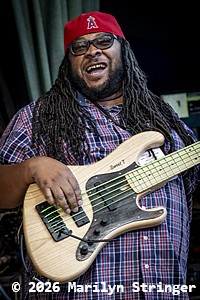 Most blues fans would instantly recognize the names – Bobby Rush, the late Michael Burks, and Victor Wainwright. They each have a definitive style, with one common denominator being their ability to consistently deliver mesmerizing live performances for fans around the world. And if you have been paying attention, you would know that the all three of them have had a certain bass player setting the tone for their bands. Most blues fans would instantly recognize the names – Bobby Rush, the late Michael Burks, and Victor Wainwright. They each have a definitive style, with one common denominator being their ability to consistently deliver mesmerizing live performances for fans around the world. And if you have been paying attention, you would know that the all three of them have had a certain bass player setting the tone for their bands.
Born in Jackson, Mississippi in 1980, Terrence “Sweet T” Grayson has a resume that leaves no doubt that he is a rhythmic powerhouse who has taken full advantage of his musical opportunities..
“I have a lot of church background. My mom and dad both play. My mom still plays piano and organ in church while my dad was a bass player. Actually, my family was the church’s band, with my brother playing drums, and my older sister was the choir director. I played whatever was open, which ended up mostly being playing keyboards up under my mom. But I always wanted to be a guitar player, but- … we always had really good guitar players. I played some drums as well.
“I thought the guitar player at the time was just such a cool guy, and he was one of the first guitar players that I had seen that would come to church with some shades on while playing, and I thought he was the coolest thing going. I switched over playing keyboards, and once I got in junior high school, I started playing trumpet but mainly just the rhythm section instruments – keyboards, guitar, bass. I never did get good at guitar, and when I found out how hard it was, I figured maybe guitar ain’t for me. I just wanted to be like the cool guy that was wearing the shades. And he did have a pretty wife!
“I always wanted to play. My parents were always traveling, going from church to different churches with the choir. What’s crazy is my dad didn’t even play a musical instrument, even though in his whole family, we have just tons of musicians that play professionally. My dad was a car mechanic who liked to hang out in the streets. My mom told him, “If you want to date me, you got to stop racing them cars, get out of them streets, and you got to learn how to play an instrument.” So he bought a bass guitar, then she taught him how to play.
“We just grew up around it, practicing in our garage every night, and getting the cops called on us. They would come and sit out there for about 20 minutes before they even knocked on the door because they was enjoying the music. They would tell us, “Hey, sorry to bother you guys, but your neighbors, they want to sleep.” My dad was real stern about somebody messing with his guitar. So I used to sneak around to play his bass, and by the time he found out, I actually knew how to play it.
“The bass is the foundation. If the bass falls out, you definitely know it. If you don’t have a keyboard player with a dominant left hand, definitely the booty is going to fall out of the groove if the bass is not there. I like setting the groove. My dad used to really thump that thing. You can feel him coming up the road to the church, thumping that bass. I switched from trumpet to playing the tuba because I just wanted to play them bass lines.”
Grayson ended up playing so much that he didn’t finish high school. He got a job and worked on getting a GED degree, which his mother insisted on. Playing at another church, he met someone who set him down a new path.
“I met Larry Milton, a local blues singer. He said, “Man, I really like the way you play. You ever played blues?” I told him no. “Well, you want to play in my band?” I was like, “I don’t know if my mom will let me do that.” He was like, “Well, we’ll work that all out. Just come over to my house to rehearse.” So, I started hanging with this guy, and he had a drummer that worked as a janitor at the school that my mom was teaching at. The drummer asked her, “Mrs. Grayson, do you got a son named Terrence that plays bass guitar?” When she said she did, the drummer said, “Oh, okay, I’ve been playing with him.” But she was thinking I’m playing at church. Every Wednesday night when I would leave, she was thinking I was going to choir rehearsal, Bible class, or something to play at this church.
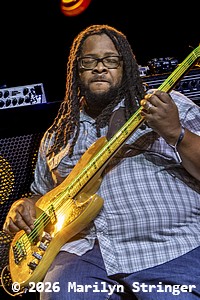 “Meanwhile, I’m playing at the nightclub at 17, 18 years old. Maybe a year or two had passed by, and from time to time the drummer would mention to her, “Saw your son again last night.” One time he mentioned that we were playing a blues festival outside of Jackson somewhere. And she was like, “Blues? I didn’t know you was playing no blues.” That’s how she found out that I had been playing in these blues clubs every Wednesday night. I did it for a long time before she found out, though. “Meanwhile, I’m playing at the nightclub at 17, 18 years old. Maybe a year or two had passed by, and from time to time the drummer would mention to her, “Saw your son again last night.” One time he mentioned that we were playing a blues festival outside of Jackson somewhere. And she was like, “Blues? I didn’t know you was playing no blues.” That’s how she found out that I had been playing in these blues clubs every Wednesday night. I did it for a long time before she found out, though.
“My parents didn’t take to that well, but by that time, I moved out of the house with her and moved in with my oldest sister. So, then Mom was like, “Oh, well, you grown now. You can do whatever you want to do, but you better stay safe out there and make sure you keep God first.” That was the main thing, keep God first in whatever you do. And so now they’re super proud of me from the different things that I’ve accomplished out here and in my music career.”
It took one of life’s little twists of fate to give the bass player a golden opportunity.
“My first professional touring gig was as a member of the Bobby Rush band. I was playing with this gospel group called the Gospel Shining Stars with my cousin and one of my best friends, Terry Richardson, who passed a couple years back. When he passed, he was the bass and keyboard player for Bobby Rush. They had a bus company with a bus yard, and they used to do all of the mechanical work on Bobby’s buses.
“From time to time, they would drive for him. So me and my cousin would always just tag along with them to gigs, go to festivals. Then I started doing guitar tech work for Terry, tuning his bass guitar for him in soundcheck and help set his stuff up. He was one of those guys that really loved women, and he was out there messing around with one of them and didn’t make a sound check. Just being around, I had learned Bobby’s whole show, which gave me a chance to sit in during that sound check. Bobby was like, “Oh, young man, you can really play.” Later on, he gave me a chance.
“When the opportunity came along, I jumped on it. I cooled with him for about, what, 10 or 11 years, something like that. He really groomed me as a touring musician. My mom knew of him. Mom’s from Byram, Mississippi. Her mom lived down there in Byram on this little one-way street that you go down, it’s like a little country neighborhood. Next to the house was a bus covered with bedsheets. And in her house, there was a wing-back chair with a resonator guitar and a picture of this old Black man on it, in one of those shotgun houses where you run through the front door straight down the hall out the back door.
“We kids be playing in there, and she was like, “Y’all better be careful running out through there. You better not knock over Chester’s guitar.” And at the time, I didn’t know who Chester was. I remember the day that this big tow truck came and pulled that bus off the yard. Years later, come to find out Bobby Rush was out there to pick up that bus. It was part of a feud that him and Howlin’ Wolf had going on. Howlin’ Wolf took the bus from Bobby. Bobby wanted to steal it back. Howlin’ Wolf stole it back from him and hid it down there in Byram, Mississippi.
“So when I was maybe like four or five years old, I crossed paths with Bobby Rush. And then later on, hearing him tell that story, I was like, “Bobby, I was one of them kids that was playing out there in the yard when you came and picked that bus up.” So needless to say, my grandma’s first cousin either dated or was married to Howlin’ Wolf.
“I was already kind of a part of the history before I even got a chance to get into the music. I always think back about that, “Man, I was playing around Howlin’ Wolf’s guitar.” Could’ve knocked it over and probably got my butt whooped real bad! Once I got with Bobby, everything just came together. He took me all over the world. Actually, I wouldn’t have met Michael Burks if I wasn’t out touring with Bobby.”
When Grayson wasn’t on the road with Bobby Rush, he played locally in Jackson as part of the house band called Blues Eruption at the 930 Blues Club, with Stevie J. Johnson doing the vocals. They would open for touring acts.
“I met the Neal Brothers for the first time out there, a whole bunch of blues artists. Of course, Michael Burks used to play long hours of the night. The club normally would close at 2:00 am., but whenever Michael would play, I would stay there until the last note, and he would get done at 3:30, 4:00 in the morning. I had a conversation with him one night on his break. I was like, “Man, I sure hope to work with you at some point.” He was like, “Well, that time could come around, it’ll most likely happen because I love the way you boys play. You all make me work hard.” Because we were a really fiery band.”
 After doing a lengthy stint with Rush, Grayson decided the time had come to spread his musical wings a bit. Still a young man, he knew there was still plenty of music and life to experience. After doing a lengthy stint with Rush, Grayson decided the time had come to spread his musical wings a bit. Still a young man, he knew there was still plenty of music and life to experience.
“A couple years later, Michael had been through about seven other bass players within that time, and we played the Portland-Oregon Waterfront Fest, and Michael was on the other stage, across the way, playing, and I could hear his bass player at the time just basically shredding that man’s show, just tearing it to pieces.
“We did the After Jam that night, and Bobby was hosting it because we headlined the festival. Michael Burks came up, playing with us. The whole night he was just looking back there at me, just smiling. And after we got through, he was like, “Man, you a solid player, man. I love how you play.” “You ever thought about playing with somebody else?” I was like, “Yeah, I mean, I’ve thought about it.” I said, “I’m going to have to talk to Bobby about it and see how he feels.”
Burks still wanted to give his bass player a chance to get things right, but promised Grayson when the time came, he would be calling him.
“I said, “just as long as you give me enough time to do things the right way with Bobby. I don’t want to just up and leave him dry. We got to have stuff set in place.” And Michael was like, “Respect.” Maybe six months later, Michael called me, and I put in my notice with Bobby, got his new bass player ready, and I went on with Michael for roughly three years up until he passed. I was actually his last bass player.
“It took me a little while to get my bearings and my mind back together after he passed because I had never dealt with any type of situation like that in my life. We were actually coming home off the tour, off of a European tour. I think we was coming from Basel, I think. And we made it back into the States, got off the plane in Atlanta, and that’s where he ended up having complications, and they took him to the hospital. He didn’t even make it to the hospital. And it took me almost a half a year or so to kind of get myself back together.
“I did my first two blues cruises with Michael, and then after that, I did my first blues cruise with Bobby, and that’s where I met Victor Wainwright a couple of years before. We’d jam together when he was doing the piano bar, and hung out on his breaks. I told him pretty much the same thing that I told Michael. I was like, “Man, I like playing with you, man. I would love to work with you someday.”
“And years later, I get the call from him. It was after I had moved to Memphis, and was trying to figure some things out. I was actually going to Memphis to venture out in my music, and I had an audition with Ana Popovic, and I was also auditioning for B.B. King’s Blues band to go on the cruises with Holland Cruise line.
“The day before a scheduled rehearsal with Ana and her band, Vic’s guitar player called me., “Hey, we got a three-week tour, and our bass player just dropped out. Would you want to do this tour with us?” I was like, “Yeah, I’ll do the tour.” I ended up ghosting Ana, which I ain’t proud of because I’m not that type of person, and went over to Vic’s house to do a little rehearsal to see if I would be a good fit for them. That led to me being with Vic for over 14 years now. I did that tour for him, and the rest is history.
“Having said that, I’m pretty sure if Michael was still here, I would be playing with Michael. We were on our way, for sure. My resume is not a long resume. I’m not one of the musicians that just jump around. I like to stick and stay, to grow within that situation. I do some freelance gigging. I’m actually going to be with Bernard Allison coming up in October for a festival. But I like to get in a situation and help that situation grow.
“Victor used to be joking around on stage, calling me “Sweet T,” and it stuck. I do believe I am a sweetheart of a guy! Vic has been out there for a while making a name for himself. I like his band because we’re all the same age. The lineup we have is crazy. I’m so lucky to be playing with this caliber of musicians, with Pat Harrington on guitar, Sam Butts Jr. on drums. We’ve got two horn players that have been with us for maybe two or three years now, Gavin Jorgensen on saxophone and Chandler Judkins on trumpet. To me, everybody in the band, way more talented than me.
 “They all have theory knowledge. I don’t have any theory knowledge when it comes to playing. I’m one of those players that just plays. We all make each other better. Once you put us together, man, we’re like the Power Rangers. Remember that cartoon, when they all get in their little machines and connect and become these big monsters, and they just win all the battles? That’s what I feel about the Train, a really fiery, just spectacular band that just goes out and kills it, man. We always putting out, we’re always leaving everything on the stage, and want to touch people when we play. You’re going to feel what we have to offer for your soul.” “They all have theory knowledge. I don’t have any theory knowledge when it comes to playing. I’m one of those players that just plays. We all make each other better. Once you put us together, man, we’re like the Power Rangers. Remember that cartoon, when they all get in their little machines and connect and become these big monsters, and they just win all the battles? That’s what I feel about the Train, a really fiery, just spectacular band that just goes out and kills it, man. We always putting out, we’re always leaving everything on the stage, and want to touch people when we play. You’re going to feel what we have to offer for your soul.”
Grayson’s dynamic bass lines have been featured on the two Victor Wainwright and the Train albums on Ruf Records. His discography also includes two albums with Bobby Rush, one with guitarist Eric Johanson, several with singer and harmonica player Tony Holiday, and the Show Of Strength album on Alligator Records, the last release by Michael Burks. He has recorded a solo project that he doesn’t feel is quite good enough. Those who have heard it continue to encourage him to release it.
“I actually produced the majority of the music on BigLlou Johnson’s “Big Man” album, and played a lot of the music. Me and one of my buddies out of Memphis pretty much did the whole album.. I just finished doing the music production for BigLlou’s next album, which I’m not sure exactly when it will be coming out. So we’re waiting on that to drop at some point.
“The beginning of next year, we’ll be doing two new albums with Victor. One is going to be him showcasing the piano, doing a tribute to a lot of the piano players. And then we’re going to do another “Train” album. And when I ain’t on the road, I’m here spending time with my wife Roxie and our family.”
Fender makes a number of fine bass guitars. Grayson has always been partial to the five string Deluxe Jazz model, at least until a recent development.
“About two years, Michael Delaney at Delaney Guitars designed my own “Sweet T” Signature 5-String bass guitar. It is a one of a kind, unless you want to order one just like it. What’s special about that bass is Michael put a tremolo on the bridge, along with custom Bartolini pickups. It features my colored strings, which I have an endorsement through DR Strings. When you see me playing my bass, it’s very unique looking because I’ve got these bright neon green strings. I play it way more than I play my Fender now. And as far as my rig setup, I got connected with the Markbass company through guitarist Eric Gales.”
If you go to the Delaney Guitars website, you can take a look at the “Sweet T” Signature jazz bass. (https://www.delaneyguitars.com/)
Not many musicians have the opportunity to play with three outstanding artists. It has been something of a charmed life, a fact that Grayson fully appreciates.
“Some years back, we used to do the B.B. King Festival out there in the Delta, and we would always do the after-party at this little hole-in-the-wall, cheap joint. And man, it was my first time. Buddy Guy was out at the festival, and of course, B.B. closed it out. Bobby, B.B., and Buddy got on that stage at that joint. We played till 2 or 3:00 in the morning, man. They just was going back and forth, man, just singing all them old songs. I felt like I was in blues heaven. Three legends on stage with me, and at my young age. A lot of musicians that have been out there for a long time and never got the experience of something like that.
“I’m so lucky to have had all these experiences, even though back then I didn’t have a clue. I got to stand beside Bobby Rush for so long, doing big festivals and hanging out with Tyrone Davis and Millie Jackson, Theodis Ealey. When I wasn’t intruding, I was always trying to hang around them to hear all the good stories, the blues, and get a chance to hear the dirty jokes. We were young guys, and Bobby used to tell us all the time, “You got to bring that engine! Y’all got to keep an old man up.” And most of the time we couldn’t keep up with him! After two weeks of touring, we’d be tired and he’d be still going.
“I do feel like I’m totally capable of fronting a band, but that ain’t what I want to do. For one, I don’t want to be the one that has to foot the bill for touring, because that is not an easy job. I like to be that crutch for that front person, to just lift that them up and keep the band going. That’s how I like to live my life, and I think that’s what I’m called to do, to be the best sideman that I can be.”
Blues Blast Magazine Senior writer Mark Thompson lives in Florida, where he is enjoying the sun and retirement. He is the past President of the Board of Directors for the Suncoast Blues Society and a former member of the Board of Directors for the Blues Foundation. Music has been a huge part of his life for the past fifty years – just ask his wife!
|

Featured Blues Review – 6 of 10
|
 Vaneese Thomas – Window To My Soul Vaneese Thomas – Window To My Soul
Overton Music
www.vaneesethomas.com
8 Tracks – 33 minutes
Vaneese Thomass was born in Memphis, Tennessee into a musical family where she was the youngest child. Rufus Thomas, her father got his start in vaudeville but translated that initial start into a successful career as a soul and R&B singer in the 60’s and 70’s with hit songs like “Walking the Dog” and “Do the Funky Chicken”. Her sister, Carla Thomas, received the accolades for her soul music in the 60’s and was proclaimed the Queen of Memphis Soul. Her brother, Marvell Thomas, was a talented keyboard player and record producer who played with R&B stars like Wilson Pickett and Clarence Carter and on blues records with Albert King, Mavis Staples and Etta James.
Vaneese followed in her family’s footsteps into the soul scene with the release of her first self-titled album in 1987 which had the hit songs “Let’s Talk It Over” and “(I Wanna Get) Close to You”, She waited eleven years before releasing her second album in 1998, When My Back’s Against the Wall. She has provided backing vocals for a vast array of artists including Bob James, Joe Cocker, Sting, Stevie Wonder, Michael Jackson, Celine Dion, Eric Clapton, Carly Simon, and Dr. John and many others. Her vocals have been used in numerous TV shows and movies. She also been a successful songwriter with songs recorded by Melba Moore, Freddie Jackson, and Diana Ross. She received Blues Music Award nominations for Best Soul Blues Album and Soul Female Blues Artist for her 2013 album Blues for My Father.
In addition to vocals, Vaneese also plays keyboards with Dave Keyes playing organ and piano, Paul Adamy on bass, Al Orlo on guitar, Ross Pederson on drums, Tim Ouinnette on trumpet, Cliff Lyons on tenor sax, John Isley on baritone sax, Andy Drelles on clarinet, and Rob Papparozzi on harmonica. Backing vocals are provided by Kati Mac, Angela Clemmons, Jason L. Terry, and Emily Bendiger.
The album opens with “I Still Got the Blues”. She elaborates “They always told me that money could get me somewhere. I got clothes and diamonds laying everywhere bringing more than trouble, more than I can bear.” “I still got the blues; money didn’t change things.” “Without some love, I am going out of my mind”. She determines “Every Moment is A Lifetime” and notes, “The sweetest moments are waiting for you, the sweetest love is just passing through.” Next, she declares “I’m a Diamond” “born in a mountain created from heat and pressure. You can’t compete with its treasure. I shine in the darkest mines.”
She says I “Ain’t Gonna Be No One’s Fool”. “Whispers through the town says you’ve been sleeping around. I ain’t going to take it.” “I ran into that other woman, thought I did not know who she was, but I had seen her reflection in your eyes.” “You can’t have your cake and eat it too. You need to know I can’t stay around while you break all the rules”. She tells him “Ain’t No Reason (For a Man Like You)” “Everywhere you go you spread the blues. You are so dirty”. Rob’s harmonica gets a solo run in this song. “That’s A Woman” slows things down in a smooth, bluesy song as she explains “She bears the world’s burdens.” “She takes the elevator to the top floor and still puts dinner on the table and will rock you to the core.” Al has a featured guitar solo in this song.
Dave’s organ supplies a lead as she requests “Somebody “Save Me” from myself.” The thrill of the moment, the touch of his hand, I know it won’t last”. She then warns “Don’t fall into this trap.””Livin’ A Lie” has a throwback 1940’s sound with jazzy horns and tinkling piano as she says, “I told you our love would never die, but I’m livin’ with a lie”. “It’s hard to hide my feelings. I don’t want to make you cry, but soon I’ll be packing my bags and saying good-bye”.
Vaneese proves herself to be one of the top soul blues singers performing today and brings a wonderful supporting band that enhances her performance without ever overwhelming the depth of her messages – a true window into her soul.
Writer John Sacksteder is a retired civil engineer in Louisville, Kentucky who has a lifelong love of music, particularly the blues. He is currently the Editor of the Kentuckiana Blues Society’s monthly newsletter.
|

Featured Blues Review – 7 of 10
|
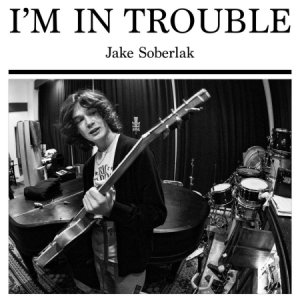 Jake Soberlak – I’m In Trouble Jake Soberlak – I’m In Trouble
Self-release
www.jakesoberlak.com
9 songs – 34 minutes
Jake Soberlak is a 17 year old singer, guitarist and harmonica player from Kamloops, British Columbia and I’m In Trouble is his debut release. Recorded at Afterlife Studios in Vancouver with producer and drummer Leon Power, I’m In Trouble suggests a very bright future ahead for this young man. He is backed by a seasoned band featuring Power, Darren Parris on bass and Darryl Havers on piano, and engineer John Raham recorded every track live off the floor across two days, capturing a joyous spontaneity and a rough-edged abandon. The album was expertly mastered by Harris Newman at Grey Market Mastering.
Soberlak wrote three songs himself. The covers feature some tasty choices from the likes of Elmore James, Freddie King, Otis Spann and St Louis Jimmy Oden that in the main avoid the more celebrated classics from their distinguished back catalogues. While Oden’s most famous composition by far is “Goin’ Down Slow” (here retitled “I’ve Had My Fun” and played as a funky rumba), picking King’s “Manhole” or Spann’s “Temperature Is Rising” demonstrates taste, restraint and maturity. Thankfully, all three qualities are also reflected in the music on I’m In Trouble. Soberlak seems to have avoided the dreaded curse of many young players, who overplay and fill every gap in the music with unnecessary notes. In contrast, Soberlak appears to be heavily influenced by early BB King and especially Peter Green. Indeed, the entire sound and feel of the album feels inspired by early Fleetwood Mac. The two Elmore James tracks, “I’m Worried” and “Can’t Stop Lovin'” both feature some lovely slide guitar that Jeremy Spencer would have been proud of (and a tip of the hat to Havers for the delightful piano solo on the latter). In addition, both Soberlak and Green sing in an open, unaffected manner that makes their youthful vocals all the more vulnerable and attractive.
The three self-penned tracks do not wilt in the company of the classic covers. “I Can’t Find” features some lovely harmonica that recalls Sonny Boy Williamson II over a gentle shuffle (and some gorgeous acoustic bass from Parris), while “Cement Shoes” is a guitar-led instrumental that nods towards Freddie King. The title track is also the final song on the album, featuring just piano and guitar (in addition to Soberlak’s voice), evoking the timeless music produced by Spann and Robert Lockwood on Otis Spann Is The Blues. It’s an absolute gem of a recording and the emotional heart of the record.
I’m In Trouble is a very impressive debut release and well-worth investigating, especially if you are partial to the likes of Elmore James, Otis Spann and Peter Green. And let’s face it – who isn’t?
Reviewer Rhys “Lightnin'” Williams plays guitar in a blues band based in Cambridge, England. He also has a day gig as a lawyer.
|

Featured Blues Review – 8 of 10
|
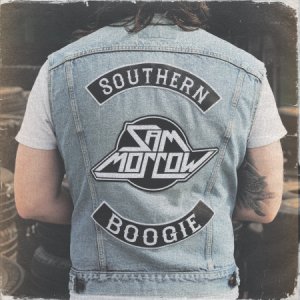 Sam Morrow – Southern Boogie Sam Morrow – Southern Boogie
Copaco Records
www.sammorrowmusic.com
9 tracks – 35 minutes
Sam Morrow was born and raised in Austin, Texas, but moved to California as a young adult where he obtained sobriety and started playing Americana and roots style music. He released his first album, Ephemeral, in 2014. He returned to Texas in 2023 and ultimately moved to Nashville where he made his debut at the Grand Ole Opry. The shift back to Texas influenced him to want to develop a harder edged, high-energy sound. With this new release, his sixth album, he leans heavily into Texas-bred southern rock. Nine original songs burst out demanding to be played loud on this robust outing.
Sam is joined by Matt Hubbard on keys, Bryan McGrath on drums, John Michael Schoepf on bass, Joseph Wullard on sax, and an array of guitarists – Ricky Ray Jackson, Damon Atkins, Eli Wulfmeier, and Leroy Powell. Tameca Jones and Paige Plaisance provide backing vocals.
The album opens with “Cruisin'” with the slide guitar driving a boogie and telling about his woman who says “She don’t like my money. She loves to tell me no. She don’t like my band, she says we got no soul. She don’t let me drink my whiskey.” “She got me walking that line”. But he will go “cruisin’ with or without you”. On “Lucretia” he is “looking for a good place to fall apart, between her arms is a good place to start.” as he continues to describe his effort to move on from the rut he is in in an all-out rocker with a country tinged vocal. He declares “Make it up as I move along. Different lines, same damn song, the takeaway from every mistake. Them “Hard Lessons” get easier to take.”
He runs through the women that he has been involved with noting that “I’ve been traveling so long. I’ve been wasting my songs, been blind to all the signs. Them “South Texas Women” they always on my mind”. “In The Bag” continues his story of trying to find a change explaining, “I been wasting time with a shiny dime and some polished steel. I’ve been holding onto something stronger than I feel.” He describes a “Saturday Night” outing with a driving beat “Short skirt, cheap flirt. Don’t play me no disco dirt. Pabst Blue Ribbon, outlaw women wishin’ they was in my position. ” “Ain’t Trying to fight unless you want to step outside.”
He declares “Oh “Juanita”, you left me black and blue. Lately, I been feeling I ain’t no thing to you”. He slows thing s down again with the country tinged “Put It in a Song”. He says “I got gas in the tank and amphetamine for the road. Losing my voice for the sake of rock and roll. Bad Habits, bad women, never staying too long. Don’t get hung on them done ya wrongs. Go on put it in a song.” He closes out with a powerful rocker “Wedding Ring” as he tells her “I don’t care what your daddy say, I’m gonna make you mine someday. Cross my heart this ain’t a fling, I’m gonna buy you a wedding ring”. as he begs her “Please don’t go”.
The album shifts from southern rock with blues and country touches to a harder rock sound. I think of modern rock equivalents such as Robert Jon and the Wreck and Blackberry Smoke with touches of the Allman Brothers and Marshall Tucker thrown in. Sam shows delivers a wide vocal range across the powering guitar driven songs.
Writer John Sacksteder is a retired civil engineer in Louisville, Kentucky who has a lifelong love of music, particularly the blues. He is currently the Editor of the Kentuckiana Blues Society’s monthly newsletter.
|
Featured Blues Review – 9 of 10
|
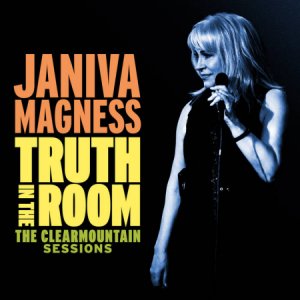 Janiva Magness – Truth In The Room Janiva Magness – Truth In The Room
Blue Elan Records – 2026
www.janivamagness.com
10 tracks; 45 minutes
Janiva Magness has done a live album before, in fact her very first record was a live recording, way back in 1991. Since then she has shied away from another live album, but the lure of an intimate audience of long-time fans and the mixing expertise of Bob Clearmountain was hard to resist. So Janiva gathered her regular touring band (several of whom have been playing with her for many years) and performed a career-spanning set which could have been credited as ‘Greatest Hits Live’. There are no new songs here but a great selection of material from across her career, all of which was clearly lapped up by the audience whose cheers can be heard between songs. The band is Janiva on vocals, Zach Zunis on guitar, Jim Alfredson on keys/BV’s, Gary Davenport on bass/BV’s, WF Quinn-Smith on drums and Bernie Barlow on backing vocals. As might be expected, the sound is pristine and every vocal and instrument crystal clear.
The album kicks off in high gear with a BB King tune (also covered by Ann Peebles), “My Bad Luck Soul”. Janiva used that as the title of her 1999 album and it really fizzes along here, driven by Jim’s rollicking piano. George Jackson’s “Slipped, Tripped And Fell” brings a touch of soul to the album, one of two cuts from 2010’s The Devil Is An Angel Too, the other being the moody title cut. 2012’s Stronger For It also provides two songs, both covers: Tom Waits’ “Make It Rain” is such a strong song that Janiva comments that she would “cut off an appendage” to be able to say that she had written some of the lines in the song; Paul Thorn’s sad and beautiful ballad “Things Left Undone” makes an emotional finale to the gig, a song that Janiva has adopted as a personal message.
Janiva is equally at home on a ballad as she is on more uptempo fare. Delbert McClinton’s much-covered “You Were Never Mine” and Annie Mack’s tender “Closer” are good examples of the former, her own tunes “Hammer” and the melodic and attractive “Love Wins Again” both uptempo numbers. Finally there is Little Milton’s “That’s What Love Will Make You Do”, another title track, this time from Janiva’s 2008 release, the track offering good solo opportunities to Zach and Jim. Indeed, whenever a solo element is required those two musicians provide concise, on point contributions.
Overall this is a good snapshot of Janiva and her band in concert, as well as providing something of a retrospective of some of her best songs.
Blues Blast Magazine Senior writer John Mitchell is a blues enthusiast based in the UK who enjoys a wide variety of blues and roots music, especially anything in the ‘soul/blues’ category. Favorites include contemporary artists such as Curtis Salgado, Tad Robinson, Albert Castiglia and Doug Deming and classic artists including Bobby Bland, Howling Wolf and the three ‘Kings’.
|
Featured Blues Review – 10 of 10
|
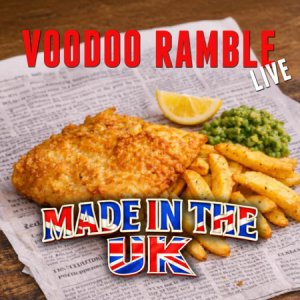 Voodoo Ramble – Live: Made in the UK Voodoo Ramble – Live: Made in the UK
Independent
www.facebook.com/voramble
11 Tracks – 40, minutes
Voodoo Ramble is led by singer – songwriter and guitarist Boris Dugi-Novack Zamba from Croatia. The band has previously won the Croation Challenge contest, which let them play in the 2014 International Blues Challenge in Memphis and the European Blues Challenge in Tuscany, Italy. As the band’s music has been recognized as being similar to British Blues, Oz Cahill contacted Boris with the idea of recording an album in the UK. With Boris’ agreement, Oz organized and coordinated the whole event which was recorded at The Media Department of Weston-Super-Mare College. The session was recorded by staff and students at the college in front of a small crowd.
In addition to Boris, the band consists of Iain Ecclestone on guitar, Ed Gerlach on bass, Josh Armittage on drums with Hannah Bartlett and Felicity Dickson Boardman on backing vocals. This is Voodoo Ramble’s fifth album, which consists of eleven original songs.
The band comes out rocking as he tells her, “Baby, I’ve Been Loving You” since the day I was born.” and says “I know we can make it, I hope you do to. I told you I’m sorry. What else can I do?” “Midnight Ride” has a bit of southern rock in the mix as he tells “Stumbled on your steps to knock on your door. Shiver and shaking all night long, sailing at the break of dawn. Look to the moon for a change in the tide. We made our escape on a midnight ride”. “Cold Hearted Woman” has a great guitar lead and kick back into a rock ‘n’ roll rhythm with a call and response. “You are going to do time in a prison of your mind” as he determines “You are a cold-hearted woman, and you are making a fool out of me.”
“Good Mood” is an instrumental that continues in the manner of old school rock ‘n’ roll”. On “Home”, he “approaches an old man sitting by the side of the road, so many stories he’s been told. So, I ask him, mister, tell me what you saw. He said, son, home is in your heart.” “That is the only place where you belong. And if you look deep down in your heart, you will find a place that you call home.” “Little Blues Queen” returns to southern rock. “I’m driving down to Memphis town. Going to play me some music when the sun goes down. Going to find me a woman when I get the chance. Spin it for a late romance.”
On “Bye, Bye Baby” the band rocks out as he declares “I don’t really need you anymore.” “You used to make me feel crazy, but now I’m okay. So, bye-bye baby”. He says, “My baby gonna jump that “Midnight Train”. So good to know she is finally coming home.” Hannah and Felicity provide the backing vocals to the song. On “Street Livin'”, he declares that the life is “Breaking my soul. Street livin’ is having a toll. ” “Easy women, easy money, always cloudy, never sunny.”
He tells, “The Smell of Money” is “What drove her far away.” “She’s the queen of the rally, always smells so good. One smell of her perfume and you’re down the road’ She poured me a whiskey, I felt so strong.” “I kept on drinking, but then she was gone”. The album closes on a high note with some solo drumming kicking off the song as he identifies that he is “Too Bad for Heaven, Too Good for Hell”.
While a few songs cross over into southern rock, most fit squarely in the British rock scene in the seventies. Easy matches can be found in the era’s bands like Deep Purple, David Coverdale, and Free among others. Boris’ vocals are clear and fits easily into that rock realm. The guitars soar with solid drum and bass driving the beat. A talented throwback to the music of an earlier era.
Writer John Sacksteder is a retired civil engineer in Louisville, Kentucky who has a lifelong love of music, particularly the blues. He is currently the Editor of the Kentuckiana Blues Society’s monthly newsletter.
|

© 2026 Blues Blast Magazine 116 Espenscheid Court, Creve Coeur, IL 61610 (309) 267-4425 |