|

Cover photo © 2025 Joseph A. Rosen
In This Issue
Anita Schlank has our feature interview with Dave Keyes. We have six Blues reviews for you this week including new music from Jus’ Blues 25th Anniversary Legends Collection, Mud Morganfield, Roomful of Blues, Yates McKendree, Bad Temper Joe and Unna with Helge Tallqvist Band. Scroll down and check it out!

Featured Blues Review – 1 of 6
|
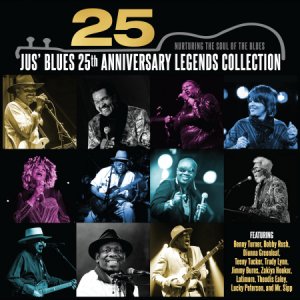 Jus’ Blues 25th Anniversary Legends Collection Jus’ Blues 25th Anniversary Legends Collection
Jus’ Blues Music Foundation
www.jusblues.org
11 songs – 41 minutes
Based out of Atlanta, the 501(c)(3) non-profit Jus’ Blues Music Foundation’s mission is to safeguard blues history while honoring its creators and inspiring young artists, and they have good reason to praise everyone on this star-studded release. It celebrates the 25th anniversary of the organization’s annual awards show/conference, and it’s Southern soul and soul-blues at its absolute best.
The lineup here includes 11 honorees who’ve appeared at the group’s annual event, which draws droves of tourists to Mississippi, where it takes place. This set’s far more than a collection of covers. Four of the tunes are fresh-out-of-the-box: two of the treasures previously unreleased numbers by Trudy Lynn and Lucky Peterson. The two others are from Bobby Rush and Latimore, each of whom went into the studio earlier this year to put a new spin on one of their classics. And all of the other entries have been remastered.
Houston-born blues shouter Diunna Greenleaf kicks off the action with the funky “Sunny Day Friends.” It’s a cautionary, horn-fueled send-up that warns against putting your trust in people who’ll be at your side when things are going good and then abandon you when things go bad. Chicagoan Jimmy Burns demonstrates his picking prowess with “Stranded in Clarksdale,” a slow-and-steady lament about being locked behind bars after being accused of shooting another man. Despite his professed innocence, he fears, he’s “headed down Parchman way.”
Detroit-born alto Zakiya Hooker follows with tribute to her dad, John Lee Hooker, next with the medium-fast shuffle, “Bluesman’s Journey,” noting that he put all of his emotion into his songs. Listen carefully and you’ll hear his voice in the intro and some of the fills. Next up, Texas-born, Louisiana-based bassist Benny Turner’s stripped-down ballad “Who Sang It First” explains that journey’ from churches and the cotton-field to the biggest stages in the world while reminding listeners always to remember the music’s origins and the men and women who created it. He closes by enumerating some of them.
The mood changes dramatically with Trudy Lynn’s “Turning the Same Ole Corners,” a funky, full-band effort. She announces in no uncertain terms that she’s tired of the never-ending routine of “breakin’ up, makin’ up, messin’ up…we both know it gotta end.” It gives way to Bobby Rush for a fresh take on “Garbage Man,” one of his best known numbers, and a complaint about being abandoned by a lover. He sounds decades younger than he is while pouring out his heart, accompanied solely by his plaintive harmonica.
Georgian Theodis Ealey’s up next with “Blues Is Calling My Name.” He opens with a stellar guitar solo before launching into lyrics that find the music knocking on his window and falling down like rain. No matter what he does, he can’t ignore it. And it’s a very, very good thing. Petite Ohio powerhouse Teeny Tucker keeps the message going as she delivers “Ain’t That the Blues,” using the life of a tormented and troubled woman to describe many of the events in life that will leave you feeling down.
The mood continues as Latimore launches in on his familiar “Let’s Straighten It Out.” Anyone familiar with the original will find this new take even more haunting as Lat slows it down a notch and kicks up the emotion. But Mr. Sipp brightens things up from the downbeat of “Hold It in the Road,” a sprightly shuffle in which he assures his lady that he’ll do whatever it takes to keep her happy before Lucky Peterson announces he’s gotten himself straight as he takes you to church with the funked up “See My Way God” to close.
Available as a digital download from multiple vendors, Jus’ Blues 25th Anniversary Legends Collection would be a welcome addition to your collection, too. This one was available at the awards as a gold-colored LP, and it’s solid gold no matter the format!
Blues Blast Magazine Senior writer Marty Gunther has lived a blessed life. Now based out of Mason, Ohio, his first experience with live music came at the feet of the first generation of blues legends at the Newport Folk Festivals in the 1960s. A former member of the Chicago blues community, he’s a professional journalist and blues harmonica player who co-founded the Nucklebusters, one of the hardest working bands in South Florida.
|


Featured Blues Review – 2 of 6
|
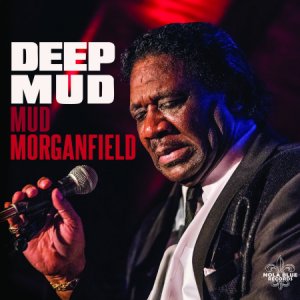 Mud Morganfield – Deep Mud Mud Morganfield – Deep Mud
Nola Blue Records
www.mudmorganfieldblues.com
14 Tracks – 69 minutes
Mud Morganfield is the son of McKinley “Muddy Waters” Morganfield. He grew up in an apartment complex that was owned by the Chess Brothers. Many of the Chess Records artists had apartments there including Bo Diddley. Howlin’ Wolf and Muddy. His mother, Mildred McGhee was Muddy’s girlfriend during his years at Chess. But he noted that Muddy and his wife, Geneva, lived nearby at another residence. That Chess connection immersed Mud in the blues from an early age.
Mud’s recording career started in 2008 with his self-produced debut album, Fall Waters Fall. A 2014 album was a tribute to his father, For Pops – A Tribute to Muddy Waters. This is his seventh album consisting of twelve original songs and two covers of his father’s songs.
Mud is the lead vocalist for all songs. Rick Kreher and Mike Wheeler are the guitarists, Melvin “Pooky Styx” Carlisle plays drums, Studebaker John plays harmonica, E.G. McDaniels on bass, Sumito Ariyo Ariyoshi plays piano on eight cuts, with Roosevelt Purifoy on piano and organ on five cuts, Rodrigo Mantovani on upright bass on one cut, Phil Perkins on trumpet and backing vocals by Felicia Collins, Kristen Lowe, Jacole Avent, and Demetrias M. Hall.
The album starts out with a rollicking Chicago blues and Mud demanding “Bring Me My Whiskey” and “my girl by my side”. “Gonna lay my head down in my baby’s lap”. Rick pulls out his slide guitar before Mud further explains “I don’t want no vodka cause vodka makes me sick. Don’t want no gin, gin always makes me sin”. Sumito’s honky-tonk piano tears through the next song as Mud says he wants a “Big Frame Woman” to “hold him tight and treat me right”. Muddy’s song “Strange Woman” finds Mud pushing a slightly deeper voice emulating his father’s vocals style. Mud plays the bass for this track as he asks her “Can I go home with you?”
Studebaker John’s harmonica is featured as Mud tells her “Don’t Leave Me” “here all by myself cause if you walk out that door, you can’t come back no more”. Phil’s trumpet and Roosevelt’s organ kick up the beat for a funky party atmosphere on “She’s Getting Her Groove On”. “Ernestine” again features Studebaker John, Roosevelt on piano and organ, and Rick’s powerhouse guitar as Mud begs “Ernestine, will you marry me? I ‘ll give you anything, anything that you need”.
“Strike Like Lightning” is slow, down and dirty Chicago blues. Mud notes “the little girl strikes like lightning, she’s more dangerous than any sting”. Phil’s trumpet is back at the center and Roosevelt keeps things jumping as Mud says he wants to be the “Cosigner Man” and says ” all I ask of you is that you let me come by some time”. “Bring me my checkbook and I’ll make it out to you.” On “Lover Man”, he tells her she “shakes it just like a willow tree” with Studebaker John again getting the groove on.
He then tells her “You can’t keep running “In and Out of My Life” that drops back to a smooth R&B sound from the early 60’s with backing vocals and Sumito’s piano floating through the song. He does note that she told him that “she has a husband… and we were through”. “The Man That You You’re With” moves back to slow blues as he laments “I may not be the man you’re with, but I know I am the man you need”. On “Carolina”, Mud tells her “If you make love to me, you are moving too fast, you’ve got to make it last”.
A cover of Muddy’s “Country Boy” tells the tale of a man has concerns that you “can’t say I don’t love you, I am just a country boy that likes to stay out all night”. Rodrigo’s upright bass drives the rhythm here. If Mud honors his father with the covers, “A Dream Walking” is a tribute and love song to his deceased mother. He notes “If my father was a rolling stone then my mother must have been so strong cause I can’t remember one day that she let us alone. You know life has its twists and turns, but a mother’s love is what we learn'”. “Have you ever heard an angel sing? If I only had one wish – to see my mother in my dreams” as Roosevelt supplies a spiritual organ accompaniment.
In the album’s liner notes Mud states ” Listen Man, It’s Chicago blues. None of that rock-blues”. ” I talk and sing about real things, real live people, real situations, things that people go through, from falling in love to beautiful women. So, it’s Chicago Blues at its best. They ain’t trying to do that no more, but that’s what it is”. I certainly cannot express the sound of this album any better than that. Muddy would certainly be proud that his son continues to provide the music style developed by his father and extending it with new material in that same form.
Writer John Sacksteder is a retired civil engineer in Louisville, Kentucky who has a lifelong love of music, particularly the blues. He is currently the Editor of the Kentuckiana Blues Society’s monthly newsletter.
|


Featured Blues Review – 3 of 6
|
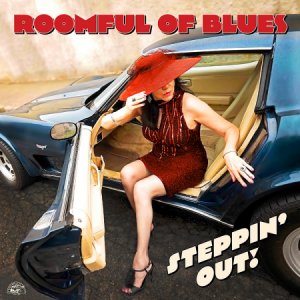 Roomful of Blues – Steppin’ Out! Roomful of Blues – Steppin’ Out!
Alligator Records
www.roomful.com
14 tracks/44 minutes
Six decades of rich and beautiful music. That’s what Roomful of Blues is all about. Formed in 1967, they released their first record in 1977.
Alto and tenor sax player Rick Lataille has been the director of this primo band. He and his horn section are legends in the music business for swing and contemporary blues. Chris Vachon on guitar has produced their last eight records, another long term stalwart of this fine music. The horn section is rounded out with Craig Thomas on baritone and tenor sax and Chris Pratt on trumpet. This New Yorker and Rhode Islander add their decades of experience to the mix, creating a fantastic backdrop for the band’s sound.
On drums is Mike Coffey and on piano and B3 is Jeff Ceasrine. They are respectively from Rhode Island and New York and bring their decades of amazing experience to the table to help flesh out the sound of Roomful of Blues. That leaves D.D. Bastos on vocals. Singing since age 5, D.D. is the Choral Director of her local school system and bandleader of her band D.D. and the Road Kings. Her work linked her up with Roomful of Blues, Sugar Ray and the Bluetones, The Broadcasters and the many other groups who have emerged from these bands. She is par of the New England blues scene and the people from those three bands are on D.D. and the Road Kings’ album Lover Bird.
What emerges from this is a completely new sound and vibe for the band. After 19 albums featuring male vocalists, here they get to showcase songs made famous by female blues greats along with other forgotten classics, fourteen in all on this outstanding collection of music.
“Satisfied” starts things off. This is a Billy “The Kid” Emerson cut from 1955 and D.D. and the horns shine as does Vachon’s guitar. Then it’s Z.Z. Hill’s 1964 “You Were Wrong” with a great groove and more stellar horns. Vachon solos strongly again as he and band nail another one. “Steppin’ Up In Class” is a Jimmy McCracken 1965 piece that D.D. delivers with passion. Vachon picks out some pretty licks, and the alto sax blazes on a super solo, too. Next is “Slippin’ and Slidin’” which is a 1957 Little Richard hit. Great sax and guitar solos and support by all the players is just solid and cool.
The torch song “Please Don’t Leave” is up next, an old Lee Diamond R&B tune that got resurrected for this album for Bastos to nail. Big horn work and deeply emotive vocals sell this one. Next is “Tell Me Who,” a Billy Myles cut made famous by Bib Maybelle. It rocks! Big Mama Thornton’s “You Don’t Move Me No More” is the next great cover with a slick piano solo and jumping and jiving guitar. Then it’s time for Etta James and “Good Rockin’ Daddy,” another swinging and cool number. Some dirty sax and later pretty trumpet make this one special.
Things slow down with “Tend To Your Business.” This one is a different take on James Wayne’s original which is more up tempo. D. D. turns it into a slow and lament-filled blues. Her vocals. the cupped trumpet and restrained guitar make this a somber and thoughtful piece. Then it’s “Well Oh Well,” a swinging and jumping cut with killer sax. It’s a Tiny Bradshaw number that Roomful makes their own. “Why Don’t Cha Stop It” follows, a Buddy and Ella Johnson cut. Nice dual sax work is featured here along with a grooving beat.
It’s time for more Big Maybelle with “I’ve Got A Feelin’” and we get more great saxophone to savor along with a howling lead by D.D.. Then we have Smiley Lewis’ “Dirty People” with some honky-tonk piano and then guitar solo to enjoy here. They conclude with “Boogie’s The Thing,” a song with varied credits. All I can saw is that whomever wrote it created a great jump blues and roomful delivers the good here. So many great solos, a jumping vocal performance and just a super finish to a superb album of tunes!
So with 19 priors done by male singers, number 20 is really cool and special with D.D. Bastos leading the charge. It is a nice change up and the album is a hit. Bastos understand the music and give it her all. The band is, well, Roomful of Blues and they can truly do no wrong. Together, we have an exemplary album of jumping and swinging blues that I intend to give lots and lots of listens to– it is a great album! Go get it now!
Blues Blast Magazine Senior writer Steve Jones is president of the Crossroads Blues Society and is a long standing blues lover. He is a retired Navy commander who served his entire career in nuclear submarines. In addition to working in his civilian career since 1996, he writes for and publishes the bi-monthly newsletter for Crossroads, chairs their music festival and works with their Blues In The Schools program. He resides in Byron, IL.
|

Featured Blues Review – 4 of 6
|
 Yates McKendree – Need To Know Yates McKendree – Need To Know
Qualified Records
www.qualifiedrecords.com/yates
13 tracks/42 minutes
Yates McKendree’s second release showcases the talents of this fine, young musician and his abilities in song writing, performing and playing guitar, bass, drums, and organ. He is a multi-instrumentalist whose talents belie his young age.
This album not only exudes musical talent but also the joy in making music. Yates loves the blues and that is apparent in every note he plays and sings. He is the real deal.
Also appearing is his father, Kevin McKendree on piano and organ. He also produced the album at The Rock House in Tennessee. Robert Frahm supplies guitar and rhythm guitar, Griffin Photoglou, George Sluppick, and Kenneth Blevins are on drums, Steve Mackey is on bass, and a few other guests who will be noted below.
Yates kicks off with his original cut “Burnin’ Tears.” Strident guitar, a great groove and passionate vocals are the order of the day here. Kevin’s Hammond also shines on the cut. Yates delivers with fantastic solo work and throughout on guitar. “Need To Know You Better” follows, another great original cut. Yates sings with feeling and his guitar soloing and the Hammond organ by his Dad make this cut special. The same ensemble continues on the third cut, also original, ”Run It In The Ground” where the quintet deliver a rousing and driving song for us to enjoy. More super solo guitar work, solid piano, rhythm guitar and the bass and drum backline are strident and solid in support.
James Brown’s “I Don’t Care” gets reworked into Yates McKendree’s style of blues. Kevin’s piano and the horn section of Jim Hoke (saxes), Steve Herrman (trumpet), and John Hinchey (trombone) deliver superb performances in support. The classic Earl King cut “Trick Bag: follows. A driving beat, piano and staunch guitar make this memorable. Delbert McClinton makes a cameo appearance vocally as song’s the father-in-law. Next is “Something You Got,” a 1961 tune by NOLA R&B artist Chris Kenner. Yates sings with feeling, plays the guitar with equal emotion as he is supported well by the band.
The traditional “See See Rider” gets a classy instrumental reworking with Yates and Kevin both delivering outstanding performances. The guitar playing is wickedly cool. Willie Dixon’s hit “I Can’t Stop” and Yates gives us some Chicago blues to truly savor here. Great guitar is featured once again and McKendree howls out the lead vocals. Magic Sam’s “Give Me Time” is next, and here Yates handles all the instruments except for electric piano with Dad Kevin on that. Great guitar, organ, drums and bass by the young musical great.
“Good As Gone” is another McKendree family “duet,” here with Kevin on organ and guitar and Yates on vocals. Lead guitar, drums and bass. Another stinging guitar performance as this one rocks and jives along with a fast beat and a great sound. A favorite country pop song of mine from my youth is next, Bobbie Gentry’s “Ode To Billy Joe.” Yates handles the lead with vocals and Hammond organ instead of guitar. He also handles bass and half the drum duties. Photoglou does the other half of the drumming and Frahm switches to lead guitar. It’s a great rendition of a super song.
Charles Brown’s “I Wanna Go Home” gets a unique cover with Yates and Sean “Mack” McDonald sharing vocals. Yates plays upright bass, Mack plays drums and Kevin McKendree is on piano. Neither of the two young guitar studs play guitar; it’s cool cut and Kevin’s piano is the primary lead instrument as the two young musicians vocally star together here. The final track is “Tide,” an original with Yates on guitar, bass, Hammond organ and washer and dryer. Sluppick adds percussion on this edgy and cool instrumental. Well done!
Yate McKendree shines here. His musicianship and ability to entertain shows the experience he’s gained since Buchanan Lane. While his first album was amazing, this one is even better and showcases the amazing talents of this burgeoning superstar. Everyone on the album does yeoman’s work– it’s a tight and exemplary effort by all involved. Yates is the catalyst in all this; his performances are superb. Go get this album now– every blues fan will love it!
Blues Blast Magazine Senior writer Steve Jones is president of the Crossroads Blues Society and is a long standing blues lover. He is a retired Navy commander who served his entire career in nuclear submarines. In addition to working in his civilian career since 1996, he writes for and publishes the bi-monthly newsletter for Crossroads, chairs their music festival and works with their Blues In The Schools program. He resides in Byron, IL.
|

Featured Interview – Dave Keyes
|
%20copy.jpg) Lately, it seems like the world rewards those with the loudest, most pretentious voices. However, it is often the quieter, more unassuming individuals who have the most interesting lives and stories. Keyboardist/singer/songwriter Dave Keyes is one of those unassuming artists that leads a fascinating life. In addition to having his own band and releasing eight albums, Keyes has performed with numerous legends of the blues, written for television and movies, played on blues cruises and the Big Blues Bender, and has conducted/played in a long-running, successful Broadway play, (Smokey Joe’s Café). Blues Blast Magazine had the opportunity to catch up with Keyes while he was performing recently at the Big Blues Bender in Vegas. Lately, it seems like the world rewards those with the loudest, most pretentious voices. However, it is often the quieter, more unassuming individuals who have the most interesting lives and stories. Keyboardist/singer/songwriter Dave Keyes is one of those unassuming artists that leads a fascinating life. In addition to having his own band and releasing eight albums, Keyes has performed with numerous legends of the blues, written for television and movies, played on blues cruises and the Big Blues Bender, and has conducted/played in a long-running, successful Broadway play, (Smokey Joe’s Café). Blues Blast Magazine had the opportunity to catch up with Keyes while he was performing recently at the Big Blues Bender in Vegas.
A native New Yorker, Keyes grew up in a family that supported and encouraged his musical ambitions.
“My mom was pretty musical—she sang, and my dad was into music. We’d go out and hear jazz every once in a while. But most importantly, they encouraged me to take lessons. I took classical lessons starting at age seven, but it only lasted two months, because I hated them. My mom was cool enough to get me a teacher who was willing to teach me the popular songs of the day. I think the first song I learned was “Downtown”, by Petula Clark. Piano was my first instrument, but in public school I started playing trumpet in the first grade. I had a really good music teacher at school and in the fourth grade I heard someone mentioning about improvising, so I then learned how to improvise.”
“One of my first early influences was Earl Hines. Then, somewhere around the 8th grade I got the record Live at the Fillmore East by the Allman Brothers, and Jefferson Airplane’s Bless it’s Pointed Little Head. And then I looked at the credits and saw McKinley Morganfield and started working back from there. I was always into swing and Louis Armstrong, so from there I got turned on to Earl Hines and, at that time, there was a ragtime revival because the movie The Sting had come out, so I started listening to Scott Joplin, Willie ‘the Lion’ Smith, and Eubie Blake. From there I got into the boogie-woogie stuff, like Albert Ammons, Pete Johnson and Meade Lux Lewis. Then, when I went to high school I moved on to Leon Russell. Leon was someone who influenced me immensely. And, later, in Boston, I got turned onto Professor Longhair.”
After graduating high school, Keyes completed a bachelor’s degree at Tufts University in Boston but majored in English, rather than focusing on his primary passion.
 “I wanted to go to music school, but my dad wasn’t really into it, so we kind of compromised. I went to regular college and got a degree in English but was playing music all through my college years. I was fortunate enough to get a really well-rounded education, so whether it was psychology or the English classes, it all helped me with my writing. I remember there was one cool professor there named Jeff Titan who was an ethnomusicologist. I believe one of his books is in the Blues Foundation’s Hall of Fame collection. We would listen to the sermons of C.L. Franklin (Aretha’s father) and analyze it for how it related to the blues with the cadence and the call and response. It was a real eye-opener and gave me a deeper understanding of just how things evolved musically and societal-wise, and the importance of that.” “I wanted to go to music school, but my dad wasn’t really into it, so we kind of compromised. I went to regular college and got a degree in English but was playing music all through my college years. I was fortunate enough to get a really well-rounded education, so whether it was psychology or the English classes, it all helped me with my writing. I remember there was one cool professor there named Jeff Titan who was an ethnomusicologist. I believe one of his books is in the Blues Foundation’s Hall of Fame collection. We would listen to the sermons of C.L. Franklin (Aretha’s father) and analyze it for how it related to the blues with the cadence and the call and response. It was a real eye-opener and gave me a deeper understanding of just how things evolved musically and societal-wise, and the importance of that.”
Following college, Keyes was able to immediately work full-time as musician, skipping the phase that many musicians experience of working horrible short-lived jobs. His initial work led to some wonderful opportunities.
“I saw an ad in the Village Voice where someone was looking for a country piano player and I played a few gigs with them. That job led to a job with a Texas swing band, and from there I met a number of great players and seemed to be working all the time. I guess in terms of a ‘big break’, 10 years later, I was playing with Darlene Love and after the show someone came up to me who was a contractor and put bands together for Broadway shows. He asked me if I had ever done Broadway. I said no but let him know that I was interested. Shortly after that I got a call from Jerry Leiber and Mike Stoller, and they asked me to be involved in a show that they were developing, which ultimately turned into the show, Smokey Joe’s Café. That show lasted six years and was an amazing gig. I probably played in two thousand performances and conducted about half of them.”
Throughout the many years it was on Broadway, Smokey Joe’s Café featured special appearances by popular singers including Ben E. King, Pam Tillis, Gladys Knight, Lou Rawls, Gloria Gaynor, and Rick Springfield, with Gladys Knight extending her involvement to actually appear in the show in Boston and Las Vegas. It was nominated several times for Tony Awards and in 1996 won a Grammy Award for the Best Musical Show Album. But this was only a small fraction of great performers with whom Keyes had the opportunity to collaborate. For example, he has performed with Odetta, David Johansen, Bo Diddley, Chuck Berry, Ronnie Spector and Popa Chubby.
Odetta seemed like an especially intriguing personality, given that she was often referred to as “The Voice of the Civil Rights Movement and influenced such greats as Bob Dylan, Joan Baez, Mavis Staples and Janis Joplin. Just the sound of her voice seems to command one’s full attention, and it has been reported that Rosa Parks was her number one fan, and that Martin Luther King, Jr. called her the “queen” of American folk music. Dave was asked about his experience with Odetta.
 “Odetta hadn’t recorded in a while, and Mark Carpentieri, from MC Records, was bringing her back to the public limelight. My friend Seth Farber was touring with her, but couldn’t do some of the gigs, so I subbed. Odetta was not the easiest person to work for because she was getting older and was having physical issues. It was very difficult for someone like her, who was used to being so independent, to find that she couldn’t do everything for herself anymore. The gig was just me on piano and her, so I traveled with her and did everything with her. It was intense. Every note she sang and every word she spoke had meaning. There were no wasted words with Odetta. It was an amazing experience.” “Odetta hadn’t recorded in a while, and Mark Carpentieri, from MC Records, was bringing her back to the public limelight. My friend Seth Farber was touring with her, but couldn’t do some of the gigs, so I subbed. Odetta was not the easiest person to work for because she was getting older and was having physical issues. It was very difficult for someone like her, who was used to being so independent, to find that she couldn’t do everything for herself anymore. The gig was just me on piano and her, so I traveled with her and did everything with her. It was intense. Every note she sang and every word she spoke had meaning. There were no wasted words with Odetta. It was an amazing experience.”
“Bo Diddley was great too—but he was more like a kid. He had this cigar box guitar with a drum machine built into the guitar. One time we went to Japan, and we were sitting on the train platform and he took his guitar out of the case and turned on the rhythm machine, started jamming with it, and within 60 seconds we were surrounded by 100 curious Japanese schoolchildren. I loved playing with Chuck Berry too, but I didn’t talk to him much. He just really wasn’t much of a talker. But those were the architects of Rock ‘n’ Roll right there—him and Bo and Jerry Lee.”
Like Odetta, David Johansen (leader of the New York Dolls who later performed as Buster Pointdexter and played the role of the Ghost of Christmas Past in the movie Scrooged), also had an energy suggesting an intense and intriguing personality.
“I worked with David Johansen for a long time—about ten years. He was like a chameleon—he could just go from one musical style to another. He went from the NY Dolls to this Latin thing—Buster Pointdexter, which was when I worked with him, and then he went to a straight blues thing. He was such a student of music and such a great entertainer. He had a passion for everything he did, which was really fantastic. Some people, like him, and Odetta in particular, I seem to appreciate more after they are gone. The thing about Odetta is that she had such historical importance. She was the first artist to have her hair in an afro, (they called it an ‘Odetta’) and she was a real trailblazer being a Black woman who was not a wallflower.”
Dave is frequently seen at the Big Blues Bender, in Vegas, and sometimes plays with their music director’s (Jimmy Carpenter) band. He was asked how that came to be.
“I was on a cruise ten years ago and met Jimmy. I was playing in the piano bar, and we just connected. He would come sit in. He can play jazz, or just about anything. Very few people can do what Jimmy does. We stayed in touch, and I was helping to book this festival in Switzerland for 25 years, so I brought Jmmmy’s band over there one year. Then he brought me out to Vegas as an artist in residence, and I also play the east coast gigs as part of his band. We’re just having a ball.”
 Jimmy Carpenter expressed mutual admiration for Dave’s abilities, noting “My friendship with Dave Keyes goes back about 15 years, and it just keeps getting better! He is not just a total pro and badass on the keys, he’s a good friend and real asset on the road. He’s been playing with my band whenever possible, and always brings it, and rolls with the challenges of our world like a champ. What a great player and fine human being!” Jimmy Carpenter expressed mutual admiration for Dave’s abilities, noting “My friendship with Dave Keyes goes back about 15 years, and it just keeps getting better! He is not just a total pro and badass on the keys, he’s a good friend and real asset on the road. He’s been playing with my band whenever possible, and always brings it, and rolls with the challenges of our world like a champ. What a great player and fine human being!”
Dave has always played in his own band when not involved in other projects, and his band won the International Blues Challenge in Memphis in 2000. Later they played for an English cooking television show on NBC (which didn’t last too long given that it aired at the same time as Rosie O’Donnell’s show.) Lately, Dave has been spending more time focusing on his own music, playing in his band, and he has just released his eighth CD, Two Trains.
“I recently connected with a guy I’ve known for a long time named Mark Sameth, who had a bunch of national country hits in the ‘80s and then stepped away from the music business. He’s back now, and we’re writing and I’m excited about our collaboration. I feel like my songwriting is becoming more targeted and pinpointed and better as a result of working with Mark. There are a couple of themes to the new album. One theme is about my wife passing a couple of years ago after us being together for 37 years. She had ALS. She had been a dancer and had a dance company, and she said if her legs couldn’t move she was done. So, she decided a year into the illness that she was going to slowly just stop eating. I respected her decision, and she lived fully until the very last minute. We lived and loved until the moment she died. So, a few songs on the album express the emotion of that sense of loss. For example, ‘Rest in Peace’ is basically about losing the one you love You are grateful for the amazing times that you had and then sad for the loss, but somehow you go on. Then there is a gospel song called “I’m Alright” that basically says that I’m alright no matter what happens, and with the love in my heart, I can deal with anything. Two Trains being the title of the CD is about the idea that there are two trains running all of the time— same track- the good and the bad, the Yin and the Yang. Even in the worst thing possible, like my wife’s passing, I found gratitude for the wonderful life that we had together. So, there is this duality constantly happening. Nothing is all good or all bad. Even the worst things sometimes teach you lessons. Even in the chaos of this world that we live in right now (and it’s really nuts), there are good things that happen, and we have to find those things and we have to acknowledge them and be able to embrace them.”
Dave also noted that he Is grateful to have a profession when he can continue to improve, without artificial limits based on age.
“I just feel really fortunate to do something that I can keep getting better at each day. There is not a ceiling on what we do. Like athletes tend to have a shorter shelf-life. I feel blessed that I can just keep playing and I’m in a better place artistically now than I have ever been, and that’s really gratifying. I’m also grateful for the connection with the audience. I’m kind of a shy guy—not naturally an extrovert. So, there has been a sort of skill development for me in terms of being able to go on stage and leave everything out there, because that is not naturally who I am. But I’ve gotten a lot better at it as I’ve gotten older. I feel like what am I waiting for? Why hold anything back? When you connect with somebody you can see it. You can tell, and it’s a great feeling. Bruce Springsteen said one of the great things we do as musicians is that we are like magicians. We can transform people. We can do things normal people can’t because we have a way to connect. When I was playing with Odetta, people would come out of the woodwork crying, talking about a concert she did in 1961. You have a way to connect with people, and they remember that stuff, and it’s wonderful. It’s a gift. I just want to do that.”
Go see Dave Keyes live and you will instantly connect with his immense talent and also with his kind and loving spirit. You can find out more about his latest album, Two Trains, and see his tour dates at www.davekeyes.com
Writer Anita Schlank lives in Virginia, and is on the Board of Directors for the River City Blues Society. She has been a fan of the blues since the 1980s. She and Tab Benoit co-authored the book “Blues Therapy,” with all proceeds from sales going to the HART Fund.
|

Featured Blues Review – 5 of 6
|
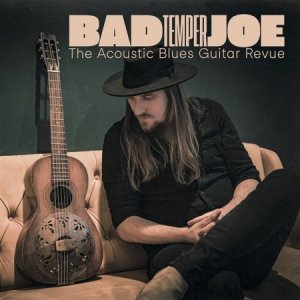 Bad Temper Joe – The Acoustic Blues Guitar Review Bad Temper Joe – The Acoustic Blues Guitar Review
Time Zone Records
www.badtemperjoe.com
10 tracks/47 minutes
Bad Temper Joe is an acoustic bluesman from the countryside of Germany’s Eastern Westphalia. His gritty vocals and fingerpicking have gained him notice in his homeland and in 2020 he was the only European act to participate in the International Blues Challenge in Memphis.
He offers up nine well-known covers that he puts his own stamp on and one original song. Marcel Rahe adds harp to three tracks. His website shows this to be his 27th album.
Charlie Patton’s Down The Dirt Road Blues” is nicely covered by BTJ. His guitar work is spectacular as he growls out the lyrics. “Poor Black Mattie” is an R.L. Burnside cut that Joe delivers with his grit and charm.
Next up is the classic “Freight Train” and BTJ picks this out nicely. He growls out the lead as his sweet finger picking contrasts his gruff vocals. Jimmy Reed’s “Baby What You Want Me To Do” follows and we get some great harp added to the mix. BTJ gives us some great guitar and Rahe blows some pretty harp to accompany Joe.
Willie Dixon’s “Spoonful” continues with harp support as BTJ gives us his take on this song that Howlin’ Wolf and others indelibly stamped into the blues lexicon. His guitar work is impressive and the blending of harp with it make this one a winner. “Laid My Burden Down” is a Mississippi John Hurt cut we all know and love. BTJ gives us a slightly up tempo version of this one and plays more of his fantastic “brand” of guitar picking.
Robert Johnson’s “Come On In My Kitchen” is up next and BYJ slows this one way down and makes us listen as he winds his way through it ever so slowly and coolly. He does make each of these covers his as he make this song thoughtful and pensive. “Big River” is the final cut with added harp. BTJ transforms this Johnny Cash song into a gritty and down home song.
Leadbelly’s “Goodnight, Irene” gets transformed into a somber and down tempo cut with thoughtful guitar and forlorn vocals by BTJ. It’s interesting and nicely done. The final track is his own “If Tears Were Diamonds.” He takes us slowly, somberly and contemplatively through his song. It’s beautifully done as he picks and makes the guitar moan like his vocals; we builds to a powerful conclusion. It’s another well-done number!
BTJ is an interesting and guitarist and performer. He takes these cuts from the last 100 or so years that we’ve heard many times and spins them in his style and manner to give then a fresh and interesting sound. If you’re an acoustic blues fan, I think you’ll really enjoy this album – I did!
Blues Blast Magazine Senior writer Steve Jones is president of the Crossroads Blues Society and is a long standing blues lover. He is a retired Navy commander who served his entire career in nuclear submarines. In addition to working in his civilian career since 1996, he writes for and publishes the bi-monthly newsletter for Crossroads, chairs their music festival and works with their Blues In The Schools program. He resides in Byron, IL.
|
Featured Blues Review – 6 of 6
|
 Unna with Helge Tallqvist Band – Today I Sing The Blues Unna with Helge Tallqvist Band – Today I Sing The Blues
Q Records
www.helgetallqvist.com
10 songs – 34 minutes
Unna Kortehisto is a pop and blues singer from Helsinki, Finland. On Today I Sing The Blues, she teams up with the Helge Tallqvist Band for 10 well-recorded and well-played tracks of blues, soul and a little jazz. All the songs are cover versions but one has to tip one’s hat to the eclectic selection of so many lesser known gems, often re-imagined cleverly and with innovation.
The album kicks off with Leo Fuld’s 1947 Yiddish classic, “Where Can I Go”, re-based as a smooth jazz-inflected soul song. By contrast, Lavelle White’s “Voodoo Man” sticks pretty close to the original, with guitarist Jonne Kulluvaara neatly acknowledging Clarence Hollimon’s superb guitar from White’s version. Super Pie DeSanto’ “Somebody’s Always Trying” is given a “Mannish Boy” workover.
Ted Taylor’s “Somebody’s Always Trying” sees the horns of the original replaced with Tallqvist’s superb harmonica. Aretha Franklin’s “Today I Sing The Blues” is perhaps more rigidly structured than the original, with both Tallqvist and Kulluvaara excelling.
Kortehisto is a fine singer, particularly on the softer, more jazz-influenced tracks. The band is also first-rate. Drummer Juppo Paavola and bassist lay Jaska Prepula lay down a series of solid grooves, whilst Tallqvist’s harmonica playing fully supports his stellar reputation. On Leonard Feather’s 1944 jazz number, “Would If I Could,” which is re-cast as a mid-paced blues shuffle, Tallqvist obviates the need for a clarinet or a trumpet with his harp. Heck, in “Will My Man Be Home Tonight”, he even echoes Earl Hooker’s guitar introduction on his harmonica.
Interestingly, the band take Ann Peebles’ “My Man” in a much smoother direction than the original. By contrast, Little Johnny Taylor’s “Part Time Love” stays pretty true to Taylor’s version, albeit that Kortehisto sings it from the other party’s perspective. The album finishes with Wes Montgomery’s instrumental, “In And Out”, with Kulluvaara and Tallqvist harmonising neatly on guitar and harmonica.
As one might be able to infer from the song choices, Today I Sing The Blues is not a raw, powerful, emotional roller coaster. It is a smooth, confident, mature release, containing a lot of excellent playing. It was recorded and mixed at Suprovox Analog Studio in Finland, by Tomi and Emil Leino, with mastering by Antony Brantberg. It will be interesting to see if Kortehisto continues to work with the Helge Tallqvist Band. One must hope so. There is clearly a lot of natural chemistry at work here.
Reviewer Rhys “Lightnin'” Williams plays guitar in a blues band based in Cambridge, England. He also has a day gig as a lawyer.
|

© 2025 Blues Blast Magazine 116 Espenscheid Court, Creve Coeur, IL 61610 (309) 267-4425 |


