|

Cover photo © 2025 Jennifer Noble
In This Issue
Anita Schlank has our feature interview with Eric Johanson. We have seven Blues reviews for you this week including new music from Bob Stroger & The Headcutters, Mother Blues With Gerald McClendon, Teskey, Texas Headhunters, Lars Kutschke, Kirk Fletcher and J. Isaiah Evans & The Boss Tweed. Scroll down and check it out!
From The Editor’s Desk

Hey Blue Fans,
Have you voted in the Blues Blast Music Awards yet?
If not please vote to show your support.
You still have time to support your favorite artists and music.
Voting ends at midnight on Sunday August 31, 2025. So support the blues and your favorite artists.
To vote, click HERE or visit https://www.bluesblastmagazine.com/vote/
Wishing you health, happiness and lots of Blues music!
Bob Kieser

Featured Blues Review – 1 of 7
|
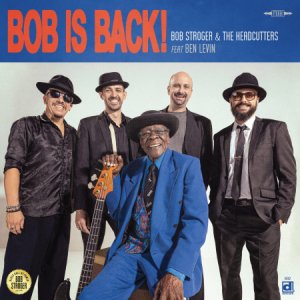 Bob Stroger & The Headcutters – Bob Is Back! Bob Stroger & The Headcutters – Bob Is Back!
Delmark Records
www.delmark.com
12 tracks – 45 minutes
Bob Stroger was born in Hayti, Missouri on December 27, 1930. The 94-year-old bass player and vocalist keeps on performing with his second solo release on Delmark Records. At 94, he is certainly one of the oldest artists currently still performing surpassing his junior performers Bobby Rush at 91 and Buddy Guy at 89. He started his career as a jazz guitarist using the name Joe Russell first with a family band, The Red Tops, and later as Joe Russell and The Blues Hustlers. He later played with jazz artist Rufus Forman. But he changed his direction to start playing blues with Eddie King and changing his focus to the bass guitar. He has an unrivaled career subsequently playing with many of the blues greats including Otis Rush, Sunnyland Slim, and in the band Mississippi Heat in the late 80’s and 90’s. He was nominated for the Blues Music Award for Best Bass many times and has won three times, most recently at the May 2025 Awards. He was also inducted into the Blues Hall of Fame in 2025.
Bob released his first Delmark album, That’s My Name, in 2019. His band, The Headcutters, are a Brazilian band that backed him on that previous release. They return for this second outing. The band includes Joe Marhofer on harmonica, Ricardo Maca on guitar, Arthur Catuto on bass, and Leandro Cavera on drums with guest Ben Levin on piano and organ on all but one track. Of course, Bob plays the bass and provides the vocals.
Five originals with seven covers kick off with Elmore James’ 1961 “Look Over Yonders Wall” with Ben’s honky-tonk piano, Ricardo’s guitar and Joe’s harmonica establishing the album’s direction with Bob’s strong vocals. Muddy Water’s 1977 “Champagne and Reefer” is next, complementing the first song with another fine, solid blues. The first original, “Jazz Man Blues”, rocks out with Bob noting that “Jazz ain’t nothing but a bluesman blowing his horn” with Ricardo playing some very jazzy riffs, Leandro tossing in a nice drum roll and Ben’s organ underpinning the whole thing.
Tampa Red’s 1940 “Don’t You Lie to Me” is the next cover. Ben’s piano really rocks out on this track. Two more originals follow with “My First Love”, a leisurely stroll in Bob’s history as he sings about his first love when he came to Chicago. He begs to “Loan Me Train Fare”, “but not another dime”. “I’m going away to get you out of my mind”. ” I will pay it back to you when your troubles get like mine”.
Amos Milburn’s 1952 “Thinking and Drinking” is next as Bob also notes he is “thinking about drinking”. Ben’s piano is again a driving force in the song with Ricardo’s guitar rocking it. Another original “Bob Is Back in Town” announces his return to his “pretty baby” and asks her “to do the things we used to do” in a slow blues with Joe’s harp commanding. Candice Ivory and Renee Gros join Bob on vocals on Little Milton’s 1970 “Love You Baby”, which was co-written by Joe Brown.
He briefly announces “Bob Is Back” in a funky original instrumental. Jimmy Roger’s 1973 “Gold Tailed Bird” moves into a very smooth, slow blues burn. Louis Jordan’s 1946 “Let the Good Times Roll” ends the album with a rollicking, party atmosphere.
Bob is still delivering solid old times blues with a stellar band supporting his every direction.
Writer John Sacksteder is a retired civil engineer in Louisville, Kentucky who has a lifelong love of music, particularly the blues. He is currently the Editor of the Kentuckiana Blues Society’s monthly newsletter.
|


Featured Blues Review – 2 of 7
|
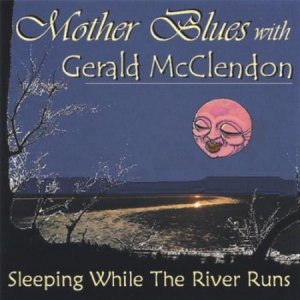 Mother Blues With Gerald McClendon – Sleeping While The River Runs Mother Blues With Gerald McClendon – Sleeping While The River Runs
Sleeping Dog Records -2025
www.sleepingdogrecords.com
17 tracks; 58 minutes
In recent years Gerald McClendon has released a series of well received albums that showcase his voice, that classic blend of gospel, soul and grit that illustrates just why he is dubbed ‘The Soulkeeper’ in Chicago. However, Gerald has been around far longer and here we have a re-release of an album recorded twenty years ago with a band called Mother Blues, an outfit of Chicago veterans put together by guitarist Steve Bramer who had previously worked with Sharon Lewis and, at the time, wanted to write material for a male vocalist. The band is Steve on guitar, Gerald on vocals, Gordon Patriarcha on bass, Gikas Marks and Jim Barklay on drums, Jerry Soto on keys, Steve on harp (credited as Hurtin’ Burt), Baabe Irving on horns and background vocalists Carole Baskin, Lara Jenkins and LaShann McNicholas. Steve is the main songwriter, Gerald chipping in with one of his own songs and an assist on one of Steve’s; on two other songs by Steve there are writing credits to RB Green and J Gritter.
Opener “Pass You By” is, quite simply, superb. Gerald’s anguished vocal is set against churchy organ and a slow, steady backbeat as he sings that “someone’s been stealing all of your time. Right before my eyes, I’m watching dollars turn into dimes”. The tune builds and the choral vocals towards the end give it a final lift. Steve’s guitar is featured on the easy rolling “Smokescreen”, both rhythm fills and a searing solo, before Gerald promises to “Keep You From Harm” on a gentle ballad with delicate guitar work and a softer vocal style. “Leaves Tremble On The Trees” has harp over a jagged riff and lyrics that sound like a bad dream as the narrator finds himself in a broken down car during a flood, even a close encounter with Mary: “I was in the presence of a great and saving grace”. “Going Down For The Last Time” is a soul ballad with the female backing vocals supporting Gerald’s strong lead, one of this reviewer’s favourites here. Gerald then shows his versatility with the uptempo R&B of “Common Ground” and the slow blues of “Bed Down”, both handled really well.
The title cut “Sleeping While The River Runs” is a Southern Soul tune, the backing vocalists again adding considerably to the success of the tune. You can hear the influence of Steve Cropper in the choppy rhythm work here and the song is clearly a perfect fit for Gerald, another keeper. “Come To Me” is a blues with Gerald in the mood for some early morning love and “Thin Line” a warning against taking love for granted. Gerald’s gospel tones suit the lyrical content of “Glory Train” as he and the girls testify: “and when my time has come I’m gonna hop that train and ride”. “Habit Of The Heart” is an uptempo number that precedes Gerald’s composition “Chalk Line”, a song that he had written after hearing Little Milton’s “You’re Gonna Have A Murder On Your Hands”. The horn lines add to the drama of this dark song, with lines like “They put a chalk line around him, now he’s no longer sleeping with my wife” – clearly Gerald is not a man to mess with! Steve gets out his slide for “Walk With Me” and Gerald shows his versatility by delivering the blues with aplomb.
There are also two instrumentals here: “Me & Ian” has elements of jazz and instrumental groups like The Shadows or The Ventures while “Where’s The Fire” is based round Steve’s nagging guitar riff, the rhythm section hurrying along and harp adding to the excitement. The album closes with a short reprise of the title track delivered by The Halsted Street National Uptown Choir over churchy organ.
Anyone who enjoyed Gerald McClendon’s recent albums will find more excellent vocal performances here, all backed by a solid band led by Steve Bramer. All good stuff!
Blues Blast Magazine Senior writer John Mitchell is a blues enthusiast based in the UK who enjoys a wide variety of blues and roots music, especially anything in the ‘soul/blues’ category. Favorites include contemporary artists such as Curtis Salgado, Tad Robinson, Albert Castiglia and Doug Deming and classic artists including Bobby Bland, Howling Wolf and the three ‘Kings’.
|


Featured Blues Review – 3 of 7
|
 Teskey – White Wolf Teskey – White Wolf
Independent
www.teskeyband.com
11 tracks – 67 minutes
Arizona’s Teskey was formed in 2024 with leader Brandon Teskey on guitar and vocals, Matt Baldwin on bass, Peter Murphy on keyboards, and Brandon Gaddy on drums. This is their debut album recorded live in the studio. Brandon cites that some of his favorite albums include Led Zeppelin I, Jimi Hendrix’s Are You Experienced, Cream’s “Disraeli Gears, Stevie Ray Vaughan’s Texas Flood, and The Rolling Stones Let It Bleed, which were all recorded in the studio. They offered a raw sound that provided a group cohesiveness instead of layering the instruments one upon the other. It was this sound that he wanted to recreate for this debut album. The album mixes the varying sounds of rock with some 60’s style psychedelia and even some jazz fusion.
Teskey opens with a powerful blues rocker “Under the Sun” as Brandon’s growling vocals declares “I let the sun go down on my anger…I pray for life, a sense of dawn”. Next, he declares himself a “Cast Aside Child” in a song that brings Alice Cooper to mind as he explains “that’s the legend how to grasp the stars and grow, how to reach the top and make my name glow. Set in something we learned long ago and heard of going to the crossroads long ago”. They move to a slow blues on “Upside Down World” as he says, “I wish I knew what is true, what’s a lie, the truth might kill me but not knowing will make me lose my mind”.
Brandon wrote the pleading “Don’t Take My Angel” with his wife in mind who at that time was fighting cancer. They move back to acoustic blues with “Lemon Tree” as he sings “my baby don’t want to go to sleep, wants to stay up all night long… baby loves my lemons, wants to climb my tree”. The title song kicks back into blues rock as declares “the white wolf is stalking me” and lets his guitar fly in an extended solo.
“Digital Window” is a funky instrumental with a touch of jazz, allowing Brandon Gaddy’s drums and Matt Baldwin’s bass to have a run of their own. An initially acoustic and somewhat folky “Beneath the Tupelo” slips into electric mode as he notes “she walks with me on the edge” and warns “Don’t seek out monsters or sometimes monsters will be”.
“Shadow Side” opens with a group chant and growl before shifting into a hard rock mode citing “When the devil came knocking, you opened your door, let him play, had his way with you… down to the Gates of Hell”. On another acoustic song, “Redemption Blues” he asks her “to open your eyes like you did long ago”. On the closer, he states, “I want to “Make the World Sing” and further notes ” I want to give you hope, I wanna make you true love to feel”. The song is anthemic and offers perhaps a feel of Led Zeppelin in its symphonic approach.
Teskey offers excellent electric and acoustic guitar with a soulful, whiskey- tinged voice that seems perfectly suited to the songs, which move easily between a harder blues rock to solid blues and frequently into points in-between and maybe sometimes far afield.
Writer John Sacksteder is a retired civil engineer in Louisville, Kentucky who has a lifelong love of music, particularly the blues. He is currently the Editor of the Kentuckiana Blues Society’s monthly newsletter.
|


Featured Blues Review – 4 of 7
|
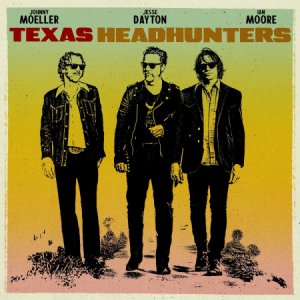 Texas Headhunters – Texas Headhunters Texas Headhunters – Texas Headhunters
Blu Elan Records
www.txhh.live
12 songs – 41 minutes
Amongst guitar enthusiasts, there has been a fair amount of excitement over the last few months about the forthcoming debut album from the Texas Headhunters, featuring Ian Moore, Johnny Moeller and Jesse Dayton, three of the Lone Star State’s most highly-respected plank spankers. Well, the album has now landed, and the good news is that the anticipation was entirely justified. As one might expect, this self-titled album features plenty of powerful, angular guitar playing. Even better, the songs are top notch too.
Moore, Moeller and Dayton are amongst the last generation of musicians taken under the wing of the late, great Clifford Antone. As a result, they know both how to lay down blazing solos, but also how to play to the song. Aided by Jay Moeller and Nico Leophonte on drums and Anthony Farrell on bass, the trio cut the record over five days at Willie Nelson’s Pedernales Studio in Spicewood, Texas, and the result is a blazing, groove-filled roadhouse delight.
Each musician contributed songs to Texas Headhunters in addition to producing it with Steve Chadie. The album opens with Moore’s raucous John Lee Hooker-inspired “Pocket” before they raise the tempo and the temperature with Dayton’s ZZ Top-influenced “Maggie Went Back To Mineola”, which even contains a classic Gibbons-esque key change for the guitar solo. “Everybody Loves You (When You’re Down)” has hints of a SRV shuffle in the verse, but so much else going on that it is both completely Texan and yet completely new. On each track, the guitars intertwine beautifully, but the musicians never tread on each other’s musical toes. On the rocky ballad, “Kathleen”, it is probably Moore’s aching vocals that seize the attention, while on Moeller’s entertaining shuffle, “Fool, Don’t Play With Fire”, the interaction between the guitars is a definitely a highlight.
Each player has a distinctive, individual guitar style, albeit one baked in the Texan sun, and different yet complementary vocal styles. There is also a joyous abandon to many of the tracks, reflecting both the long-term friendships and the abiding mutual respect between the men. There is real wit as well as deep musical sensibility in the structure of the songs, particularly on the nearly-instrumental “Headhunters’ Theme” and entirely instrumental “Burnin’ Daylight”, which closes a hugely impressive album.
Elsewhere, “Gun Barrel Boogie” has an irresistible slide guitar riff, while “Independence Day” is blues-rock at its finest. “Seeing Around Corners” nods towards Guitar Slim (a rare non-Texan influence on this release) with some of the finest guitar playing and singing on the record. Moore’s “Who Will Your Next Love Be?” takes the band in more of a soul direction, while Moeller’s “Gimme Some Love” blends blues, soul and rock into a single track.
The Texas Headhunters may be a side project for three highly in-demand musicians but, on the evidence of this album, one has to hope there is more to come. Texas Headhunters is a love letter to Texas and the musicians who inspired the band. It is also a simply fabulous album in its own right. Gritty, dirty, muscular and quite superb.
Reviewer Rhys “Lightnin'” Williams plays guitar in a blues band based in Cambridge, England. He also has a day gig as a lawyer.
|


Featured Interview – Eric Johanson
|
 Hard rock and heavy metal might seem like genres far removed from the blues, but they actually share some deeply rooted links. Legendary blues guitarists, such as Robert Johnson, Muddy Water and BB King influenced rock and metal guitarists with their innovative bending of strings, vibrato and use of the slide, and the blues themes of persevering over periods of heartache and struggle influenced the lyrics of rock and metal too. Therefore, it’s not surprising to learn that groups such as Black Sabbath, Judas Priest and Deep Purple actually began as blues bands. Hard rock and heavy metal might seem like genres far removed from the blues, but they actually share some deeply rooted links. Legendary blues guitarists, such as Robert Johnson, Muddy Water and BB King influenced rock and metal guitarists with their innovative bending of strings, vibrato and use of the slide, and the blues themes of persevering over periods of heartache and struggle influenced the lyrics of rock and metal too. Therefore, it’s not surprising to learn that groups such as Black Sabbath, Judas Priest and Deep Purple actually began as blues bands.
Some of today’s favorite blues artists delved into hard rock and metal before their journey brought them to the blues. Louisiana-born and raised guitarist/singer, Eric Johanson, falls into that category. Eric was born into a musical family in Alexandria, LA, (where his grandparents owned a music store), although he later moved to New Orleans. He started playing guitar at the age of five and was basically self-taught.
“My grandfather and grandmother ran Kelly Ward’s piano and organ store. We had instruments around the house and they both played. I also had an uncle that played bass and another uncle that played guitar. My aunt played bass and piano, and my mom did a little piano and singing, although none of them were full-time musicians. Also, some of our family members were in relationships with musicians, so at Christmas time there were always going to be family jams. As far as lessons, some of my older friends played, so I picked their brains a bit, and I got some books on scales to help me understand how scales fit together, but never properly took lessons. I started learning from records, trying to play with every song on the record.”
“With regard to genres, I was exposed to a lot of different music. My mom had Etta James and BB King and James Brown—lots of soul, funk and blues, and I always liked that stuff. But what grabbed me at first and made me want to get into music was definitely the heavier stuff. Metallica was my favorite band for a time, and then White Zombie. Then I started to get into some instrumental guitar, like Joe Satriani and Steve Vai, and the more I became interested in guitar the more I noticed that players I liked seemed to always reference the blues and how everything they did was started in the blues.”
“So, I got more into the blues, got to play some gigs, and started to get into writing my own music and finding my own voice. Then, I started to veer back toward rock, because it felt like rock was more fitting for my voice and for what I was experiencing at that time, so I had a rock band for a little while. But then I started playing alongside other people, like Cyril Neville, and over time I started to get more comfortable with the idea that my own approach could fit into the blues realm without having to sound like the people I could never sound like. For example, I would listen to Freddie King and think, If I could just sound like that, I would play blues. But I learned to become comfortable in this bluesy space without having to keep it inside a box.”
One aspect of the blues that appears consistently loved by fans is the authenticity and raw emotion that is poured into the songs. That element played a strong role in guiding Eric’s musical journey back to the blues.
“One of the things that kept pulling me back to the blues was that feeling and connection with the emotion that is really amazing with the blues. You’re not playing it the same way each time, you’re saying something different each night. I want to make music that explores what I’m thinking about now—I’m not interested in relying on traditional topics or old-timey language or being a throwback to something. When you’re making music, you want to connect with people in an authentic way, so that has been a goal of mine—to continue to move my feeling for the blues and make sure that’s kept in there, while exploring song territories without putting a limit on it.”
After Katrina hit New Orleans, Eric left Louisiana and lived for a time in New Zealand, which can be somewhat isolating for someone in the music industry.
 “That was really just about exploring life and getting away. I wasn’t thinking about how it would fit with my music career. I was recording and focusing on making music that was not meant to be played live, until I realized I missed playing live improvisational music. I missed playing soulful music live, in a context where people really understand. Coming from New Orleans, it’s so deeply entrenched there that you can take a lot for granted. Like the shared vocabulary. Until you go somewhere else you don’t appreciate how great it is that people can just make music up on the spot and have it sound like some beautiful thing. Just jamming with other people—I missed that, so I ended up coming back and diving right into it. Ultimately the music brought me back to New Orleans.” “That was really just about exploring life and getting away. I wasn’t thinking about how it would fit with my music career. I was recording and focusing on making music that was not meant to be played live, until I realized I missed playing live improvisational music. I missed playing soulful music live, in a context where people really understand. Coming from New Orleans, it’s so deeply entrenched there that you can take a lot for granted. Like the shared vocabulary. Until you go somewhere else you don’t appreciate how great it is that people can just make music up on the spot and have it sound like some beautiful thing. Just jamming with other people—I missed that, so I ended up coming back and diving right into it. Ultimately the music brought me back to New Orleans.”
Eric was drawn particularly to the music of Tab Benoit, and after meeting him, Tab came to appreciate Eric’s talent and often invited Eric to join him on stage. Eric then was invited to join Tab’s record Label, The Whiskey Bayou Label, and later started opening for Tab. (Those who know Tab well know he loves any opportunity to play drums, and Tab started joining Eric, playing drums during the opening set.) Tab later also gave Eric a job as his tour manager, which allowed Eric to make some money, and have a spot on the bus and a hotel room each night.
“I really looked up to what Tab was doing. I didn’t feel like my style was the same as his, but I am a fan of his raw approach and a fan of the power trio and of pouring your heart out and putting 100 percent into it every night. I was very inspired watching him. I kept showing up at his shows and there were a couple of times that I got to jam with him playing drums. He started having me sit in at shows and he finally said, ‘Why don’t you come by and record?’ I went over there and, at first, we just made some sounds and hung out a little bit and made a plan to make the record the next year. After we made the record, (Burn it Down), in 2017, they started floating the idea of me going out and opening for him and we did that for about two years with him playing drums with me. At first there was some push back, because it didn’t seem like a good idea to open for yourself, but somehow it worked.”
Eric noted that, while he didn’t exactly write any songs with Tab, Tab’s influence can be found on every track.
“He brought something to all of the tracks, especially “Graveyard Queen”. He really flipped the groove on that one in a way that it’s hard to imagine it any other way now. When I got there to record, I thought we should hash out song ideas, but he was ready to just push the record button and see what happened. That was cool and it definitely forced me to not think about whether something was ready. I thought, ‘I guess it’s ready because we’re recording’. There was none of thinking that you could have ten or twenty takes, like some people do. And I’ve stuck pretty much with that way of doing it, just recording it live, otherwise you can get in your head too much, and you want to stay in the inspired moment.”
In 2019, Nola Blue Records issued a duet album pairing Eric with his cousin, Tiffany Pollack, entitled Blues in my Blood. The next year, Eric had just released the Below Sea Level album (produced by Luther Dickinson) when COVID hit, and the gigs slowed down to nearly nothing. Like many other musicians, Eric resorted to live streaming some shows during COVID, which led to the release of his interpretations of other people’s music, called Covered Tracks.
Then, in 2023, he released an album on Ruf Records (produced by Jesse Dayton), called The Deep and the Dirty, which debuted at #1 on the Billboard Blues Chart. That album likely contributed to him being named as one of Guitar Player Magazine’s 25 Best New Blues Guitarists, and also likely helped him land a spot in Total Guitar Magazine’s list of 100 Greatest Blues Guitarists of All Time. Eric’s most recent release, Live in Mississippi (2025) earned him a nomination for a Blues Blast Award for best live album.
“After awhile of livestreaming, you start to play some of the same songs and start to get requests. Some fans would be tuning into the live streams and would say that they would like to have some recordings of the stripped-down acoustic songs I was playing, so I released Covered Tracks. Then I released the Live at DBA record. I had wanted to capture the band rocking out and doing what we do in a live setting. Then The Deep and the Dirty came out, so there were new songs that were not on Live at DBA, and we wanted to capture them on a live album, so we recorded Live in Mississippi at Ground Zero in Biloxi. It’s been doing really well. We’ve gotten a lot of good feedback about it, and it’s been a popular seller at the live shows. I guess the live records tend to be of interest to people who come to hear you live.”
 Like many musicians, Eric struggled with some substance abuse issues for a period of time but now has an extended period of sobriety. His music sounds better than ever, and it appears that he is getting some well-deserved recognition for his work. Like many musicians, Eric struggled with some substance abuse issues for a period of time but now has an extended period of sobriety. His music sounds better than ever, and it appears that he is getting some well-deserved recognition for his work.
“It’s been six and a half years since I stopped drinking, and it has given me a lot of focus and motivation. I wouldn’t have any of this going on if it wasn’t for that. For me, playing is more fun this way because playing itself has become the release rather than the release occurring later the show or before the show. The show itself is the payoff of doing all of this. I remember shortly after I stopped drinking, I realized I was selling way more merchandise and CDs than I ever had before. I could see the response was different and I was clearly connecting with people more than I was before. But, at the same time, I’m really of the mindset of whatever works for others. I have no problem being around people who are partying. I enjoy being a good time for other people and I love looking out and seeing people having a good time. I always want to encourage people to feel comfortable having a good time around me, and it doesn’t bother me at all if they are drinking.”
Eric doesn’t have a single most-requested song but always appreciates it when audiences seem to know his work and request any of his originals. One of the most cathartic compositions came when he penned “Familiar Sound”. The lyrics note: “I cross the ocean. Tried to lay my troubles down Into the sea. But they follow me right in the town. I heard that voice from the shadows. It was an old familiar sound.” The composition, “She is the Song,” was also particularly meaningful for him. And he has now gained confidence that his unique blend of blues and rock is well-accepted by audiences.
“’Familiar Sound’ is about how many times you can be trying to change the situation or the surroundings, when what you’re really needing to change is something more within yourself. I think that one gets across something that has been a big issue for me—realizing the negative things you’re telling yourself are not the truth—they’re just a sound that’s popping up in your head. And ‘She is the Song’ is an expression of how hard it is to capture some things in a song, when the thing you are trying to capture is always greater than the song. I am becoming more comfortable with my own brand of American roots music that incorporates rock & roll and blues and funk and I’m having a little more faith that the audience get it, and they’re not going to be saying ‘that’s not blues’ or ‘that’s not New Orleans music’. I’ve become more comfortable that even though I rarely play a traditional blues song, the emotional center is still going to resonate with people without it needing to be in a particular box.”
Eric has been touring extensively both in the US and in Europe. He recently played Poland and has festivals in Romania and Belgium coming up in the near future, as well as many venues across Europe. He was asked what was left on his ‘bucket list’ of musical goals that he hoped to accomplish.
“I’d love to play with Warren Haynes. I’ve been a fan for such a long time and he’s always been such a nice guy. I’ve run into him several times over the years but haven’t yet had the chance to jam with him. I’d also love to jam with Derek Trucks and would like to get to jam more often with Luther Dickinson. There are so many, but those would definitely be high on my list.”
We can only hope that we are in the audience when Eric Johanson gets the chance for any of those desired collaborations. You can learn more about this extremely talented singer/songwriter/guitarist, and you can find out where his tour is taking him next, by going to www.ericjohanson.com.
Writer Anita Schlank lives in Virginia, and is on the Board of Directors for the River City Blues Society. She has been a fan of the blues since the 1980s. She and Tab Benoit co-authored the book “Blues Therapy,” with all proceeds from sales going to the HART Fund.
|


Featured Blues Review – 5 of 7
|
 Lars Kutschke – Brașov Tales Lars Kutschke – Brașov Tales
Timezone Records – 2025
www.larskutschke.com
5 tracks; 25 minutes
With Brașov Tales (2025), Lars Kutschke, a premier European blues guitarist and composer, offers an eclectic, genre-blurring exploration of American music rooted in jazz, blues, funk, and rock, but with a polished, modern sensibility. The five track instrumental release follows Kutschke’s 2022 solo LP release While We’re Here.
Across the album, Kutschke weaves jazz-inspired improvisation and ambient textures with danceable, high groove energy, with parallels to funk and soul acts like Stevie Wonder and the Meters. Guitar work shifts from fluidly tender, melodic introspection to fiery blues-rock displays of virtuosity.
The album balances spacious, atmospheric passages with explosive bursts of rhythm and melody. Instrumentation is layered and polished, with contributions from saxophone, bass, keys, and rums, giving the music a rich, tapestry-like feel – sometimes hypnotic and ambient, sometimes primal and ecstatic.
“Ada In an Uber” opens the album with soft ambient tones and jazzy notes, with electronic instruments and drums. Guitar improvisations and flighty, spacious notes follow and subtle blues notes. The track has an almost yacht-rock like polish, like Steely Dan. The tune is a sonic journey – it feels like going out to the desert and finding a part of yourself you hadn’t yet discovered. Melodic, rolling keys are played by Till Sahm, stretching out the song on a musical tapestry, like a more jazzlike “Jessica” by the Allman Brothers.
One of the best tracks on the EP, “King City”, is a polished musical tapestry dipping into jazz and blues. Jarring, retro sounds open up into a high tempo groove, like an upbeat Stevie Wonder song. The band jams out, and Tom Götze provides a gnarly bass groove while Michal Skulski offers sharp, howling tenor saxophone. The dance number employs fervent, enraptured rhythm – wild and swinging, but controlled music.
The closing track, “Nicu”, drifts towards a quieter, calmer power. Gentle, tender guitar picking from Kutschke kicks it off, and Till Sahm delivers a funky, soulful piano line, with pleasant resonance. It is delicate and expressive, like a haiku of sound.
“Hardly Ever” employs a funky bass intro, an infectious groove that infects the entire song with hypnotic rhythm. The track evokes the Red Hot Chilli Peppers at their funkiest and The Meters, with an off-beat cohesion and an unrelenting energy. The track also slides into spacious, airy territory, meandering like a windy country road.
Bluesy guitar opens up “Green Hill View”, a song with soft, intimate chord progressions and tender guitar playing by Kutschke that build to faster and tenser moments of heavier rock and blues. A fundamental contrast develops as Kutschke wields a fireworks display of guitar prowess.
One can only imagine the emotional resonance these songs might achieve with lyrics to match their depth. Even without them, Kutschke and his studio band shine as vital, energetic performers, captured live in a single day’s session. Brașov Tales offers an eclectic approach to blues, jazz, rock, and funk both polished and energetic.
Writer Jack Austin, also known by his radio DJ name, Electric Chicken (y Pollo Electrico en Espanol), is a vinyl collector, music journalist, and musician originally from Pittsburgh.
|


Featured Blues Review – 6 of 7
|
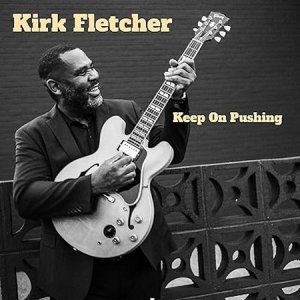 Kirk Fletcher – Keep On Pushing Kirk Fletcher – Keep On Pushing
VizzTone Label Group – 2025
www.kirkfletcherband.com
10 tracks; 44 minutes
The fact that Kirk Fletcher has recovered from his 2023 stroke and put out an enjoyable new comeback album immediately puts this one in the win column. Keep On Pushing is not a big crossover attempt. It is a blues expert putting out a blues record for blues fans. Seven of the ten tunes are older covers, including songs by Big Bill Broonzy (“Just a Dream”), Arthur Crudup (“I’m Gonna Dig Myself a Hole”), and Percy Mayfield (“Lost Love”).
Fletcher is historically known for his work as a top guitar sideman, but his throwback blues vocals on songs like the first track “It’s Love Baby” are also worth mention. The album picks up the pace on its fourth track with a cover of the 1960 Eddie Bo deep cut “Every Dog Has His Day”, showing off some of the guitar ace’s best chops.
The original instrumental “Croke” is a jumpy, jazzy jam that proves he’s not ready to do what the title says. The title track “Keep On Pushing” seems to be Fletcher’s mantra right now. It’s an original shuffle that serves as another showcase for the leader’s guitar playing, with single note soloing reminiscent of B.B. King.
As the blues often does, the record see-saws between despair and hope. If you’re lonely and want to delve into your midnight depression with a glass of whiskey, then the my-baby-done-left-me laments “Lost Love” and “Here in The Dark” are for you.
The slide guitar on the album-closing, original instrumental “Blues for Robert Nighthawk” echoes the legend himself and puts you in a rocker on the back porch looking out on the fields at twilight. It’s a strong, atmospheric track that sounds like it could have been recorded in Nighthawk’s lifetime (1909-1967). Overall, the record could have benefited from another burner or two, but perhaps they were just going for a mood.
The 49-year-old veteran has already graduated with honors after his stints playing with genre heavyweights The Fabulous Thunderbirds, Joe Bonamassa, Charlie Musselwhite, and Nick Moss and didn’t have much more to prove, but that doesn’t stop him from pushing. This is the eighth solo album for the Bellflower, California native and his first since 2022. JD Simo co-produces with Fletcher and both play guitar, while talented Nashville studio cats fill-out the band: Jason Smay on drums and Ron Eoff on bass.
Fletcher has not yet toured to support the album, but has two European dates booked in the fall. Keep on Pushing is worth a listen and keeps Kirk Fletcher on the global blues map.
Writer Dave Popkin is a Music News Reporter for WBGO FM in Newark/New York. He is a regional judge for The Blues Foundation’s International Blues Challenge and is a singer in the NJ-based band, Porch Rockers.
|


Featured Blues Review – 7 of 7
|
 J. Isaiah Evans & The Boss Tweed – Americana Radio J. Isaiah Evans & The Boss Tweed – Americana Radio
Sunland Sound
www.jisaiahevans.com
10 Tracks – 31 minutes
Dallas Texas’ J. Isaiah Evans has been the front man for the roots rock and roll band The 40 Acre Mule for over a decade. But now he moves into a new direction with an all-new band with a unique trio for a new sound he calls “Garageicana Rock-n-Roll”. Evans was always a fan of Booker T. and The MGs. Evans created his new trio with the idea of having the keyboards front and center. The new band featuring Evans on guitar, keyboardist Matthew Vasquez, and drummer Spud Crowley espouses a line-up more common to jazz trios. But Evans’ idea is to create roots music inspired by acts like Bo Diddley, Chuck Berry and Ike Turner. Evans cites the music as “fueled by American rock & roll and Texan country-boogie”. The band has opened for Alejandro Escovedo and Dave Alvin and The Third Mind.
The band comes out strong with the declaration of “Let’s Rock” as he says he is going “to pick her up, put on these dancing shoes” as the whole band gets things jumping. Next, he says, “I am sorry papa, I thought you understood, your little man’s all grown-up and “Up to No Good”. It started way back when I was in school …breaking every rule”. “Americana Radio” is pure rock and roll as he proclaims “Honky-tonk heroes and juke joint star, still nobody knows who we are, set up a meeting with the A&R man with a better plan, we gotta get you on Americana radio, a little country, a little rock-n-roll really don’t matter long as you got soul”.
“Pullman Porter Blues” slows things down on a roadhouse blues number with Vasquez’s B-3 swirling behind Evan’s prodding guitar as he tells “I came back from California, a guitar and a dream, I tried to go to Texas, but she was through with me”. “Fell into the arms of a voodoo queen, put a spell on me and made my money disappear.” He tells her “I’ve got a secret I’ve been keeping for so long now. I’ve got to tell you, but I don’t know how. The rumors are true, I’ve got “A Thing for You”. “Hat-in-Hand” is a song Evans played in his former band and now updated for the current band formation. He explains, “I thought it would be better if I was not around. Strike up the match and burn this to the ground. Packed up my bags and said I am a new me” “The ring around my finger is like a rope around my neck.”
“The Devil Makes Three (Coche Del Diablo) is a sizzling instrumental. A cover of Mel Mcdaniel’s “Stand Up” first released in 1985 is the sole cover on the album. The song examines all the things that can go wrong in a relationship and asks that you “Stand up if you have ever been there”. “Ruby Anne” is a rocker that brings to mind Little Richard’s “Lucille”. Evans closes the album with “Trouble Bound” as he warns “You better settle down, you know you are trouble bound. Running around the world chasing every kind of girl town to town”.
The band is rooted in present day but brings a reflection of the great music of the past and could probably found a place to occupy in the 1950’s. J. Isaiah Evans guitar keeps things rocking with strong deep vocals that draws you in and with Matthew Vasquez’s B-3 sometimes reminding of Augie Meyer’s organ in the great Texas band Sir Douglas Quintet. Spud Crowley offers a solid beat behind the music that keeps the music raw and gripping. Together they provide a sound that will make an audience get to their feet and shake off their doldrums. This is rock-n-roll revived.
Writer John Sacksteder is a retired civil engineer in Louisville, Kentucky who has a lifelong love of music, particularly the blues. He is currently the Editor of the Kentuckiana Blues Society’s monthly newsletter.
|


© 2025 Blues Blast Magazine 116 Espenscheid Court, Creve Coeur, IL 61610 (309) 267-4425 |


