|
 In a blues world dominated by over-the-top rockers these days, guitarist Jontavious Willis provides a breath of fresh air to blues purists. With a style deeply rooted in acoustic Pre-War and Piedmont traditions, he’s reverentially carrying the styles forward for future generations while adding his own special sauce to the mix. In a blues world dominated by over-the-top rockers these days, guitarist Jontavious Willis provides a breath of fresh air to blues purists. With a style deeply rooted in acoustic Pre-War and Piedmont traditions, he’s reverentially carrying the styles forward for future generations while adding his own special sauce to the mix.
It’s amazing how far he’s come, considering that he’s still in his late 20s – just a year or so older than Christone “Kingfish” Ingram and the growing number of young talents taking over music venues across the U.S. and around the world.
Speak to him – as Blues Blast did recently, and you know instantly that he’s one of the brightest of the rising talents in the industry, a man who’s truly done his homework. But that should come as no surprise because he’s a graduate of Columbus State University in his native West Georgia with a double major in sociology and anthropology as well as an obsession to study the blues, something he’s done since childhood.
Born in Lagrange, Ga. – the town made famous by the Allman Brothers, and raised in Greenville – population 864 – near the Alabama line 20 miles to the west, Jontavious, (Quan to his friends) was always destined for stardom. But his education came first, even after Taj Mahal branded him as his “Wonderboy” and “Wunderkind” after calling him up on stage and trading licks with him on a couple of tunes in 2015.
But Willis has always been a star.
At age three, he was already standing on a chair beside his grandfather, Simon Reeves – a powerful vocalist in his own right, in front of worshippers at Greenville’s Mount Pilgrim Baptist Church and captivating the crowd with his singing.
“That was the first time I ever had an audience and the first time I ever had musicians,” he remembers, “the first time I was rewarded for singing. I pretty much learned everything I know about music in the church…timing…phrasing…how to read the crowd…making ’em feel like they’re part of the performance.”
More fortunate than many of his peers, Willis grew up in the country surrounded by family, and he didn’t want for too much because his father, now retired, was an electronics technician and a guitarist, too. All kinds of music – sacred, secular and even hip-hop — filled the home on a regular basis. “He’s now in his mid-50s and has always been playing good, older music,” he says. “It connected me to so-o-o much stuff all along.”
Around age eight, he started taking trombone lessons, did band a bit and then realized he had a talent at piano, too. With no keyboard at home, though, the lessons became pretty much of a chore, he says, noting: “I was able to play stuff. But having to read music and play at the same time (during the lessons)…it’s kinda like the way I feel about math. History was always my No. 1 subject, and I hate math.”
The lessons stopped after the teacher’s untimely death. But he’s been tinkering with the 88s since acquiring a piano recently with the help of a friend. After an initial struggle, he says, “I sound pretty good at regular blues piano stuff.”
While other kids at the time were digging the Rolling Stones. But even back then, the blues history lessons began with the music of Son House, Willie Brown, Charley Patton, Kokomo Arnold and Big Joe Williams filling his ears.
 Jontavious’ interest in the guitar began at age 12. That’s when he stumbled across a video of Muddy Waters performing “Hoochie Coochie Man.” And it proved to be a life-changer. The experience was riveting…and chockful of the same passion and emotion that he felt in church. “His voice kinda reminded me of my pastor in the way he got that rich tone,” Quon says now. “And after seeing Muddy, I made a conscious decision to play the guitar…to play blues guitar. Jontavious’ interest in the guitar began at age 12. That’s when he stumbled across a video of Muddy Waters performing “Hoochie Coochie Man.” And it proved to be a life-changer. The experience was riveting…and chockful of the same passion and emotion that he felt in church. “His voice kinda reminded me of my pastor in the way he got that rich tone,” Quon says now. “And after seeing Muddy, I made a conscious decision to play the guitar…to play blues guitar.
“Even then, I knew!”
A lifetime of study later, Willis fully understands the connection gospel has to blues, noting: “I think almost every blues musician you find — at least the good ones — is gonna have that black church background because (the music uses) the same vernacular.”
In his eye, he says, there shouldn’t be any moral dilemma about being both devout and playing blues, too. “Sure,” he says, “blues talks about things that aren’t always morally righteous. But they also talk about regular life, and they can be fun and whimsical, too.
“I don’t think of it and slavery. It’s music created by freed slaves…the first ones to have a voice. And everybody that recorded in the ’20s before the Depression, they got paid to record it…between $20 and $50 a song…more than a lot of folks were making all month long.
“Georgia Tom (later the Rev. Thomas A. Dorsey, the undisputed founding father of gospel) started in the church then wrote songs for classic blues ladies before going back to gospel. His song, ‘Tight Like That,’ sold a million copies.”
As a history student, Willis always had a curiosity about the origins of the blues, tracing tunes back to their creators no matter how long the journey or how far back he’s had to go. Always mature for his age – his grandfather lovingly called him “Old Man,” he’s always paid extra-special attention to the sounds and stylings of Piedmont region in which he was raised.
Shortly after discovering Muddy, Willis’ interest in the six-string literally exploded overnight thanks to a casual conversation between a pair of female relatives, which he accidentally overheard from another room. One girl said to the other that she wanted a boy who could play piano. The other said she wanted a guy who could play guitar. She was so emphatic that it only took a heartbeat for him – like other boys have done for ages — to understand the possibilities even at his tender age.
He fooled around with his dad’s axe when his father was out of the house and then, that Christmas, he awoke to find an inexpensive electric guitar — a Fender Squire, a small amp, tuner and instructional book awaiting him under the tree. He hasn’t put down a guitar ever since. And it didn’t take long before he was practicing his craft in public, playing old gospel songs as a guest artist in various churches.
As for the instructional book, well…
“I played the guitar the way I wanted to play it,” he says, “beginning with Hawaiian or square-neck (a style used by dobro players since the ’20s) tunings.”
The first couple of months were difficult. , he adds, noting: “I couldn’t even give you the top fret on the neck.”
 His playing style changed in a big way when he switched to an acoustic, first a rental and then a Kay Old Kraftsman he found at a yard sale. “The acoustic resonated with me more than the electric did,” he says. “My grandmother talked down the guy who was selling it from $150 to $100 and bought it for me. I still carry that guitar everywhere with me today.” His playing style changed in a big way when he switched to an acoustic, first a rental and then a Kay Old Kraftsman he found at a yard sale. “The acoustic resonated with me more than the electric did,” he says. “My grandmother talked down the guy who was selling it from $150 to $100 and bought it for me. I still carry that guitar everywhere with me today.”
By February 2011 and with a set list that usually included the Brother Joe May gospel classic, “Don’t Let the Devil Ride” and Blind Willie Johnson’s “Nobody’s Fault But Mine,” Willis was playing in public, admitting: “I couldn’t even get the guitar strap on my neck ’cause I didn’t know how the shit worked!”
Almost completely self-taught, he admits that he’s always felt that its “silly if somebody tells you how you’re supposed to play your music.”
Big Joe Williams, who’s best known for playing an eight-string guitar, was Willis biggest influence back then. His stylings still surface in his performance today.
“He’d stay almost in the same (open) tuning,” Willis notes, “but he had different tempos in it and different notes he’d emphasize in different songs. I spent the first third of my life playing in various open tunings, and I almost failed guitar class because of it. Me and my homie Jayhawk were the only two black boys in guitar class. My teacher almost failed me. I had a 67 or something like that because I didn’t play in standard tuning. He came back and apologized to me later.”
With the encouragement of his No. 1 and No. 2 fans – his mom and dad, Jontavious started traveling and playing bigger shows just two years after he picked up the instrument. His first paying gig came at the 2012 Black Belt Folk Roots Festival in Eutaw, Ala., a five-hour drive from his home.
“I called and asked if I could play,” he says. Dr. Carol P. Zippert, the promoter and coordinator, told him he could – two songs — but for the exposure, not money. The crowd adored him, however, and Willis was stunned when she handed him $200 as he was getting ready to head home. His dad captured it all on video.
The incident instilled so much confidence in the young man that he was soon calling other folks out of the blue, informing them that he was interested in both the blues and meeting the forebears who made it. In the summer of 2015, he’d hooked himself up with the folks at The Music Maker Foundation, the 501(c)(3) charity that’s spent the past 30 years that’s helped house and feed struggling artists while promoting their music through performances and recordings.
Tim Duffy, who co-founded the organization with wife Denise, invited Willis to come to his headquarters in Hillsborough, N.C., where he’d be able to meet and play with some of his musical heroes.
He made the trip accompanied by his mom, granny and aunt, and he was thrilled to be able to rub shoulders and trade licks with John Dee Holeman — who’s carried forward the Piedmont tradition established by Blind Boy Fuller and others — and Boo Hanks — who began life playing barn dances in rural Virginia in the ’40s. Duffy recorded five tunes, including Willis playing Frankie Lee Sims’ “Lucy Mae Blues,” and then he posted online.
That clip proved to be a life-changer.
Taj saw it and was impressed, realizing instantly that Willis wasn’t playing in standard tuning. “We talked,” Willis remembers, “and he said: ‘I’ve been waitin’ for ya!’”
They met face-to-face at one of Taj’s shows as the year drew to a close. Invited onstage to play a couple of songs, Willis sat at his side, feeling more nervous than he’d ever felt in his life. But his fretwork and demeanor were so exceptional that the master immediately stating: “That’s my Wonderboy, the Wunderkind!”
 Any anxiousness that Willis felt was fleeting though. He’s never gotten jitters about any performance since, he says, including the festival bookings that soon followed. Any anxiousness that Willis felt was fleeting though. He’s never gotten jitters about any performance since, he says, including the festival bookings that soon followed.
A star-in-the-making, his first CD, Blue Metamorphosis, went on to earn honors at the International Blues Challenge after its release, receiving the trophy for best self-produced album of the year. It was such a stunner that Paul Oscher – who played harmonica with Muddy in the ’70s before a masterful career as an Otis Spann-trained keyboard player and Waters-trained guitarist, too — stated: “When I heard him play, I said to myself: ‘This is how the blues, as I know it, is going to stay alive!’”
But the best was yet to come.
In 2017, Taj and Keb’ released TajMo, eventually winning a Grammy for contemporary blues album of the year. And after its release, Taj phoned with instructions: “Keb’ Mo’ will be calling. Make sure you answer it!’”
Before he knew what was happening, Keb’ had invited him to New York to serve as the opening act for two shows the duo scheduled to promote the record. Two shows turned into a week, which turned into a 30-show tour lasting two months. Overnight, Jontavious went from small clubs to playing to packed houses numbering in the thousands. And making it even more special, the youngster was on board the tour bus, soaking up the blues 24 hours a day, as the two masters crisscrossed the country, beginning with a concert at Piedmont Park in Atlanta.
Taj and Keb’ were ready to lend helping hands when Willis was ready to record his second album, serving in the roles of executive producer and producer. Keb’s fretwork graces the CD, Spectacular Class, in a support capacity. Not only was it his first time inside a real recording studio, it was an all-original set delivered in full-band arrangements instead of going solo. And some of the tunes were written on the fly like they were in the early years of the blues, too.
Released in 2019, it went on to earn a 2023 nomination for traditional blues album of the year. Willis was in New York the day the nominations came out, and Kingfish awoke him with a call at nine in the morning to tell him the good news. Not only was Willis nominated, but Ingram proudly announced that he’d been nominated in another category, too. Facing a long drive to Maine for his next gig, Willis informed his parents before hitting the road, and the two guitarists shared a table at the ceremonies, happy and satisfied to be there even though neither of them won.
His relationship with other like minded musicians is special – and a throwback to way things used to be in the the blues. Created in the Delta and spread to the world, in the early days through the ’70s, the blues community was always a society in which everyone nurtured each other through thick and thin, Willis notes. But the comradery and mutual support, to a large extent, has faded with time and the passing of the older generations. The support Taj and Keb’ have provided are an echo of the past, but he’s doing his best to return the community to those positive ways.
“This is how it used to be,” he insists, “the elders ushering in the new generation…Big Bill Broonzy helping Muddy who helped Chuck Berry and so forth. That’s how it’s supposed to be.”
A firm believer in networking, Willis has worked diligently to build a new social network in the blues, a group that includes Kingfish, Marquise Knox and several other young talents. His core group also includes the talented Sean “Mack” McDonald, a fellow Georgian, and Jerron “Blind Boy” Paxton, a Californian, too. During the pandemic, the musicians kept themselves busy — kept fans entertained – by posting different versions of tunes by Robert Johnson and other on YouTube for the world to see.
“I messaged them and said: ‘Hey, we gotta do something together,’” he says. “I told ’em: ‘Marquise, you play the blues from the ’40s to the ’80s, and Kingfish, bro, you play the blues from the ’80s ’til now. We’ve got a hundred or so years of blues!’
 “I didn’t look at it as a competition because the music was gonna speak for itself. If you’re really trying to uphold the music, I’m 100 percent behind you and will do what I can to help. We need more people that are deep into it. It’s a serious thing. You hear the old guys’ stories and some of ’em was real, real close. They made personal music that didn’t sound like background noise. “I didn’t look at it as a competition because the music was gonna speak for itself. If you’re really trying to uphold the music, I’m 100 percent behind you and will do what I can to help. We need more people that are deep into it. It’s a serious thing. You hear the old guys’ stories and some of ’em was real, real close. They made personal music that didn’t sound like background noise.
“Muddy Waters, Little Walter and Otis Spann lived together. You should be able to go to somebody’s house, to get a good meal, stay a night or two…somebody loan you some money…it’s supposed to be a network amongst us. It ain’t about who’s got the most gigs or the most notoriety.
“If you’re hungry and got the drive, I’m gonna show you stuff. If you’re trying to get down to the bottom of the blues, man, I’m all for it. But if you’re using blues as a scapegoat to play rock and all that other stuff, I don’t feel like you need to know anything.
“We’ve split the blues in so many ways, and the definitions we put on it… ‘contemporary’ for me is not a synonym for rock because it don’t make no sense. ‘Contemporary’ is happening now. Technically, I can be contemporary and traditional at the same time. It’s a living thing, incorporating lyrics that are socially relevant to today but musically part of the old tradition.”
The one thing that the purists forget today is that many of the old-timers we think of as “traditional” were rules breakers themselves, Willis insists. In reality, they played and sang in non-traditional ways with different tunings, delivery and song stylings. The confusion exists, he notes, because the entire ball game changed after the British Invasion in the ’60s.
“I understand that it’s a money game and that a lot of the demographic that listen to blues music came because of the British invasion, I’m proud to say I don’t listen to that stuff. I’m not saying it’s bad, but the Stones and others put the spotlight on the artist, not the culture. What ended up happening was that ticket prices started going up, the shows started moving downtown and the demographics of the music changed with rock and other genres of music, not just blues.”
“If the British Invasion wouldn’t have happened, either the blues would have died or would have become so concentrated,” he admits. “But if you go to any black church in the United States, you’re hear some blues licks. That’s the way the musicians separate their traditional gospel from the contemporary gospel.”
“If you listen to contemporary blues from Mississippi, they’re playing contemporary gospel on top…not traditional gospel, which would sound like Muddy Waters or Howlin’ Wolf, Mahalia Jackson or Sister Rosetta Tharpe. Contemporary gospel now goes so easy with soul and contemporary jazz that it kinda makes traditional blues look like it’s a museum piece.”
“But to me, that’s the roots.”
Fans have had a five-year wait, but Willis has finally released a new album. Entitled West Georgia Blues, it’s an all-original, 15-song set that, like his previous CD, honors his roots and more, all the while taking innovative risks in his guitar playing.
Recorded at the legendary Capricorn studios in Macon, he delivers a masterclass in several different traditional blues stylings. While they have an old-timey feel, they’re loaded with contemporary themes, modern lyrics – some serious, some definitely not — that hint of the past and contain items that will leave you chuckling.
“It’s all sorts of different stuff, but the same stuff, too,” he admits, with an interest mix of solo, duo and full-band performances. “I kinda made up my ‘old’ riffs and my ‘old’ lyrics. You’ve got everything on there…a little ragtime, a little kinda like church-inspired a cappella stuff, instrumental, your juke-joint raunchy stuff, the folk stuff…I tried to put everything on there.”
 “And I really tried not to take just a B.B. King or T-Bone Walker lick and say: ‘Hey, this is my song!’ I put some of my own licks in there, my own vocal phrasing. So, you know, just a good benchmark of where I am with my blues and how I feel. It’s my love child!” “And I really tried not to take just a B.B. King or T-Bone Walker lick and say: ‘Hey, this is my song!’ I put some of my own licks in there, my own vocal phrasing. So, you know, just a good benchmark of where I am with my blues and how I feel. It’s my love child!”
Self-produced and, amazingly, financed through crowd-funding without the benefit of a public campaign on social media, he gets helping hands from several of his friends, including Big Jon Atkinson, who recorded, engineered and contributed the guitar parts Jontavious couldn’t.
One of Willis’ favorite tracks in the set is “Ghost Woman,” a haunting number in which he finds himself on his knees in front of a gravedigger, sweetly pleading to “give back my rider (an old-time reference to a woman), please.” His solo fretwork belies the solemness of the situation as he wonders why his lady failed to explain why she had to go and why she won’t come around anymore.
There’s plenty of upbeat messages, too, like the full-band, soul-infused pleaser, “Leave Your Worries on the Dance Floor,” which tells ladies not to fret over troubles with the kids and encourages men who’ve lost their jobs that better ones await ahead.
“Those are my top two,” Willis says. “And then there’s ‘Time Brings About a Change,’ which I play by myself. It’s got a cool riff in it and some cool words, too.
“I’m really proud of my writing. Like my grandfather before he got dementia and my uncles who always had an interesting way of saying things and always had a joke, the phrases just keep rolling outta my head!
“There’s a lot of people I admire as artists that have other folks writing for ’em, too, and the songs don’t sound like them,” he says, chuckling as he adds: “Tell ’em I’ll do the writing — and produce it!”
There’s one kind favor Willis asks of folks reading this: Turn back the clock for an hour or two and give a good listen to the music played by the men and women who first set the blues in motion by recording in the ’20s.- “We’re coming up on the centennial celebration of a lot of these old blues songs,” he says, “and I want people to hear the effort put into it and how much those people cared about and nurtured it.”
What they did was amazing when you consider the times and they recorded everything in one take into conical horns that collected soundwaves and transferred them through a diaphragm connecting to a stylus, which cut the grooves into an unchangeable cylinder or disc.
Blues was great then and it is now with the emergence of so much young talent, he insists.
“It’s not the future of the blues. It’s now – and happening in real time!” Give ’em a listen, too.
Check out Jontavious’ music and where he’ll be playing next by visiting his website: www.jontaviouswillis.com.
Read Mark Thompson’s 2020 interview with Jontavious – https://www.bluesblastmagazine.com/featured-interview-jontavious-willis
Blues Blast Magazine Senior writer Marty Gunther has lived a blessed life. Now based out of Mason, Ohio, his first experience with live music came at the feet of the first generation of blues legends at the Newport Folk Festivals in the 1960s. A former member of the Chicago blues community, he’s a professional journalist and blues harmonica player who co-founded the Nucklebusters, one of the hardest working bands in South Florida.
|


 Misty Blues – I’m Too Old For Games – A Live Tribute to Odetta
 Jontavious Willis – West Georgia Blues
 Layla Zoe – Into the Blue – Live in Concert
 JD Simo & Luther Dickinson – Do The Rump!

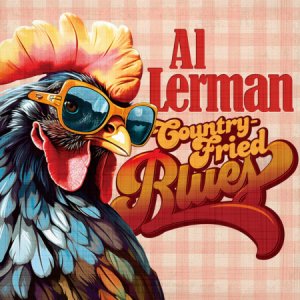 Al Lerman – Country-Fried Blues

