|

Cover photo © 2026 Laura Carbone
In This Issue
Dave Popkin has our feature interview with Joanna Connor. We have ten Blues reviews for you this week including a Dick Spottswood book about Ma Rainey plus new music from King Leo & Son, Steve Howell, Dan Sumner & Jason Weinheimer, JD Harmo, Miko Marks, Derrick Procell, AG Weinberger, Jad Tariq, Ali Handal, and Gyasi. Scroll down and check it out!

Featured Blues Review – 1 of 10
|
 King Leo & Son – Presenting King Leo & Son
Self-Released
www.kingleo.com
10 tracks/28 minutes
King Leo is Leo LaDell who spent decades performing, touring and recording solo and with a band in the U.S. and Australasia. He’s opened for luminaries like Pinetop Perkins and Bo Diddley. Here Leo joins up with his son Oscar, who now lives in Melbourne, Australia; the two turn in some superb performances.
The LaDell home of reference is now Ŏteoti/Dunedin, Aotearea in New Zealand. The two reunite periodically to perform and have time as a family. Last Winter, Leo and Oscar went into Surgery studios in nearby Wellington/Pŏneke and laid down ten tracks live to tape. The result is this CD.
Leo plays harp and sings while Oscar handles the guitar. Leo’s vocals are outstanding, strident and moving. His harp is poignant. Oscar’s guitar is offered up with a controlled restraint that sneaks up on the listener and winds up bowling you over. They say to listen loud and in stereo and those are not bad recommendations.
“Run Run Run” opens the album. Leo sings and blows some slick harp while Oscar picks out some nice stuff on guitar. Leo’s vocals are quite good and grab at the listener. This is a well-done original cut written by Leo. Howling Wolf’s “Smokestack Lightning” is delivered with a very slow pacing in a gripping fashion and was transformed well by the duo. Leo’s vocals are great, his harp is sublime and the guitar accompaniment is subdued but very cool. Gritty stuff; I liked it a lot.
“Nothing You Can Do” features harp that reaches out and pokes at you to make you notice. Leo sings with passion and Oscar continues to impress with his sensitive yet poignant playing. Leo penned this and the next two cuts and they are pretty darn good. “All Along” follows, a slow bluesy ballad filled with passion. The thoughtful guitar licks and vocals set a soulfully somber mood as Leo tells us how he and his are always together even when they are apart.
Next up is “Hands of a Maker,” a bouncy and spirited little number giving good advice on how to go through life. Leo sings and plays with authority as Oscar lays out a steady groove. “Gather You In” d features some tasty harp soloing with excellent, laid-back guitar accompaniment. Leo sings with confidence as he and his son play off each other.
Oscar wrote “Down on my Knees,” a deep, slow blues with lots and lots of grit and emotion. Leo howls out the lead and Oscar plays some excellent stuff to compliment the performance. It’s stark and minimalistic and also quite well done. I loved the cut. Little Walter’s “Tell Me Mama” is a fun song offered up in quite a different style than the original. Jacobs recorded this in a swinging and jumping style and the LaDell’s make it their own by delivering it with a bouncy, front porch blues sort of delivery and it works well.
Up next we have “You or None,” a 1955 Bobby Bland ballad that Oscar accompanies with restrained electric guitar as his Dad sings emotively. The thoughtfulness of Oscar’s picking is truly intriguing and cool as it can impress without being in your face even as he and Leo build the song to a passionate conclusion. They conclude with Muddy Water’s “Country Boy” and here Oscar’s guitar rings brightly as Leo wails on harp and sings with confidence and power. It’s a fantastic rendition of this classic cut. Nice soloing on guitar and harp make this memorable.
This is a great album. I really did not know what to expect and half way through the first song I was sold. This father and son duo are a team. They deliver impassioned original cuts and some well-crafted covers that I truly enjoyed. I highly recommend this album!
Blues Blast Magazine Senior writer Steve Jones is president of the Crossroads Blues Society and is a long standing blues lover. He is a retired Navy commander who served his entire career in nuclear submarines. In addition to working in his civilian career since 1996, he writes for and publishes the bi-monthly newsletter for Crossroads, chairs their music festival and works with their Blues In The Schools program. He resides in Byron, IL.
|

Featured Blues Review – 2 of 10
|
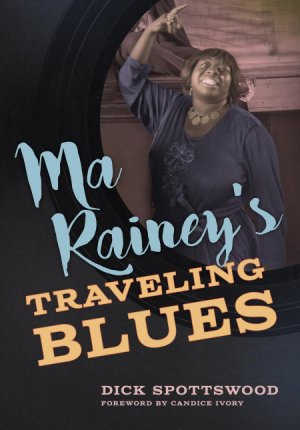 Dick Spottswood – Ma Rainey’s Traveling Blues
University Press of Mississippi
https://www.upress.state.ms.us/
260 pages
There was no one more important in the dawning of the recording industry than Gertrude “Ma” Rainey. Billed as the “Mother of the Blues,” the Alabama-born, Georgia-raised contralto recorded dozens of sides between 1920 and the mid-’30s – many of which on the Paramount label and primarily dealing with love, sexuality and racial oppression — are still being covered often today.
But despite her fame and the fact that she’s been immortalized on stage by the play and movie Ma Rainey’s Black Bottom, her life has remained somewhat of a mystery, including the year and date of her birth. Since her passing from a heart attack in Columbus, Ga., in 1939, there’s only been one previous biography – Sandra R. Lieb’s 1981 book, Mother of the Blues: A Study of Ma Rainey.
But it’s nothing like this highly detailed and scholarly work by Dick Spottswood, the 89-year-old musicologist whose previous major works have dealt with bluegrass, ethnic and folk music while penning liner notes and more for Bear Family, Rounder, Columbia, Arhoolie, Flyright, Yazoo, Biograph and a host of other labels.
With multiple degrees in library science, Spottswood has always been an amazingly detailed researcher. And the words of this heavily illustrated bio run, which actually run only 164 pages. They weave Rainey’s life, career and importance into a tapestry that includes a heavy dose of early blues history and the cultural forces of race, gender and class that made her the person she was.
The author’s research includes information drawn from long-forgotten interviews conducted in her lifetime, contemporary accounts and lyric quotations from Ma’s music, too. He uses the remaining 100-or-so pages to deliver a timeline of Rainey’s life followed by a complete discography of her 78-rpm. records, the lyrics of all of her songs, 20 pages of footnotes and a bibliography of all of his sources.
Following an introduction by 2025 Blues Music Award nominee Candice Ivory, Spottswood paints a portrait of the multiple challenges she faced as a black, bisexual – she was married, but penned several songs with thinly veiled lyrics about lesbianism — woman having to deal with the entire dynamic of being literally at the birth of the recording industry while being an outcast in society.
Despite Wikipedia listing her birth in 1886, Spottswood cities a 1900 census report that shows that Gertrude Pridgett came into the world in 1882 in Russell County, Ala. After her family moved to Georgia, she was already singing in the local revue, A Bunch o’ Blackberries, at age 14 before running away to join the vaudeville, tent and variety show circuit as a blues shouter, dancer and comedian who traveled the South. It was while she was in a minstrel troupe owned by Moses Stokes that she met and married Will “Pa” Rainey – her co-star in Stokes’ biggest act — in 1904.
She and Pa moved on to the Rabbit Foot Minstrels, the premiere group at the time, before launching their own touring company, billing themselves as Rainey and Rainey, Assassinators of the Blues and more.
Mamie Smith recorded “Crazy Blues,” the first blues disc, in 1920 and Edith Wilson and Lucille Hegimon followed in ’22, but the whole world changed in ’23 when J. Mayo Williams discovered Rainey and brought her into the Paramount studio in Chicago to lay down “Bo-Weavil Blues,” and seven other sides that would resonate deeply with her audience and forever set the standard for other female vocalists, including protégé Bessie Smith and Memphis Minnie, in the industry to follow.
Rainey recorded more than 100 sides for Paramount in the next five years – 94 of which were released — before the Great Depression brought everything to a halt. A posthumous Grammy Lifetime Achievement winner, she’s in both the Blues and Rock ‘n’ Roll Halls of Fame, and she was immortalized in 1994 with a U.S. commemorative postage stamp. But she’s never previously gotten the exposure she receives in the pages of Ma Rainey’s Traveling Blues.
If you’re looking for an easy-breezy read, you’re out of luck with this book. But if you’re truly interested in the real history of the first generation of blues, it’ll take you in directions you’ve never gone before.
Blues Blast Magazine Senior writer Marty Gunther has lived a blessed life. Now based out of Mason, Ohio, his first experience with live music came at the feet of the first generation of blues legends at the Newport Folk Festivals in the 1960s. A former member of the Chicago blues community, he’s a professional journalist and blues harmonica player who co-founded the Nucklebusters, one of the hardest working bands in South Florida.
|

Featured Blues Review – 3 of 10
|
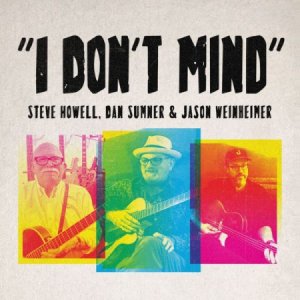 Steve Howell, Dan Sumner & Jason Weinheimer – I Don’t Mind
Out of The Past Music
http://www.stevehowell.ws
12 Tracks – 48 minutes
Steve Howell constantly searches the past for the music he brings to his albums. He is entrenched in the early blues of the twentieth century. Steve was just thirteen years old when he heard Mississippi John Hurt’s finger-picking style of country blues. The music was a revelation that led him on a lifetime search of that early style of music and has resulted in 15 albums of that older music performed in combination with many varied players. While based in East Texas, his music has taken him across America from Oregon to Mississippi and across the ocean to the United Kingdom and Italy in a forty-year journey.
Steve is joined on this album by Dan Sumner and Jason Weinheimer, Dan is a versatile guitarist and producer located in Louisiana. He currently plays with Doug Duffy and Badd and has recorded with and produced numerous local musical acts. He also owns and operates the Forst Sumner Music School. Jason Weinhemer is an accomplished bass guitarist, producer, and songwriter from Little Rock, Arkansas. He has played with Shelby Lynne, Allison Moorer and as part of Steve’s regular quartet, Steve Howell and The Mighty Men.
The album opens with a cover of Louis Jordan’s 1945 hit “Choo Choo Ch Boogie” declaring his love for trains with the refrain “Take me right back to the track, Jack”. In 1971 Dave Von Ronk recorded his version of Erik Fransdsen’s folky “The Fresno Shuffle” that becomes the basis of Steve’s version of the song. He announces that “If it wasn’t for me, she would still be back in Fresno. I made the woman what she is today” as he finds she left him for a “new man that really hurt my pride. He is a windshield wiping wino from the lower east side.” The light jazz “I Don’t Mind” was written by Duke Ellington and Billy Strayhorn in 1944. He sighs “I thought perhaps I could cheat love. maybe break a few hearts and then run. Now that I find that I cannot beat love, I will take the good with the bad, the sweet with the sour.”
Cole Porter’s song “Love for Sale” was a controversial song that came from the 1930 Broadway Play, The New Yorker, which was sung by a prostitute. Steve delivers it with a touch of innocence as he asks, “Who is prepared to pay the price for a trip to paradise. Every love but true love”. W.C. Handy’s classic 1914 song “St. Louis Blues” has been covered by a large array of performers over the years. Connee Boswell, who was a vocalist for The Dorsey Brothers had a hit in 1932 with “Hummin’ to Myself”. He advises, “I’ve got the words. I’ve got the tune. Is anyone listening? I got to know soon or do sit by myself and sing for my health? I can jazz it up or sing it straight, the words and melody are right up to date.”
Jazz piano legend Thelonious Monk in 1947 wrote the song “In Walked Bud” for his friend and fellow pianist Bud Powell, who in 1945 was involved in an incident at the Savoy where police raided the venue and was hauling Monk away for failing to show identification. Bud who was present for the concert interjected and tried to stop the arrest. A policeman struck Bud in the head with his nightstick and left him disabled for the rest of his career. The song tells that story with Steve’s guitar assuming the original piano lead. Duke Ellington’s 1940 instrumental “Never No Lament” was revised with lyrics by Bob Russell in 1942 and became known as “Don’t Get Around Much Anymore”.
Johnny Mandel and Paul Francis Webster wrote “The Love Theme from The Sandpiper”, otherwise known as “The Shadow of Your Smile”. The 1965 movie starred Richard Burton and Elizabeth Taylor. The song won that year’s Grammy Award and the Oscar for Song of the Year and was nominated for the Golden Globe. Tony Bennett then recorded his version of it, and it became a signature song in his repertoire. Steve performs the song as an instrumental, Tommy Dorsey’s 1937 song “Once in a While” hit #1 on the charts. In the soft ballad, Steve asks “Once in a while will you dream of the moments I shared with you. Moments before we two drifted apart” .
Steve gets things swinging with Duke Elligton’s 1932 “It Don’t Mean a Thing (If It Ain’t Got That Swing”)” asking “What good is melody, what good is music if it isn’t possessing something sweet. ” Bing Crosby had an early hit with the 1931 song “Out of Nowhere” which was written by Johnny Green and Edward Heyman for the 1931 comedy -western Dude Ranch. Steve plays it as a quiet instrumental to close the album.
Steve provides another brilliant recital of classic music from the past. While Steve’s voice is slightly world weary, he delivers the intended sentimental journey of the songs with aplomb and his impeccable guitar making for a pleasant easy listening experience for background or dinner music.
Writer John Sacksteder is a retired civil engineer in Louisville, Kentucky who has a lifelong love of music, particularly the blues. He is currently the Editor of the Kentuckiana Blues Society’s monthly newsletter.
|

Featured Blues Review – 4 of 10
|
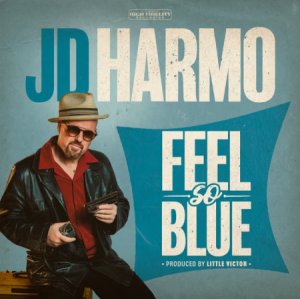 JD Harmo – Feel So Blue
Self-release
https://jdharmo.bandcamp.com/album/feel-so-blue
14 songs – 50 minutes
Singer/harmonica player JD Harmo, the nom de plume of Julien D’Imperio, was born in France but he has spent significant periods of time in both the UK and the USA, developing his musical skills. Now based back in Southwest France, Feel So Blue is his debut release and it’s a joyous celebration of classic early electric blues.
Produced by Little Victor, and recorded at Church Road in Brighton & Hove, England, Feel So Blue was recorded by Paul Pascoe, mixed at Yard Studios in Brighton & Hove by Alex Barron, edited by Paul Magne at T.M.B. Studios in Bordeaux, France and mastered at Black Shack in Calw, Germany by Rawand Baziany. The result is a gloriously warm sound that captures some high class performances. The groove on songs like Lonesome Sundown’s swampy “Leave My Money Alone” is worth the price of admission by itself.
Feel So Blue features performances by some of the finest traditional blues players in Europe and beyond, including Lewis Fielding, Jo’ Buddy, Justin St-Laurent and Rockin’ Johnny Burgin on guitar; Little Victor on guitar and harp Junior Blues on guitar and Hammond Organ; Orlando Shearer on upright and electric bass; Jim Hammond and Thomas Lucas on piano; Jay Raulamo on organ; and Mike “Chilly” Watts, Roy Webber and Nick Simonon on drums.
Harmo is a fine singer and an absolutely top drawer harmonica player, laying down a series of great solos (his playing on Little Walter’s “Blue Light” is absolutely haunting), while also generously sharing the spotlight with the other musicians. The end result makes the listener feel they have stumbled into a smoky Chicago bar in late 50s or early 60s, hearing a crack band at the top of their game.
All 14 songs are covers, but Harmo cleverly avoids the trap of including tracks that have been covered to death already. So we have gems such as Joe Hill Louis’s “Glamour Girl”, which is given a swinging West Coast treatment, Al Smith’s “You Wanna Do Me Wrong” which sounds like an out-take from an early Fabulous Thunderbirds album, and Tarheel Slim’s “Number Nine Train”, played as an early rockabilly track. There are also a couple of better known songs, such as Jimmy Reed’s “Kind Of Lonesome” and “Honey Hush”, together with Little Walter’s “You’re Sweet”. One of the highlights of the album is Johnny Winter’s “That’s What Love Does”, played in the style of Lazy Lester with an absolutely off the wall solo from Johnny Burgin.
The overriding feel of Feel So Blue is that Gulf Coast/Chicago blend that the Fabulous Thunderbirds perfected over their first four albums, which should be recommendation enough to check out the album. It’s a belting debut and I look forward to Harmo’s next releases.
Reviewer Rhys “Lightnin'” Williams plays guitar in a blues band based in Cambridge, England. He also has a day gig as a lawyer.
|

Featured Blues Review – 5 of 10
|
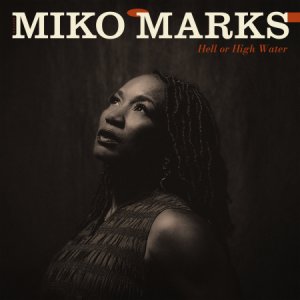 Miko Marks – Hell or High Water
Redtone Records
www.mikomarks.com
10 songs time – 35:46
On Miko Marks’ previous recording she delved into soul, blues, and rock music. Here, her raging vocals pair up with producer and primary instrumentalist Justin Phipps to plumb and reinvent the depths of down home blues with striking authenticity. He handles guitar, dobro, piano, drums, percussion, and bass. The only thing he leaves out is the kitchen sink. Steve Wyreman contributes various instruments as well. Together they pull up familiar pieces and vibes to create something of their own. You can almost swear at times that you are hearing a female blues singer from the past. I can’t say enough about her soulful interpretations of all the songs that she wrote with Justin.
Justin’s driving harmonica is upfront on seven of the ten songs, including the opener, “Ain’t Nobody Gonna Bring Me Down.” Along with his energetic guitar, it propels her powerful vocals forward. “I’m gonna dance for the sunshine, gonna dance for the rain”. The well-worn classic boogie beat and ever-present harmonica and guitar charge right along with her commanding voice on “It’s Alright”. Acoustic guitar, dobro, harmonica, and spare drums take the listener down home to the Delta with “Ease My Mind”.
Now for the ominous portion of the program, sports fans. “Death Rolls Like Thunder” starts out slow, then proceeds to a shuffle layered by slide guitar and harmonica. “It’s a good day to die”. Now a jived-up Delta blues as dobro and harmonica duke it out on “Sweet Mama’s Blues”. “I’ve Got A Feeling” finds Miko in a perfect blues voice (what else is new?) over sweet electric guitar blues notes and tinkling piano.
The death theme is revisited with “Reaper Blues”. “Wake up Bosefa, somebody’s knocking on your door. Well, it might be the Reaper; you better pay what you owe!”. Shuffle drums and crossroads references. The title song “Hell Or High Water” is another high-energy blues with a mojo thrown in for good effect. With only acoustic guitar and her soulful vocal, “Bound To Roam” has a vibe similar to “Motherless Child”. Shuffling drums, dobro, electric guitar, rhythmic harmonica, and piano create a cacophony on the closing song, “Freedom”.
What I have just witnessed here is a realization and presentation of what real blues is. I could go on and on about it, but all the parts fit, from Miko’s expressive and soulful voice to the superb musicianship, the songwriting, and the production values; this is a modern-day blues masterpiece!
Reviewer Greg “Bluesdog” Szalony hails from the New Jersey Delta.
|

Featured Interview – Joanna Connor
|
 Some people can pinpoint the moment that their fuse was lit. For guitarist Joanna Connor, it was seeing Buddy Guy live at a young age. “I’ll never forget it. There’s no doubt in my mind why, that was a mind-blowing experience. Buddy’s never lost steam. He’s out there kicking in an amazing way, but you can only imagine, he was probably in his 30s then and so much fire. Me being ten years old, it was just a monumental experience,” Connor remembered.
Connor played guitar starting at age seven, but the lessons were classical.
“I liked it, but I wasn’t that into it. I loved music, but I was one of those kids, ‘I don’t feel like practicing, this is boring.’ I picked it up again when I was 14.”
Not long after that she moved from Worchester, Massachusetts to Chicago and started rubbing elbows with a who’s who of the blues, becoming a professional musician at age 17. One launching pad for her career was the famed Checkerboard Lounge. Her first gig was with Johnny Littlejohn and she then joined Dion Payton’s band. She got to play with legendary names like Koko Taylor, Hubert Sumlin, Magic Slim, Lonnie Brooks, Pinetop Perkins, Son Seals, Otis Rush, and more. Talk about Blues University.
“When I watched the video (Live at the Checkerboard Lounge, Chicago 1981) like a year ago, I could name all the people, all the regulars. That gives a good inner view of what it was like. It was such an incredible meeting of local, neighborhood people on the southside and then University of Chicago kids every weekend and the way people interacted. Then all the cast of characters of pretty famous musicians and B level musicians too, just hanging out together. You walk-in through the door to the right and under the Old Style sign was a table elevated and all the guys playing cards. And who were the guys? Buddy Guy, Junior Wells, Sammy Lawhorn, etc. Carrying on. They sold half pints of alcohol. It was just an amazing experience all the way around. The music was always top notch. We were like the house band. We’d do our set and then every weekend we’d backup a singer, another guitarist, even comedians at times, and Buddy Guy. It was quite the education. I’ve never been anywhere like that since. It was a special moment in time.”
Connor’s blues career took off in the late 1980s. Chicago was the right place at the right time.
“It was a pretty fast process. The owner of the Kingston Mines, when I was still playing with Dion, he said he wanted me to have my own night. This was 1988. I was like, “Really, I don’t have a band’ and he said, “You have one month. You have every Tuesday.’ That kind of propelled me and pushed me out of the nest. By 1989, Blind Pig (Records), one of the owners lived in Chicago and started coming to my shows. He was like, ‘I would like to offer you a contract.’ I was like, ‘Whoa!’ (laughs). I only wrote two songs, but the rest was stuff we had been doing. We recorded the album (Believe It) in two days. One day was all the tracks and the next day was all the vocals and there it was.”
 Connor then started sharing stages and opening for top blues artists around the world, including B.B. King, Robert Cray, Luther Allison, Etta James, Robben Ford, Jimmy Page, ZZ Top, Joe Cocker, and many others.
Almost 25 years ago, Mark Carpentieri from the blues label M.C. Records came a calling, which started a long and successful affiliation.
“Around 2002, I went back to college. I said, ‘I don’t know about this music thing. I think I’m going to go back and become a teacher.’ Mark called me out of the blue and said, “I’d really like to make a record with you.’ It kind of kicked me in my pants to get me rolling again. I actually left college after about a year and went back to playing full-time. I’ve done quite a few records with him. I did do the record (4801 South Indiana in 2021) with Joe (Bonamassa), for obvious reasons, I think most people would take that opportunity. Then I went with Gulf Coast and I was thinking if Mark would want me back and he was like, “Of course, I would.’ He’s probably been the most open-minded, supportive, positive record person I’ve dealt with. He gives a light hand in the studio. He gives good direction, but he’s not trying to mold you into something or pigeon-hole you into something. He kind of understands what you’re about and says maybe we should try this or that. With the live album, he picked the songs. We did two sets. A lot of them were extremely long. We jammed. He edited some of the solos, because most of the tracks would have been like 15 minutes (laughs). He did a really masterful job of that. The live album, everything else was untouched. It’s been a pleasure to work with him, he’s just a nice guy. Kind of a unicorn in the music business. It’s not an easy business or group of people to deal with sometimes, but he’s a real gem.”
Building on the momentum of 4801 South Indiana hitting #1 on the Billboard Blues Chart, Connor released another strong record, 2024’s Best of Me, on which she leaned into her songwriting even more.
If you listen closely to her newest record, 2026’s Live on 11/11, you might think that Connor has a significant jazz background.
“That’s funny, you’re the first person ever that noticed this, good for you. I’m not a jazz musician per se. To me that’s the ultimate level of musicianship. It’s the final level of accomplishment, as a musician, technically. Your vocabulary is huge. My thought process as I’ve gone along as a player has always been as a jazz musician, that kind of way. I always try to choose players that I really respect and admire that can bring something to the table. I don’t tell people that you have to learn something like so and so played it on the record. I utilize the voicings coming from that individual musician and bring out the best in them or try to. I think that’s my best part of being a band leader. It’s more of an open-ended structure. We’re not going to play everything the same way. There will be certain licks we play. I open with the same song every night, but after that the setlist is all in my brain and we just go for it. It is really kind of a jazz philosophy and some jazz elements in the music improv-wise. I’m taking the blues roots, but I’ve always pushed the envelope with it. I was being true to myself. With Joe, we made a straight-ahead blues album with a little punk feel to it, because of the energy that’s on it. My own stage show is really just about the music, expression, and improv. It is jazz, in a sense.”
 Connor sings and writes and entertains, but at her core, she’s a rippin’ guitar player. Her solos are propulsive. It’s like driving a stick shift, you can feel them go from third, to fourth, to fifth, to overdrive. When she really gets it going, it makes your hair stand on end.
“It’s my inner being or my philosophy. I always feel like I can do better. I’ve gotta push it, I want to express it. I’m always trying to reach that sweet spot in every solo I play and address the song for what it is. One thing Joe Bonamassa said about my playing, ‘She’s more like a player from the 60s or 70s where that freedom is involved.’ Which is a great compliment to me. I think also being a woman guitarist, I always felt like I had to prove more. I wasn’t a chip, but an impetus to come across a powerful or be as good as I could be,” she said. Whatever the motivation, it works.
Connor is known for her slide guitar playing, but she is certainly not one-dimensional.
“On a regular night, I play slide 30 to 40 percent of the time. I think people probably think that’s the strongest thing that I do, which is fine. For me, it’s just another mode of expression. I think someone like Sonny Landreth or Derek Trucks, who spends a majority of their time on slide, they are guitarists don’t get me wrong, but they are slide players. I probably could do it more, but I like to challenge myself. Maybe it’s foolish, but I want to do everything.”
Connor is in the middle of her long annual residency at the famed blues club Kingston Mines, in Chicago. It has provided a safe haven when the road is less appealing.
“What I’ve been doing the last decade is I didn’t tour much in the winter. Once festival season is over, I might push it to November traveling, but I’m not a big fan of traveling in the winter. I respect musicians that do, but I did it for years and I had a couple of really scary moments on the highway. I’m too much of a chicken. Now that I have that open-ended residency, I stick around the city (Chicago) during those months. I always like to work. I don’t know if I want to stay in Chicago forever because the gig is long, but it is a great place to play. The audience is really young and usually very crowded and a lot of energy in the room. I’m very grateful for the ability to be able to work there when I need to work there. I like the kind combination of traveling, staying put, and having time off now and then to get my head together. Back in the day I could never do that, I had to work constantly, raising two kids. It’s nice now and then to take a breather and get refreshed.”
Live at 11/11 is a fun album that blues fans and programmers are catching on to. It opens with The Meters’ “Cissy Strut” and has classics like “Shake Your Money Maker”, “The Sky Is Crying“, “Further On Up The Road”, “I Just Wanna To Make Love To You”, “Can’t Find My Way Home”, and others. Led Zeppelin’s “When The Levee Breaks” closes it out in searing style.
“I’ve gotten the best reaction to any record I’ve ever done with this one. All the blogs, the reviews, comments, they’ve been really outstanding. I feel like it’s the best record I’ve made. I just like all the performances on it, it feels true. My most comfortable spot is being on stage. I’m going to make another studio record, but to me it’s where I do my best work (live).”
 Connor’s Wrecking Crew live band certainly adds to the album. The lineup has been somewhat fluid lately, but there is no shortage of top players in the Windy City.
“My keyboard player is Buddy Guy’s keyboard player/musical director, Dan (Souvigny), my son I call him. I play with him when I can, but I have another keyboard player in town Jeremy who’s also an incredible drummer, who is Shaun Calloway the bass player’s brother. He fills Dan’s shoes well, for sure. Every week he gets better and better. I’ve got a different drummer for now, who’s outstanding, named Ivan Morris. He grew up with all those guys and he is fitting in really well.”
Connor has raised her family in Chicago and lived there for over 40 years.
“It’s a great city in many ways. There’s so much culture. The music scene is still great, even after the pandemic. I still feel like the live music scene, festival scene, neighborhoods, everything is just outstanding still. I don’t think it gets enough notice, in a way. The musicians that come out of here are so great.”
When Joanna plays the local gig at Kingston Mines, there is often a moment during the night that reminds her why she needs to keep doing what she does.
“Sometimes when I have a lot of younger women coming up to me and they’re like, ‘You’re my hero, I want to do what you do.’ That makes me feel wonderful for myself, but great for them that I empower them in a way, even if they’re not musicians. That’s a special moment when I hear that.”
She gets the blues like the rest of us, but generally Joanna Connor is a genial, happy soul just looking to spread some joy in dark times.
“I’m trying to be an optimist. We should embrace as many artists and organically manufactured modes of art, reading, and music that we can to keep the energy balanced in the universe and that’s one way to do it. I know things are tough for everybody. I’m worried about the planet and sometimes think, does this even matter? Try to support your deserving local musicians. Everybody hang in there, we’ll get through this. I guess music is one way. I know when I’m up there playing and we’re doing our thing, everything disappears, so that’s a great therapeutic moment for myself.”
Writer Dave Popkin is a Music News Reporter for WBGO FM in Newark/New York. He is a regional judge for The Blues Foundation’s International Blues Challenge and is a singer in the NJ-based band, Porch Rockers.
|

Featured Blues Review – 6 of 10
|
 Derrick Procell – My Incredible Heart
Catfood Records – 2026
www.derrickprocellmusic.com
11 tracks; 45 minutes
Derrick Procell has been singing and writing songs for forty years but is a late starter in recording under his own name, having only made his debut album in 2016 (reviewed in 5 June 2017 issue). On his third release he again wrote with Terry Abrahamson on seven songs, with label boss Bob Trenchard on three and one is all his own work. The album features his All-Star Mojo Band – Todd Lazer on bass, Rick Vitek on drums, Mitch ‘The Lip’ Goldman on trumpet and Tom Trinka on sax, plus backing singers Meredith Colby, Karla Beard-Leroy and J Hemphill; guitar duties are covered by Dave Steffen, Zoey Witz, Kingston ‘Soul Fingers’ Livingston and Zach Avery and Anne Harris adds violin to one cut. Three songs were recorded live in Crystal Lake, Illinois and feature some personnel changes: Rob Davis on drums, Brother John Kattke on keys, Darren Jay Fallas on guitar and Bongo Mike Orfanos on percussion; the backing singers, horns and bassist Todd staying on board. Throughout the album Derrick handles lead vocals, keys and harmonica.
Derrick is a solid vocalist across all these tunes, clear expression of the lyrics, soulful with a touch of grit. The album opens with “Alabama Bambulance” which celebrates the music of the state, name-checking Muscle Shoals, Wilson Pickett, Little Milton and extracts from several well-known songs. The strong horn arrangements continue with the title track in which Derrick celebrates his own ability to rise above all challenges while “Play My Soul” is pure soul music, Derrick’s organ/piano leading to a rousing chorus with lovely harmonies, a great track. More soulful music on the warm “I’ll Take You Back”, the gentle and supportive lyrics sure to reassure a partner in distress: “I’ll always be here for you, always here to see you through”.
Arguably the best song of all on an impressive collection is “I Was In The Room”, Anne Harris’ violin is an elegant addition whilst lyrically Derrick bears witness to events in US history, including the Civil War and Martin Luther King: “I was in the room when everything went down, I was in the room and I heard every sound”. After that emotional high Derrick ups the tempo with a plea to “Heal Me”, strong guitar featured here, before he observes that “You Could Be Doin’ Better” – if she were to choose him! “All Cried Out” is another great piece of soul music, more harmonies and attractive guitar fills from Dave Steffen: “Feel that sunshine radiating, see the teardrops evaporating, what I’m talking about, you know I’m all cried out”.
“Gettin’ Old” is the first of the three live tracks, a rocking, full band production with amusing lyrics about the ageing process: “From Rolling Stones to kidney stones…gettin’ old is getting old with me”. “Use What U Got (To Do What U Can)” is an elegant mid-tempo tune, as Derrick sings about the way we pay so little attention to veterans who have sacrificed for their country, as well as referencing the ‘No Kings’ movement; a fine horn arrangement, sax solo and choral vocals further enhance the message implied by the title. “Too Much” closes the album with another rocking cut, Derrick bemoaning too much going on in his head, simply “too much of everything”, demonstrating his harp skills on the coda.
Bob Trenchard’s Catfood label has been home for artists like James Armstrong, Zac Harmon, Dave Keller and Johnny Rawls, so is a natural fit for Derrick Procell. This is another terrific album from Derrick and his collaborators, chock full of soulful music and wonderful arrangements, so if your tastes run to the soulful end of the spectrum, check it out as a matter of urgency.
Blues Blast Magazine Senior writer John Mitchell is a blues enthusiast based in the UK who enjoys a wide variety of blues and roots music, especially anything in the ‘soul/blues’ category. Favorites include contemporary artists such as Curtis Salgado, Tad Robinson, Albert Castiglia and Doug Deming and classic artists including Bobby Bland, Howling Wolf and the three ‘Kings’.
|

Featured Blues Review – 7 of 10
|
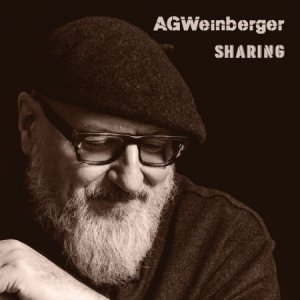 AG Weinberger – Sharing
Bigfoot Records/Universal Music Romania
www.agweinberger.com
12 songs – 50 minutes
A giant of a man at 6-foot-5, AG Weinberger is the most respected blues and jazz guitarist in Romania. And for the past 50 years, his live performances have helped transform the music scene in his formerly Communist homeland, laying the groundwork for a new generation of performers who are enjoying their own artistic freedom as never before.
But AG’s a giant in other ways, too. Not only is he a prolific playwright and author with more than 30 shows produced by four of the largest theater companies in his homeland, but he founded Bucharest’s BlueSylvania Foundation – the nation’s first blues society, and he also serves as vice president of the Romanian Cultural Institute.
A self-described “gringo” because of his mixed minority Jewish, Hungarian and Roma heritage, he’s known as “Romania’s Mr. Blues.” He spent seven years in the U.S., during which he honed his craft. And he celebrates his golden anniversary in showbiz with this deeply thoughtful album, which is a first for him because all nine of his previous recordings were independent productions, and this one was picked up by Universal Music, a major label.
Weinberger sings both lead and backup in English throughout with only the slightest of accents while switching between acoustic, electric and lap steel guitars, delivering a mix of contemporary blues tempered with a little European blues-rock. The album was produced by multi-instrumentalist Kovacs Norbert at Republic Studios in Targo Muras, Romania. He handles keys, bass, baritone and acoustic guitars along with programmed percussion. They’re joined by mandolin player/percussionist Szasz Csaba and Farkas Kovacs Timea, who sings additional backup.
A brief guitar run opens the sprightly original, “Real Love Is Hard to Find,” before AG launches into a complaint about a woman who came on like a roaring fire only to leave him burned and scarred. “Shadows that linger when morning arrives,” he notes, “faded with silence you left in my life. You said forever but meant just for tonight.” It flows into the bittersweet acoustic ballad “The Place to Be,” which finds him returning to his old neighborhood and reliving memories despite being aware that – today – no one remembers him.
The loping rocker “Riders of Fire” is up next with Weinberger traveling from Tokyo through Los Angeles before setting down in Ohio because nothing will ever beat “burning the night like a neon choir” and trading secrets with the “squares” he finds there. He continues his travels in “Every Kind of Pain,” a tender ballad that uses imagery to describe the personal torment one feels as he approaches the end of his life and loved ones are slipping away. The percussive “Blues Is Dead” opens quietly before erupts into a number that praises the music but complains about all the interlopers who are claiming the blues as their own, turning it into something else and taking all the money.
A cover of Randy Newman’s “Short People” brightens the mood as the towering AG delivers a little tongue-in-cheek diatribe against folks who can’t stand and see him eye-to-eye. It gives way to the languorous “Calling Shadows,” which finds the singer living a life that’s “no regret, just gasoline…every promise, every lie left a note in my alibi.” An uncompromising agnostic, Weinberger celebrates his independence from religious dogma in the rocker “Free Forever” before the steady-driving “Money People” lambasts a world dominated by folks who hoard piles of cash and other “empty crowns of vanity.”
Another ballad of remorse, “Waste Your Love” delivers a warning to a lover that the romance is about to end because “your heart beats in rhythm, mine just beats to say goodbye” before AG looks back on his life again in “Soul Rolling Slow.” But this time there’s no sorrow even though he admits that “money runs fast out of my hand…drinking wine with the supreme divine…getting in bed with strangers…just staying free.” The disc closes with an intimate take on Willie Nelson’s early hit, “Crazy.”
This album wouldn’t have existed unless Weinberger’s wife hadn’t prompted AG to make it. And she should be glad she did because he delivered a sugar-sweet treasure.
Blues Blast Magazine Senior writer Marty Gunther has lived a blessed life. Now based out of Mason, Ohio, his first experience with live music came at the feet of the first generation of blues legends at the Newport Folk Festivals in the 1960s. A former member of the Chicago blues community, he’s a professional journalist and blues harmonica player who co-founded the Nucklebusters, one of the hardest working bands in South Florida.
|

Featured Blues Review – 8 of 10
|
 Jad Tariq – Precious Company
Momojo Records
www.jadtariq.com
10 Tracks – 38 minutes
Jad Tariq is originally from Trumbull, Connecticut. He started playing guitar at a young age and by age 12 was already playing in bars and other area venues. At age 18, he moved to Memphis to become totally immersed in the city’s blues music heritage and has become a mainstay in the Memphis music scene. A recognition of his talent led to collaborations with John Nemeth, Tony Holiday, and Charlie Musselwhite. Most recently he was selected to be part of Bob Dylan’s touring band for several dates.
His 2025 debut album garnered him nominations in the Blues Blast Awards for the Sean Costello Rising Star and for the New Artists Debut Recording categories. Jad on vocals and guitar for his second album is joined by Earl Lowe on drums, Matthew Wilson on upright bass and backing vocals, Wyly Bigger on piano and backing vocals, Jon Hay on rhythm guitar and backing vocals, Nick Smothers on tenor and baritone sax, Benton Parker on backing vocals, Marc Franklin on trumpet, and guests Nicholas Karolewicz on upright bass on track 5, and Jacob Huffman on harmonica on track 10.
On the opening song he croons that old “September Moon” will haunt the rest of my days. I will remember November cause that’s when she got away.” Next, he says, “I Want a Mean Woman” which adds some swing with the horns chiming in and a nice piano interlude. “I want a woman who is as mean can be. I am not a jealous man but can’t have her worrying me. I want a woman who always frowns and treats men like clowns. Fellows beware; a sweet girl is a girl you just have to share. Now my old heart is broken, and a sweet girl is all I have to blame.” “Room for Two” is a throwback to a 50’s style of blues with a romantic bent. “I can’t take it anymore. Seems you left me for good this time cause you didn’t leave a thing behind. Now there’s far too much space in this half empty place.”
He moans “Poor Me” but gets things jumping again. “Oh, how I’m suffering. Oh, how you made me cry. I know that time will dry these tears from my eyes.” and further notes that “These women just don’t play fair”. “All I ask is for your “Precious Company” noting that “If they lock me up in jail, I will hang your picture up on the wall. Now I get shivers when you say my name.” “Half Measures” just won’t do when we it comes to loving you. You can take the bread right out my hand if that will keep you from another man”. Nick’s baritone sax keeps a rhythmic beat powering the song with Marc’s trumpet lingering in the background.
“Whiskey, Ain’t but a Dollar” “whiskey they sell it by the swallow. Throw that liquor down the hatch and sit and wait for another batch. You’ll walk in nice and tall but on the way out, you’ll have to crawl. Line them up and we’ll shoot them again.” On “Inflation’s High Blues” he declares he can’t borrow a dollar, can’t even hold a dime. Gas prices are so high, I cannot even afford to drive a mile. They say inflation is high, but they been saying that for a long, long time. Folks have nowhere to stay while some are wearing satin and silk. We got folks living in mansions, others can’t even buy a carton of milk.”
He is “Waitin’ and Wishin” “I count my lucky stars on you. No more dancin’, no more sweet romancin’ since you broke my heart in two. Just waitin and wishin’ for my baby to come back home”. He closes with a note “To My Used to Be” citing “If you ask me how I’m doing, I will say I’m doing fine but don’t ask how I’m feeling, I feel like I’m dying. I wish you had spoke up and told me what was going wrong. I sit here and wait for your call, dear.” Jacob’s harmonica accents his lament.
The overall feel of the album is a throwback to tunes from yesteryear. Jad’s vocals are a soft croon with a laid-back guitar and horns and piano providing a subtle backing with the vocalists humming in the background. The result is very calming all the while mostly focused on the loss of his love and the desire for her return. The only shift from that theme is the more modern concern for inflation.
Writer John Sacksteder is a retired civil engineer in Louisville, Kentucky who has a lifelong love of music, particularly the blues. He is currently the Editor of the Kentuckiana Blues Society’s monthly newsletter.
|
Featured Blues Review – 9 of 10
|
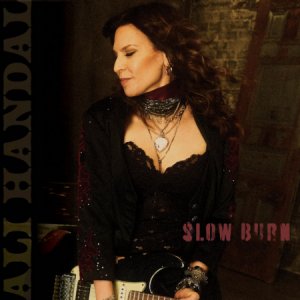 Ali Handal – Slow Burn
Dessert First Records
www.alihandal.com
11 tracks; 40 minutes
According to her website Ali Handal is “a Los Angeles–based guitarist, singer, and songwriter whose music fuses blues-rock grit, bold guitar work, melodic fire, and emotionally honest songwriting”. Slow Burn is her fifth album since her debut release, Dirty Little Secret, in 2000. Again working with four time Grammy winner producer Seth Atkins Horan, Ali wrote nine of the eleven songs, working with several other writers, notably Patricia Bahia who gets credits on four songs; the two covers are both Classic Rock tunes that will be known to all listeners. Ali handles lead vocals and plays guitar throughout and adds keys to six tracks: the rhythm section is Jonathan Flaugher on bass and Jimmy Paxson on drums, with contributions from Nailah Porter (backing vocals), Steve Aguilar (organ) and David Leach (percussion). Additional guests appearing on one track each include Scarlet Rivera on violin, Ben White on bass, Susie Major on B/V’s, Marc Maron on guitar and Chris Pierce and Trent Williamson on harmonica.
Opener “Take Down” is a rocker with wild harp and Ali’s sultry vocals to the fore before Marc Maron trades riffs with Ali on the slow chugging “High Road”, plenty of backing vocals on the chorus and a torrid exchange between the two guitarists in the solo section. “Pour Me Another” finds Ali in predatory mood: “Sorry, I didn’t catch your name, it don’t matter, it’s all the same cause a hottie by any other name is still on fire. I’m in the mood to feast on you – pour me another reason to let myself go wild”: a spiraling guitar solo fits the mood of the song. Aerosmith’s “Walk This Way” was famously covered in the 1990’s by Run DMC and here Ali’s take on the song catches a bit of both the original and the cover, her sultry vocal style again working well on her version. “If I Had Your Life” is a ballad with an acerbic opening line: “If I had your life, I wouldn’t p*ss it away”, but as the song develops Ali states that, in fact, she would still not have the confidence “who am I foolin’”, her elegant solo on the outro underlining the sad nature of the song.
We get back to rock with “Brave” and “Shut Your Mouth And Do Something”, the latter featuring Ali on slide and concluding that “the ones who talk the loudest always have the least to say”. John Lennon’s “Come Together” appeared on Abbey Road; Ali’s cover plays it pretty much like the original, even with distortion on the vocal, and her vocal delivery suits the song rather well. The next song depicts a tragedy in which children die in a house fire, Ali wondering “why, oh why, they say Everything Happens for a reason”. The mood changes again with the acoustic-based “Perennial”, a hopeful song with Scarlet Rivera’s haunting violin: “We don’t have to be young to build a brighter future”. The title cut “Slow Burn” is also a quieter tune with acoustic guitar and follows a similar lyrical theme of keeping going, this time with a relationship.
As may be gathered from this review there is little or no blues in this album, so readers looking for real blues will not be interested in this release; those whose tastes run more to Rock with a few quieter moments may enjoy this one.
Blues Blast Magazine Senior writer John Mitchell is a blues enthusiast based in the UK who enjoys a wide variety of blues and roots music, especially anything in the ‘soul/blues’ category. Favorites include contemporary artists such as Curtis Salgado, Tad Robinson, Albert Castiglia and Doug Deming and classic artists including Bobby Bland, Howling Wolf and the three ‘Kings’.
|
Featured Blues Review – 10 of 10
|
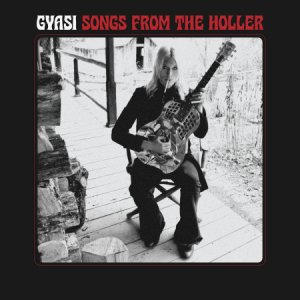 Gyasi – Songs from the Holler
Alive Natural Sound Records
https://gyasimusic.com
16 Track – 43 minutes
Gyasi Heur grew up in a mountain holler in Hinton, West Virginia. His first name is pronounced Jah-see. If you are already familiar with his music or career to present, you will find this album is a big shift from his previous music. Gyasi left the holler and made his way to Nashville where he established himself as a glam rock performer in the style of David Bowie or Marc Bolan. He has released two previous albums with covers that clearly show him in glam rock mode. But he also has received acclaim for his guitar playing with comparisons to Lou Reed. That acclaim led him to be the lead guitarist on Alice Cooper’s 2025 album, The Revenge of Alice Cooper, and is also credited for playing bass and the glockenspiel.
But now set all of that aside. For this album, Gyasi said he wanted to return to the holler and play the music he grew up with. In fact, his early interest in rock & roll led him back to the early blues and folk artists. He cited much of his knowledge of those artists came from his father’s collection of old 78 rpm records. He says these early artists show him a “mysterious beauty that never fades”. He cites his father and his music teachers who played the music for him and taught him to “listen at me, do it.” as his mentors.
He returned to the holler and set up two microphones and recorded live to four track tape. Gyasi plays guitar and sings and is joined by Dylan Whitlow on harmonica and Jimmy Froglegs on percussion. He adds four original songs to a dozen covers.
If you have any doubts about Gyasi’s blues potential, you will be immediately dissuaded from that thought as he quickly establishes himself as a true blues man with a ringing guitar in a solid version of Robert Johnson’s 1936 song. “Preachin'”. He follows that with a jumping version of “Robert “Barebeque Bob” Hicks 1927 song “Motherless Child”. He does an instrumental solo on the traditional “Poor Boy” which was first recorded 1n 1927 by Gus “Banjo Joe” Cannon”.
Leroy Carr’s 1926 song “How Long” is next. The well-known song gets a solid treatment by Gyasi. He moves to one of his originals, “Man from the Mountain”, noting “It takes about a half a mile to get up to the top of my road. You get all the way up there to see me, baby, you will never want to leave. It’s one holler after another. Well, people talk about me. I hear them whisper up and down the town. We do not know much about him, but he sure can make a guitar sound.” And with that proves that he knows and understand s the blues he is playing with a song that stands well beside the established great songs of the past. “Black Dog” is another original as he sings about missing his baby when I’m gone, but “That old black dog and me are riding side by side”.
He moves back to a cover of Lightnin’ Hopkins 1966 “C’mon Baby” and gets things jumping again as he begs her to “C’mon with me. I will make you as happy as any woman can be.” Sleepy John Estes’ 1935 song “Drop Down Mama” noting “Well my mama, she don’t allow me to fool around all night long. Now I may look like I’m crazy, poor John do know right from wrong.” He drops back to another original, “Dance of the Three Rivers”, another rousing instrumental.
He returns to Lightnin’ Hopkins on his 1959 song, “Hello Central”, a song that plays back to the old days when you had to go through a telephone switchboard to contact someone. Bo Carter’s 1931 “Banana in Your Fruit Basket” is a double entendre with an old -timey sound as he says “I have got the washboard, my baby’s got the tub. Gonna put them together, rub, rub, rub. Let me put my banana in your fruit basket and I will be satisfied”. On Blind Blake’s 1929 song “Police Dog” as he declares “All my life, I’ve been a travelin’ man. I stayed alone doin’ the best I can. I met a gal, I couldn’t ger her off my mind. I’m sacred to bother her around her house. She got a police dog cravin’ for a fight. Guess I’ll travel. I guess I’ll let her be before she sics her police dog on me.”
His last original, “Clog Dance”, is another instrumental with a percussive beat like the sound of feet dancing on a wooden floor. He moves back to 1936 again with Robert Johnson’s “Kindhearted Woman” and adds a falsetto pitch to his vocals. He gets things rocking with Dylan’s harmonica joining on JB Lenoir’s 1954 song “Mama Talk to Your Daughter”. It is cited that there is no certainty when Leadbelly’s song, “Sukey Jump” was first recorded, but it first appeared on a record in 1966 on a Smithsonian Folkways Lead Belly Legacy collection. It is another excellent guitar instrumental.
Gyasi establishes himself as an absolute acoustic guitar master moving from finger-picking to slide and everything in between. He clearly shows his love of the music and an understanding of the rich history of the blues. His vocals are also dead on the mark for each of the songs. The songs are in an authentic blues tradition displaying his Appalachian roots. If you love traditional blues, this album should definitely be on your radar.
Writer John Sacksteder is a retired civil engineer in Louisville, Kentucky who has a lifelong love of music, particularly the blues. He is currently the Editor of the Kentuckiana Blues Society’s monthly newsletter.
|

© 2026 Blues Blast Magazine 116 Espenscheid Court, Creve Coeur, IL 61610 (309) 267-4425
|


