|

Cover photo © 2026 Laura Carbone
In This Issue
Mark Thompson has our feature interview with bass playing legend Larry Fulcher. We have ten Blues reviews for you this week including new music from Christopher Wyze & The Tellers, Guitar Shorty, Cedar County Cobras, Antone’s 50th Presents Chicago Bound, Dr. Helander & Third Ward, Gerry Hundt Trio, The Empty Pockets, Terry Haggerty, Trenton Ayers, and BB & The Bullets. Scroll down and check it out!

Featured Blues Review – 1 of 10
|
 Christopher Wyze & The Tellers – Naptown Blues
Big Radio Records
www.christopherwyze.com
11 tracks/ 40 minutes
Scrapper Blackwell and Leroy Carr are two famed bluesmen who first recorded in Indianapolis. Christpher Wyze and The Tellers pay tribute to them on this new, third album. Wyze hails from Southern Indiana and continues his late-bloomed career in the blues. It features ten classic songs and one new contemporary cut inspired by Carr and Blackwell.
Carr and Blackwell both moved to Indiana and when introduced to each other they decided to make some music together. Vocalion Records brought some recording equipment in and in 1928 they laid down some tracks. The two created well between 100 and 200 songs that were recorded between then and 1935. “How Long—How Long Blues” was their big initial hit and was part of the 1928 session in Naptown, the colloquial name the African American community gave to Indy back in the day. Carr’s piano and Blackwell’s guitar made them big stars 100 years ago.
On this recording are Christopher Wyze on vocals and harp and two others from his band The Tellers. John Boyle II does all the guitar work and adds Hammond organ to a cut. Gerry Murphy’s bass is on 8 of the 11 tracks.
“Going Back To Tennessee” opens the album, a 1930 cut the duo recorded in Chicago. Here Wyze’s trio gives us a good rendition at a metered pace with electric guitar and bass accompaniment along with some harp fills. The 1929 title cut follows, also recorded originally in Chicago. Wyze sing emphatically and plays some harp with the band setting the groove and adding a guitar solo to boot.
“How Long—How Long Blues” is a bare bones rendition here with Wyze on vocals and harp and some stripped down acoustic guitar with some overlaid electric guitar licks. Somber and cool, the track is nicely done. “The Truth About the Thing” is next, with some nice acoustic guitar picking. Wyze sings with emotion and adds some harp to this mid-tempo cut, another 1929 Chicago cut from Carr and Blackwell.
”My Own Lonesome Blues” comes from the 1928 recording efforts in Naptown. The acoustic guitar is really well done and Wyze adds some harp soloing to this one, a truly lonesome sounding song. “Midnight Hour Blues” from 1935 is next, another somber and laid back acoustic cut with some organ adding nicely to the mood.
“Kokomo Blues” is another song from the 1928 sessions featuring acoustic guitar and harp. The finger-picking here is the highlight of this cut. “Tired Of Your Low Down Ways” is a later 1928 cut first done in Chicago. To note, the first recorded reference to wearing overalls for Christmas was in this song and later was used in other cuts by Lead Belly and Howling Wolf. It was absent from the Mississippi Sheiks version of “Sittin’ On Top Of the World” but included in a later recorded verse by many others.
The next two tracks are from songs from the Naptown sessions. “You Got to Reap What You Sew” follows, with some haunting electric guitar. Slide guitar is featured on “Prison Bound Blues” with some laid back vocals and a little harp added. It’s a pretty cut.
“Birthday in Jail” concludes the album. Wyze reworked the 1932 “Christmas In Jail-Ain’t That a Pain” into this re-adaptation with some great harp licks and a slow and steady guitar groove. It Is a cool reworking of an old song.
Wyze offers some steady vocals and his harp is well done. The guitar is the standout on each track.
The only disappointing thing for me was there is no piano here on this album. Leroy Carr was a great piano player (who incidentally died at a mere 30 years of age in Indianapolis). However, the album pays a nice homage to the legendary songs he wrote with Blackwell’s assistance.
Blues Blast Magazine Senior writer Steve Jones is president of the Crossroads Blues Society and is a long standing blues lover. He is a retired Navy commander who served his entire career in nuclear submarines. In addition to working in his civilian career since 1996, he writes for and publishes the bi-monthly newsletter for Crossroads, chairs their music festival and works with their Blues In The Schools program. He resides in Byron, IL.
|
Featured Blues Review – 2 of 10
|
 Guitar Shorty – Live, Birmingham, Alabama
Master-Tex Records
www.facebook.com/sam.pemberton.50409
7 tracks/73 minutes
Sam Pemberton played rhythm guitar for Guitar shorty for over 600 shows. He spent 30 hours in the studio massaging and remastering the music contained on this CD. He has captured the essence of Shorty live with this album. It captures the sound and talent of a great bluesman who is in his prime and playing his heart out. If you are a Guitar Shorty fan, this will certainly trip your trigger. It is an outstanding listen that allows you to hear music from a couple of decades ago that is otherwise not available.
You can steam the album HERE
Guitar Shorty was born David William Kearney in Houston, Texas, 92 years ago. He was moved to Kissimmee, Florida, at a very young age and was raised there by his grandmother. Mentored by his uncle Willie Quarterman who hailed from the Mississippi Delta, he developed his unique style listening to the likes of Guitar Slim, T-Bone Walker, B.B. King, John Lee Hooker, and Willie Dixon. His style takes pieces and parts or the Delta, West Coast blues, rock, soul and more all fused together in the raw and powerful music that Shorty delivered to us to savor.
Shorty’s career began in the late 1950’s and 1960’s and was phenomenal. He disappeared from the scene for a while, but his return in the 1990’s for Blacktop Records and and then Alligator Records heralded his talents and fame. He won a pair of Blues Music Awards, first for My Way Or The Highway, an English release, and then with We the People. His storied career ended in 2022 when he departed this existence at age 87. His legacy lives on, and with this release it is embellished even further.
The driving and powerful guitar on the opening cut “We the People” showcases the depth and power of his guitar work. Stratospheric runs and vibrant phrasing give us Shorty at his peak to savor for almost eight minutes. It’s primal and oh-so cool.
Then we get over nine minutes of “Roll Over Baby” to enjoy. A moderately paced mid-tempo song, Shorty takes us to new heights with his licks. It builds and builds in the extensive solo where he gets raunchier and more distorted as he gets further into it, giving the listener something to remember. It’s a primal and totally slick performance that moves from the almost sublime start to a totally wild ride.
Then it’s time for “Jody’s Git Your Girl,” a fifteen and an half minute musical romp as only Shorty can deliver. By the time we get seven minutes in we can forget about vocals. The soulful and wild guitar grows and grows in intensity and distortion. It’s not for the faint of heart. High energy licks abound as Shorty gives it his all.
Up next is the classic “Ain’t Gonna Worry My Life No More.” Slow blues, soulful and passionate give the listener an earful. The piano is pretty and the guitar is delightful. Shorty again builds into a powerful and gutsy slow blues with torrid licks.
We get almost a dozen minutes of “Let Me Love You Baby” next. It starts out slow and soulful, with piano and greasy guitar licks and some moaning and groaning as Shorty’s delightful wails paired with his outstanding guitar give the listener pause. The long solo grows in intensity and leaves the listener wanting even more.
“Hey Joe” follows, and we get to hear it for almost eighteen minutes. Shorty goes off on tangents galore and it’s another exceptional guitar ride to just hang on to and just enjoy. He picks some interesting stuff out first, and then transitions into a more Hendrix-like world with extended fuzz and distortion and other cool effects.
He concludes with “The Star Spangled Banner/The Battle Hymn of the Republic.” He gives us the anthem for the first half of the cut and then transitions into the hymn. It starts out familiarly and then Shorty jazzes up the conclusion with some dirty and distorted stuff to draw the song and album to a close.
Shorty does all the vocals and lead guitar. Pemberton is solid on rhythm guitar and serves as band leader. The bass duties were handled by John Morris. On drums we have Mandriel “Big Driel” Allen. Matt Farrell plays keys. It’s a great set of musicians and they support Shorty well here.
It’s a wild album. Shorty live removes the studio restrictions that never allow the listener to hear Shorty in all his glory. As I noted earlier, this is not an album for those who want complacent music. This is wild and driving stuff that showcase what Guitar Shorty was all about. He improvises and makes his guitar groan and moan and shine brightly as he delivers one superb performance after another.
This is not a 2026 studio quality recording. It’s music that someone got a hold of and made available for the masses. While the dynamics and frequencies get packed into a lesser sound, we still get the impact and power of a man and his instrument doing what he can do as only he can do. If you like Shorty then grab a copy of this. You will not be sorry. The man who became legend shines brightly within the constraints of the recording. As you listen more and more, the flaws fade and you become fully absorbed into the music of David William Kearny, AKA Guitar Shorty.
You can steam the album HERE
Blues Blast Magazine Senior writer Steve Jones is president of the Crossroads Blues Society and is a long standing blues lover. He is a retired Navy commander who served his entire career in nuclear submarines. In addition to working in his civilian career since 1996, he writes for and publishes the bi-monthly newsletter for Crossroads, chairs their music festival and works with their Blues In The Schools program. He resides in Byron, IL.
|
Featured Blues Review – 3 of 10
|
 Cedar County Cobras – Sinners and Saints
Overton Music
www.cedarcountycobras.com
10 Tracks – 33 minutes
The Cedar County Cobras are a traditional blues duo with leaks into Americana. Tom Spielbauer plays slide guitar in the style of Delta blues accompanied by his foot drum with April Dirks on upright bass and mandolin. Tom, who was declared blind in 2005 with advanced macular degeneration at a young age follows in the footsteps of other blind guitarists, such as Blind Willie McTell and Alan Wilson. His ailment forced him to retire from his former occupation of pouring concrete and working construction. In 2022, he won the Iowa Blues Challenge and was a semi-finalist at the 2023 International Blues Challenge in Memphis.
His partner, April Dirks, is an Iowa native who previously played in bluegrass bands and was noted for adding a gypsy-like sound to the music. She joined with Tom, who had previously played as a solo act, in 2014. She soon found she had an affinity for playing the upright bass. With Tom, the duo adjusted to playing Anerican roots and Delta style blues.
“Matches and Gasoline” offers a metaphor for how gossip can “burn the whole thing down” as Tom cites “People round here talkin’, sayin’ things they don’t know. “Motorbike“ is a boogie with Dave Moore on harmonica as Tom cites, he wants to escape this town. “I wanna go somewhere where no one knows my name. The people round here, they’re driving me insane. Tired of the same old faces, here in this town. Tired of being set up and being pushed around.” Heath Alan guests on sax and provides the vocals on “Bessie Smith’s Last Ride” commenting on the death of Bessie Smith in 1937 and comparing her death to current events. “Eighty years later and things have never changed. Faces might look different, but the idea is still the same. They saw a black man driving, right away they’re thinking. They said it was his fault and they accuse him of drinking”.
Two covers of traditional songs follow with “St. James Infirmary” and the gospel “Get Right Church”. Alan continues on sax on the first song with Tanner Taylor on the B3 and piano. Tom sings the lead vocals with April on mandolin. Monica Faye and Krista Guillaume add backing vocals on the latter song with Tanner continuing on the B3 and piano. as Tom advises “one of these mornings and it won’t be long, you’ll look for me and I’ll be gone”. He says, “If it ain’t broke, I Ain’ gonna fix it…I’ll “Mind My Own Business”. “Careful what you wish for, you might get what you want. Might find out later, it wasn’t what you thought.”
On “Guitar Zero” he challenges video game players to learn a real instrument, noting “You got to get drunk and practice and do it every day. You go to believe me there just ain’t no other way.” Pushing buttons on a toy plastic guitar “don’t take no creativity at all”. April takes the vocal lead on “Ruby Red” which was written by a Vietnam Vet who returned from fighting, but his woman could not be found and proclaims “Oh, Ruby Red, where are you tonight. I didn’t want to leave you, no I didn’t want to fight.”. “Springtime” is a reflective, quiet instrumental. A cover of Thomas Dorsey’s 1932 gospel song “Precious Lord closes the album with Monica and Faye providing the backing vocals in a final statement of redemption and faith.
The album is an enjoyable listen to an old-time style of music cast in a modern light. The duo delivers blues with shades of folk, Americana, and perhaps a pinch of country.
Writer John Sacksteder is a retired civil engineer in Louisville, Kentucky who has a lifelong love of music, particularly the blues. He is currently the Editor of the Kentuckiana Blues Society’s monthly newsletter.
|

Featured Blues Review – 4 of 10
|
 Antone’s 50th Presents Chicago Bound: Honoring Muddy, Cliff & Blue
https://antonesrecordshop.com
11 tracks; 35 minutes
When the four-disc box set Antone’s: 50 Years Of The Blues was released last year there was clearly some material that could not be fitted in, so we now have this album which brings together musicians who played at Antone’s to celebrate blues from Chicago, Texas and Louisiana. There are so many musicians involved here that it makes sense to detail the players track by track, but suffice it to say that this is really a ‘cream of the crop’ collection.
First of all, there are three tunes directly associated with Muddy Waters. The title track is a Jimmy Rogers tune, here in a great duo performance from Muddy’s last guitarist, John Primer, and Steve Bell, son of one-time Muddy harp player Carey Bell; hard to comprehend that just two musicians can make such an exciting sound! A second Jimmy Rogers tune, “Act Like You Love Me”, is well delivered by Lurrie Bell with Anson Funderburgh and Derek O’Brien providing rhythm guitar alongside Nick Connolly on piano, Scott Nelson on bass, Jay Moeller on drums and Mark Kazanoff and Joe Sublett on saxes. John Primer closes the album with a full Chicago band performance of “Got My Mojo Working” with Lil’ Ed Williams sharing the guitar duties, Steve Bell again on harp, Sumito Ariyoshi on piano, Rodrigo Mantovani on bass and Kenny ‘Beedy Eyes’ Smith on drums, also the son of a former Muddy drummer, Willie ‘Big Eyes’ Smith.
Bobby ‘Blue’ Bland is celebrated with two songs here. First Kam Franklin delivers a great vocal turn on “I Wouldn’t Treat A Dog (The Way You Treated Me)”, her powerful vocals beautifully framed by Bobby’s drummer son Rod leading The Dreamers: Brad Stivers and Zach Ernst on guitar, Scott Bomar on bass, Archie ‘Hubbie’ Turner on organ and a horn section of Marc Franklin and Alex Schuetrumpf on trumpet and Art Edmaiston and Tom Link on sax; then we get Kim Wilson leading The Fabulous Thunderbirds through “I’m Not Ashamed”, a 1959 Duke hit for Bobby. The T-Birds current line-up of Jay Moeller on guitar, Bob Welsh on organ, Steve Kirsty on bass and Rudy Albin on drums is supplemented by the same horn section, plus Billy Flynn on guitar. Kim’s vocal is great and the whole tune superb, one of the real standouts here.
Clifton Chenier often brought zydeco to Antone’s and his “One Step At A Time” gets the star treatment with Ivan Neville on vocals and organ, CC Adcock guitar and vocals, Rolling Stones Keith Richards and Ronnie Wood sharing guitar duties, Jimmie Vaughan leaving his guitar at home to play some high-pitched harp in Jimmy Reed style, Steve Riley’s accordion and Curley Taylor’s rubboard bringing the Louisiana feel whilst the rhythm section is ‘Big’ Robert St Julien (who played with Clifton) on drums and Chuck Bush on bass. Jimmy Reed is directly represented by “Baby What’s Wrong”, sung by Lavelle White who was 95 when this was recorded in 2025, with Marcia Ball on piano, Derek O’Brien on guitar and Mark Kazanoff on harp. Anson Funderburgh covers Albert Collins’ instrumental, “Backstroke”, backed by Nick Connolly on organ, Sarah Brown on bass and Jason Corbiere on drums, plus Mark Kazanoff and John Mills of The Texas Horns. Doyle Bramhall II does a storming version of Hound Dog Taylor’s “Give Me Back My Wig” on which he sings and plays guitar, bass and drums, the drum-heavy version also having JJ Johnson and Jay Moeller behind the kit and Derek O’Brien on second guitar.
In terms of Clifford Antone, the whole album is a form of tribute to the man who founded the Austin club in 1975. We get to hear Clifford himself when he tells us that “The Blues Is So Big” in an audio extract, immediately followed by a tune from one time leader of ZZ Top Billy Gibbons and his current BFG band, Mike ‘The Drifter’ Flanigin on keys and drummer Chris ‘Whipper’ Layton. They deliver “Hangin’ On A Cliff” which pays tribute to Antone on a heavy shuffle with Billy’s deep, gruff vocals.
There is plenty of great blues to enjoy here and a who’s who of current blues musicians, from Austin and Chicago in particular.
Blues Blast Magazine Senior writer John Mitchell is a blues enthusiast based in the UK who enjoys a wide variety of blues and roots music, especially anything in the ‘soul/blues’ category. Favorites include contemporary artists such as Curtis Salgado, Tad Robinson, Albert Castiglia and Doug Deming and classic artists including Bobby Bland, Howling Wolf and the three ‘Kings’.
|

Featured Blues Review – 5 of 10
|
 Dr. Helander & Third Ward – Wishing Spoon
Bluelight Records
www.facebook.com/bluelightrecords
10 songs time – 35:41
Another example of the long reach of the blues in this Finnish blues trio, Dr. Helander & Third Ward. They are celebrating their eighth year of operation with their fourth CD. The band consists of Ilkka Helander on guitar and vocals, Esa Kuloniemi on bass and guitar, and Leevi Leppanen on drums. They receive outside help on harmonica and saxophone. All except one song are band compositions. Their brand of blues and blues-rock is pretty much of the “In your face” variety, with a powerful guitar assault.
As elsewhere they occasionally borrow bits and pieces of classic blues chestnuts. Here on “Congratulations” they assimilate the riff from Dr. Ross’s “Cat Squirrel”, that Cream and Jethro Tull performed as “Cat’s Squirrel”. Esa adds lead slide guitar to compliment Dr. Helander’s guitar. Jantso Jokelin provides some authentic blues harmonica. It is a high energy romp with the good doctor on rustic non-accented vocals. It is curious that on some songs you can detect an accent in his voice. Maybe that has to do with the fact that these songs are taken from three different recording sessions. The hard charging “Monkey on My Back” features some nicely fluid blues guitar from Ilkka.
They more-or-less appropriated the melody of the “Catfish Blues” for “My Home Town-Slight Return”. More of their patented heavy guitar sound. Esa delivers his only vocal turn on “Big Bad Wolf”. The riff sounds familiar and he emits a Howlin’ Wolf-like howl. The brief instrumental “‘Yac and ‘Pane” has an entertaining standard guitar and slide riff. Rocking harmonica fired blues on “Hotel by the Sea”. Accent pops up in “Morgantown”. The lyrics are not much, but good playing as usual, with sax by William Suvanne.
Accent returns on “Wishing Spoon (They Put a Man on the Moon)”. It includes some wailing guitar. Next up is a Freddie King instrumental that I’m not familiar with, “Son of Jose”. It certainly has the Freddie King stamp on it. “Another Song” closes out things with classic slide guitar and harmonica blues.
These Fins have absorbed the blues quite nicely. They at times use snippets of classic blues, but ultimately achieve a fresh sound of their own, while maintaining an authentic blues vibe.
Reviewer Greg “Bluesdog” Szalony hails from the New Jersey Delta.
|

Featured Interview – Larry Fulcher
|
 Taj Mahal…..Ruthie Foster.
Two artists whose talent and careers place them in the top ranks for blues music. And there is another common thread between these two stellar performers. The rhythm section in both of their bands is anchored by the deep bass licks from Larry Fulcher. He is indeed living the dream!
Born in Houston, Texas, Fulcher grew up singing in the church. After his mother passed, he made the move to Orange County, California to live with his aunt and uncle, who had been a big part of his early childhood.
“At the age of 13, I had moved to Southern California. My best friend started a band, and I said, “Okay, I’m in it.” “What do you play?” “I don’t play anything.” But my mom had a piano that I still have. It’s a 1906 upright grand. I taught myself some chords, then got a little Wurlitzer piano. There were certain tunes that you had to play, like “Louie Louie,” “Twist and Shout,” “Gloria,” and “Pipeline” by The Chantays, who were in my hometown. Just to be with the band, it made me learn scales, figure out chords, chord structures, and chord voicings. I was not a great keyboard player.
“ Texas was 100% segregated at the time. I went to Black schools, had Black teachers, lived in a Black neighborhood. Racism, it was terrible. When I moved to California, you had white kids coming up asking my name, and if I wanted to be in their study group, or if I wanted to join the football team. And I’m going, “Man, this is like some reverse reality.” I mean, it was very welcome. We were just friends, period. It didn’t matter. All of a sudden I got Mexican friends, I got Samoan friends, I got white friends. I got Japanese, Chinese friends.
“It was a very culturally awakening experience, and musically, too. I’m down in Texas, hearing Fats Domino and Lloyd Price, and of course the Coasters and the Drifters, but Bobby Bland and that kind of stuff. I moved to California, and they got this stuff called surf music, which to me was- … this is goofy.
“My first gig as a musician in California, we had started our little band and one day, we were at a restaurant, and I became friends with this guy that owned it, Carey Sinclair. He knew we were into music and suggested we talk to his friend.” I said, “Who’s your friend?” He says, “Dick Dale.” “Really? Give me his phone number.”
“So he gives me Dick’s phone number. Being 15 years old and not having any better sense, I called him up and said, “Hey, man, I got your number from Carey Sinclair..” I introduced myself saying. “I got this band, and we need to play. We need some work. Can you help us out?” And he goes, “Are you guys any good?” I replied, “No, we’re great.” True story.
 “Dick says, “Well, okay. There’s this thing they call the World Teen Fair.” This was 1964 at the Orange County Fairgrounds. And he says, “I could get you guys to be one of the opening acts.” I went, “Sure.” So I called the rest of the band. They didn’t believe me, until the posters came out and sure enough, our name was down near the bottom. So my first actual groove was at a place that held about 10,000 people, my first actual gig, and we opened for Dick Dale and the Del-Tones, Jan and Dean, The Ventures, The Challengers, all these different surf groups. It was a surf guitar legend, Dick Dale, got me my first gig.
“Years later, I was playing at the Fender Museum with Taj Mahal, about 1997, and Dick Dale was there. I walked up, and told him that story, saying I’ve been in music business ever since. Dick replied, “Well, I certainly hope you don’t blame me. It’s not my fault. You talked to me!”
Once Fulcher got his foot in the music business, it took one of those fortuitous twists of fate to set him down the path that came to define his life’s work.
“One day we were rehearsing a Herb Alpert tune, I don’t know if it was “Taste of Honey”, and the bass player didn’t show up for rehearsal. So I walked over, picked up his bass, and it was so natural. It’s like, “Shit, I can do this.” I can stand up and be cool, the bass being a much cooler instrument at the time than playing keyboards. That’s what started me playing bass, our bass player didn’t show up for rehearsal.
“I had been listening to a lot of Motown because, as a Black teenage guy, you wanted to be a Temptation. But I couldn’t sing or dance, or wasn’t tall enough to be a Temptation. But those James Jamerson bass parts on the Motown records killed me. I started out by learning three Four Tops tunes – “Reach Out,” “Standing in the Shadows of Love,” and “Bernadette.” That gave me a strong foothold into playing the bass.
“Another reason I played bass was I walked into a music store, and one of the salesmen there said, “Hey, man, I got this gig at…” It was the most popular teen club in Orange County at the time. And he says, “I need a bass player who can sing.” And I said, “I’ll do it.” Now, I didn’t own a bass, so I called a friend of mine who had a bass but had stopped playing it. I borrowed his bass and amplifier. I became a full-time bass player in 1967 or 1968, something like that.
“Those days, even as a cover band, you could work six or seven nights a week and make decent bread. We got an agent, and he booked us out of Orange County to all over the States. You’d go to a town, you play in a club for a week. You go to the next town, you play in a club for a week. That sharpened my playing, but I could see that I wasn’t going to be young forever, nor did I want to play cover tunes forever. So, I said, “I should go back to school.” My cousin who lived in Minneapolis, told me, “Man, why don’t you apply to the University of Minnesota?” I knew nothing about Minneapolis, Minnesota, wintertime, snow, none of that.
“I wasn’t a great student but they offered me a scholarship paying for my tuition and books. So I said, “Sure, I’ll do it.” I flew up in April, never having the sense to research what Minnesota was about. It was 18 degrees when I arrived. Oh my God, what have I done? But I love Minneapolis, the university, and the music that was there. It wound up being a really good transitional point in life for me.
 “Once I graduated, one of the department heads liked me, so I got a job as a teaching assistant for freshman English. So I figured, “Okay, I could be a college teacher. I’m still young, got access to books, music, and girls! I was still single, so I was fairly content. I’ll never forget, it was the first week of October. I woke up one morning and looked out my window, and it had snowed seven inches overnight.
“Then my phone rings, and it’s the drummer that I had been touring with in LA. He goes, ” What are you doing?” I replied, “I got this gig teaching freshman English in Minneapolis. What are you doing?” He says, “Well, I’m playing drums for Smokey Robinson. He needs a bass player, we’re about to start this album, and he was going to hire somebody, but I told him about you, so he said to give you a call.” My mind started spinning.
“So I said, “What if I just come out and do the album, and I come back?” And he goes, “No, he needs a permanent full-time bass player, and there’s other session work I can get you.” I was hemming and hawing, and then I looked at the snow, and asked, ” What’s the weather in LA?” He said, “It’s 85 degrees.” I told him to get me the ticket and I’d fly out the next day. That is how I was snatched back into the world of music. This was 1977. They say you get used to it, but I was in Minnesota for three years and never got used to the snow and cold.
“Doing those sessions for Smokey Robinson was very interesting. I was working with the band and the producers, and Smokey wasn’t there. Because I have a fairly high vocal range, I cut all the scratch vocals for the song demos And I’m thinking, “This is crazy. I’m in the studio. I’m recording, I’m singing songs for Smokey Robinson. He’s going to cover my vocal. This is crazy. This makes no sense at all.” But it happened, it worked, and I started getting more and more session work, and there was no snow in Southern California. So I was back in the music business.
“It was like parallel realities. I met The Crusaders, and they decided to produce the band that I was working with. I have a lifetime of gratitude to The Crusaders, who took me under their wings and let me hang out, and had me doing sessions with them. That was my finishing school. That was my PhD, the time I spent working with Joe Sample and then Wilton Felder, Stix Hooper I could never thank those guys enough for their friendship, and for their mentoring.
“That band did a combination of R&B, and jazz, and reggae. One day, one of the guys said, “Hey, let’s go to Jamaica. I know Sly Dunbar and Robbie Shakespeare, let’s go down there and maybe we can get them to play on some of the tunes we’ve written.” I had never been to Jamaica, so we went, and the story of getting to the studio is probably a book in itself. When we got there, there was full-scale rioting going on because Ronald Reagan and Norman Schwarzkopf, the International Monetary Fund had devalued Jamaica’s currency and opened something called Operation Eradication, to get rid of all the weed fields. There was an an uprising in Kingston, and that was going on full time when we landed at the Kingston airport.
 “We got a taxi driver who said he would take us as close as he could to the studio. There were soldiers in the streets, armored vehicles, and Jeeps with .80 caliber machine guns. By the time we’re in Trench Town, the driver says, “You got to get out and walk the rest of the way.” So being stupid, we get out with our guitar cases on our back. People who were actively in the midst of rioting saw us with these instruments and befriended us, asking us, “Where are you going?” We said, “We’re trying to get to Channel One to meet Sly and Robbie.” So people were walking us block by block till we got to Channel One Studio, and met Sly and Robbie. At one point, one of the keyboard players had to leave. So I said, “Well, yeah, I could do that.” Reggae keyboards are more percussive than all that kind of Beethoven stuff.
“I spent a day recording with them as a keyboard player. They never knew that I was really a bass player. From that, I started getting reggae sessions, whether it was down in Jamaica or a reggae act that came to the States, a Jamaican artist. A lot of times I would get calls to tour as a keyboard player. I met some great people, like the guys from Third World. I wound up doing an album with The Wailers at Bob Marley’s house. I loved the music. It just spoke to me. Jamaica spoke to me. I fell in love with the food and the culture and with the musicians. To this day, The Wailers that are left are still my friends. Steel Pulse are still my friends.”
In the early 1990s, Fulcher made friends with a group of fellow musicians, eventually landing a weekly gig at an LA club called the Mint as the house band. That simple beginning was the start of the Phantom Blues Band.
“A great British producer, John Porter, was producing different R&B records, including Maria Muldaur, so he got me in her band for two years, and then he started producing Taj Mahal. On Taj’s Dancing the Blues record, that’s all of the current Phantoms except for me, because I was out with Maria Muldaur. But when I came back, I joined the band to do the promotions in1993, and then I started working with Taj. Because I had this background from R&B, and I’d worked with The Crusaders, as well as so many Jamaican acts, he didn’t have to explain things to me. It was a natural fit.
“The Phantom guys all knew each other, because three or four of them had been in Bonnie Raitt’s band, plus they were all Texans, so when I got called to jam with them, I was just another Texan. We weren’t the Phantoms at that time. We were called Padlock or something like that. But we just had a natural affinity for each other. We all joined Taj en masse. As we were touring, doing the promotions for Taj’s Phantom Blues album, our emcees would introduce us as, “Here’s Taj Mahal with the Phantom Blues Band.” We said, “That sounds pretty cool. We’ll keep that.” We were the band on that album, so that’s how the name came about.
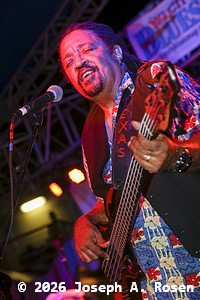 “There’s nobody like Taj out here. The guy knows music. He’s studied the history of music, how it flows, where it started in Africa, and how it migrated. And believe it or not, that was my major in college, how cultures migrated. So our meeting was very fortuitous. We had the same curiosity about the movement of culture, how cultures react, how they’re formed, their art forms, their music, and how that music travels, and a lot of it was through trade. You had to be able to communicate with the person you were trading with, so the ships would take you from one port to another. Music, along with spices and culture, was a movable, growing, and ever-spreading thing, a never-ending process.”
Taj Mahal’s latest album, Time, on Resonatin’ Records, features the Phantom Blues Band with New Orleans keyboard ace Jon Cleary filling in for the late Mike Finnigan.
“Tony Braunagel, our drummer, and I produced it. Tony’s my brother. He’s a piece of work. We’ve been bugging Taj for years that we weren’t done. We did “Dancing,” “Phantom,” “Senor,” and then we did the live album. We just felt that we had another album to complete. And this one, we got it out, it’s on the marketplace, and people are really liking it. The response has been wonderful.
“The title track, “Time,” is a song Bill Withers gave to us. He had never recorded it. But before he passed, he handed it to Steve Berkowitz, a producer friend of ours, saying, “See what those guys think of it.” We heard the tune, and fell in love with it. It’s up there as one of my all-time favorite Taj tunes. And don’t get me wrong, I love “Queen B.” I love “Senor Blues.” I love “Lovin’ You Baby.” I love all those tunes. But this one tops them.
“We also do a cover of Bob Marley’s “Talkin’ Blues.” I had no idea he wrote that song for Taj. Taj and I are famous for our 2:00 or 3:00 in the morning phone calls. So I called him. I go, “Taj, man, what do you think if we do Bob Marley’s ‘Talkin’ Blues?'” And he starts yelling into the phone. “Man, Bob wrote that song for me.” And it’s true. They were really good friends. I’ve known Ziggy Marley since he was 13, so I asked Ziggy to come in and sing the bridge, which he did. He said, “Man, this is like I’m recording with my uncles. Thanks for calling me.”
The connection with Ruthie Foster was another of those chain of events that brought like-minded souls together. It took leaving California for Austin, Texas, and while the initial rationale was monetary, Fulcher soon struck musical gold again.
“Well, that’s my heart. That’s my little girl. I moved to Texas in ’92. I moved to Austin because I had enough. I grew up in Southern California, from ’62 to ’92. I saw a lot of evolution. I saw prices go crazy. Then I had a daughter, and I didn’t necessarily want her growing up in LA. My wife’s mother lived in Austin, so we went down for a visit. Just started looking around, realized I could get a house. We were paying $1,500 bucks a month for rent in LA. I could get a house in Austin for $380 bucks.
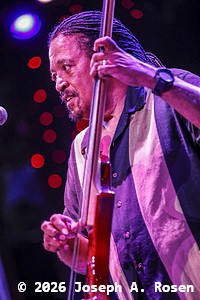 “That changes a lot. My wife worked for an airline, so I had access to travel. I could be anywhere I really needed to be because it was in the middle of the country. Next I met the Antones, Clifford and Susan, and they started… well, they inducted me into the Antone’s house band by putting my name in all the advertisements without ever talking to me. My wife would say, “You’re playing at Antone’s Saturday, aren’t you?” “No, I’m not.” She goes, “Read the newspaper.” Working at Antone’s, I met some other musicians who had a reggae group, the Killer Bees.
“They would tell me about this lady named Ruthie Foster. She did some sessions, some background vocals, and she sang just wonderfully. So, when Taj and the Phantoms were going to play in Austin, Taj says, “Man, who should we get as an opening act? You guys are from Texas.” I said, “There’s this girl named Ruthie Foster, she’s going to blow you away. I think you should get her.” Ruthie just had a duo at the time, just her and a percussionist. But she had a voice from God.
“I was doing a session with her drummer, this lady named Samantha Banks, and she was saying, “Well, I don’t know what we’re going to do.” I go, “What’s wrong?” She goes, “Our bass player, she just quit. We got this tour, and she just…” I go, “Well, the question as musicians always ask, what does it pay and how long? How much, how long?.” She said, “Let me get Ruthie on the phone.” And Ruthie just says, “If you would do it, I’ll pay you whatever. I’ll meet your salary request.”
“That was in 2014. I’ve been touring and recording with her ever since. I just turned 78 years old the other day. There’s only two people that I would leave the house to tour with, and that’s Ruthie and Taj. I consider them both iconic in what they do. There’s only one Taj. There’s only one Ruthie Foster. Well, there is Mavis Staples, but after Mavis, there’s Ruthie Foster. She makes the hair on my arms stand up.
“We feel that playing with her. It’s a performance, but it’s almost like a church service or a spiritual experience. She never mails it in. She brings it every night. We put together a really good band around her. And going from her to Taj, especially when I’m on things where I get to play with both of them, it’s like, “Oh my God.” And people say, “What’s it like doing both?” I have to admit, it’s pretty dadgum cool.”
Fulcher received a Grammy Award for the Shoutin’ In Key live album that Taj Mahal released in 2000, backed by the Phantom Blues Band. He also has been the producer on several award winning projects in recent years.
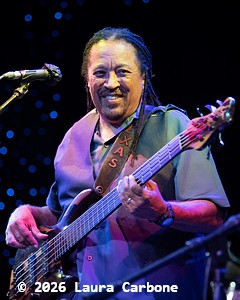 “I produced Dylan Triplett’s first album, and the second one that I produced is going to come out soon. It’s got some great material on it. And I’m contracted to do a third one for him as well. I also produced three albums for a young lady named Annika Chambers. The last one, Good Trouble featuring her husband Paul DesLaurier on guitar, got the Blues Blast Music Award for Soul Blues Album of the Year. We have a Phantom Blues Band record that we hope to get out the first part of next year. There’s also a young lady from Mexico City, Evelyn Rubio, who lives here in Houston. She’s a brilliant sax player, vocalist. I produced one album for her that the Mexican Tourist Board used as kind of their theme song when they’re talking about tourism for Mexico. I’m finishing up another record for her right now.
Knowing just a few of the key moments in Fulcher’s life, one can easily understand the pride he takes in his accomplishments, and his gratitude for all of the people that helped get to this most special place in his life’s journey.
“It’s been a long, strange trip, and music has taken me from East Texas farmland, Klan country, to every part of the world pretty much that I’ve ever wanted to go to, and got paid to be there, which is such a blessing. There is a God, because I always wanted to see this Earth. I just never knew that I would get to do it in that fashion.
“I’m thankful every morning I wake up. I have a wife and a daughter who put up with me being a musician, even the times they wanted to strangle me because my schedule is so crazy. One of the things my mother told me before she passed, she goes, “I really don’t care what you wind up doing in life. Whatever it is, you just make sure that you’re one of the best that ever did it.” I’ve taken that into music, always trying to do my best.
“One day, me and Mike Finnigan, keyboard player for the Phantom Blues Band, had finished our show, and we’re smoking cigars, sitting backstage watching Mavis Staples. We’re both in our 70s at this time. I go, “Fins, this does not suck.” And he goes, “Are you fucking kidding me? For us to be this age and have gotten away with living this lifestyle for all these years, and we’re still here?” He added, “Man, we’ve already won. We’re playing with house money.”
“And that stuck. We were playing with house money a lot longer than a lot of people. So I feel like a very fortunate and blessed and grateful guy. You don’t ever know. Mike Finnegan’s passing was a spirit crusher to all of us. It hits me every day, at least once a day. Finnegan left us here with this bullshit. I just miss him.
“I wish that everyone could get along in everyday life like they do when they’re at a concert. We played in places and countries where no one spoke our language. But as long as the music is going, you have a community. It’s just such a positive experience. I think that one of the reasons God put me here, and made me curious about how culture moves, was so I understood my part and my role.
“It’s certainly not logical. No one goes into music because you’ve got good common sense. You have to have serious mental defects to do this for a living. But I’m so appreciative he chose me to put in this role. That’s what I have to say. I’m just thankful and appreciative, and I hope that some of the music that channels through me, because music comes from on high, and it channels through us, and we disperse it and dispense it. I hope I’ve been a good vessel, a good channel.”
Blues Blast Magazine Senior writer Mark Thompson lives in Florida, where he is enjoying the sun and retirement. He is the past President of the Board of Directors for the Suncoast Blues Society and a former member of the Board of Directors for the Blues Foundation. Music has been a huge part of his life for the past fifty years – just ask his wife!
|

Featured Blues Review – 6 of 10
|
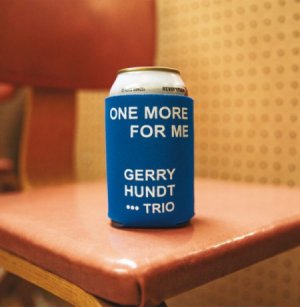 Gerry Hundt Trio – One More For Me
Self Released
www.gerryhundt.com
10 tracks/32 minutes
Born in Wisconsin, raised in Rockford, Illinois and now based out of Chicago, Gerry takes his music seriously. He’s played with many bands, has toured the US and all around the world, and remains solidly rooted in the blues music that he loves.
Gerry handles guitar, vocals, harmonica and mandolin. Renaud Lesire (bass, vocals and harp) and Tom Leihnert (drums) round out his trio as they deliver blues tinged with all sorts of other great musical styles
They open with “Pimenta,” a spicy instrumental that hearkens to the hot sauce and pepper it’s named after. Gerry gets a Bo Diddley groove going and delivers a poignant performance as he picks out some pretty stuff on guitar. Then it’s “Caught In The Middle” with howling vocals and strident guitar in the Westside style of Lil Ed. He and the band do some call and response as they deliver a powerhouse cut.
The rocking “Pretty Baby” is next, a mid tempo-ed song ready to get the party started. Hundt offers some impassioned vocals and hot guitar licks for the listener to enjoy. Gerry breaks out his mandolin for Johnny Young’s “Kid Man Blues” done in an old school style. There’s some slick harp here to savor, too.
Renaud plays harp on the dual harp boogie “Ruby Doobie,” a fun number. Gerry and Renaud play off each other in this cool and funky little piece. Eddie C. Campbell’s “Runnin’ Wild” is next, a sweet instrumental track with some funk melded into the blues. Gerry picks out some really nice stuff on guitar here.
Next is “I’m Gone,” something Gerry has reworked and offered up to appreciative listeners. It’s got a great groove and Hundt sings with vibrant passion as he tells his baby it’s too late and he’s gone. The mandolin returns on Tampa Red’s “Rambler’s Blues” done in a unique manner. It’s a winner!
Hundt offers a new cut inspired by his news watching entitled “Strange Things Happening,” sort of a follow-on to his 2006 song “Since Way Back.” His electric guitar resonates with power as he offers up a great new number. Gerry finishes with “End of the Day Blues,” a song he first recorded on mandolin in 2007. Here the guitar takes over on the instrumental with a greasy and guttural performance attributed to a “full Earl Hooker treatment.” It’s beautiful and hard core slow blues.
Hundt recorded this in Luxembourg with a pair of Belgian and Luxembourg natives whose resumes are quote impressive. Gerry is the ultimate musician and entertainer; whether it’s he alone as his one man band or with an ensemble of musicians, he always delivers inspired and nuanced performances. He can sound like it’s authentically a hundred years ago or it’s 2026 or any time in between. In front of a band or on the side: it doesn’t matter– one notices his astounding musicianship in everything he does. This is a superb album and I highly recommend it!
Blues Blast Magazine Senior writer Steve Jones is president of the Crossroads Blues Society and is a long standing blues lover. He is a retired Navy commander who served his entire career in nuclear submarines. In addition to working in his civilian career since 1996, he writes for and publishes the bi-monthly newsletter for Crossroads, chairs their music festival and works with their Blues In The Schools program. He resides in Byron, IL.
|

Featured Blues Review – 7 of 10
|
 The Empty Pockets – Dear Billionaires
MT Pockets – 2026
www.theemptypockets.com
10 tracks; 38 minutes
Described by themselves as ‘Roots Rock/Americana/Blues Rock’ The Empty Pockets have established a strong reputation in their native Chicago by independently releasing seven albums and selling directly to their fans. They have toured with a long list of people, including Al Stewart and you can hear reflections of Al’s music in this record. The album was recorded over two days at Abbey Road in London with no instrumental overdubs, just one cover, the rest of the album attributed to the whole band: Erika Brett, keys and vocals, Josh Solomon, guitar and vocals, Nate Bellon, bass and occasional backing vocals, Adam Balasco, drums.
A funky guitar riff and swirling organ underpin opener “Serrated”, Erika and Josh duet-ting on a song that celebrates a shared love (“would you be the one I could have forever?”), the same sentiment expressed in a different way on “I Never Get Sick Of You” with Josh leading the vocals and warm harmonies on the chorus. In the way of many contemporary acts, both tracks were previously issued as singles ahead of the album release. “Dearest Millionaires” is a caustic rejoinder to those who “have so much”, “the only solution may be revolution”, perhaps a warning to the super-rich, wrapped in a lush pop arrangement. An appropriate follow-up title is “Eat The Rich”, an instrumental that is the closest to blues so far, stinging guitar featured and the rhythm section getting the chance to show their abilities too; a second instrumental later on the album, “Working Class Blues”, adds further to the blues quotient.
“Capitol Hill Autonomous Zone” has plenty of harmonies as Nate joins in on the chorus and Erica sings strongly about “making a date for The 31st Of June”, so maybe this is a strong hint that this relationship will not last long! Josh leads on the interesting story of “Queen Of LA”, the piano giving the tune a jaunty feel, while “Broken Down In Bozeman” closes the album on a country-tinged ballad about one of the well-known hazards of touring. The sole cover is Billie Holiday’s “God Bless The Child” which Erika sings rather histrionically, though Josh’s guitar is excellent.
Not really one for the devoted blues fan, but some clever songs if you enjoy a broader palette of music.
Blues Blast Magazine Senior writer John Mitchell is a blues enthusiast based in the UK who enjoys a wide variety of blues and roots music, especially anything in the ‘soul/blues’ category. Favorites include contemporary artists such as Curtis Salgado, Tad Robinson, Albert Castiglia and Doug Deming and classic artists including Bobby Bland, Howling Wolf and the three ‘Kings’.
|

Featured Blues Review – 8 of 10
|
 Terry Haggerty – Family
Little Village Foundation
www.terryhaggerty.com
11 songs time – 54:02
Being that Terry Haggerty was the guitarist for Sons Of Champlin that where part of the 60s San Francisco scene, this isn’t at all what I expected. I was familiar with the name, but I don’t recall ever hearing them. This CD is hundreds of miles away from the Dead, Airplane, Big Brother and others from that era. To say this isn’t my cup of tea, is putting it mildly. I feel like I fell into a black hole. This CD has no place being reviewed at a blues magazine. A trace of blues in some of the guitar solos, but it is all mindless, rambling on funk. The main band is Terry, his brother Tim on keyboards and nephew Aaron on drums, plus guest vocalists. All the songs where composed by different variations of the band and some outsiders.
Hey, the sound and production are good, but I can find nothing here to like. It is mostly droning on grooves with no grit or edge. Keyboards, what sound like synth horns and strings and funky vocals. Bill Champlin himself graces one song. The instrumental “New Frontiers” is something close to what I like with its’ funk guitars. The guitarists trade off blues-rock solos on “In Your Arms”. If you are a fan of mellow soul vibes and falsetto male vocals, you have come to the right place.
Reviewer Greg “Bluesdog” Szalony hails from the New Jersey Delta.
|
Featured Blues Review – 9 of 10
|
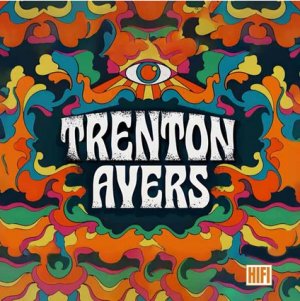 Trenton Ayers – Taking It To The Mountain
Music Maker Foundation
www.facebook.com/ayers.kidd
9 Tracks – 35 minutes
Trenton Ayers was born in Holly Springs, Mississippi where he was immediately surrounded by the Hill Country blues. His father, Earl “Little Joe” Ayers played bass for Junior Kimbrough. And family outings found him at events surrounded by the likes of R.L. Burnside, Robert Balfour, and Jesse Mae Hemphill. He says that he was always surrounded by guitars and if he picked it up, there was always someone there to give a new lesson. He naturally took to playing the guitar starting at age 3 and by age 6 he played his first gig, a birthday party where he earned $370 in tips. By age 12, he joined his first band, The Burnside Exploration with Kenny Kimbrough and Gary Burnside. At age 14, he toured with the Slick Ballinger band and opened for BB King at a Lexington, Kentucky show. In 2016, he worked with Cedric Burnside and his uncle, Gary Burnside, on Descendants of Hill Country, which was nominated for a Grammy Award for Best Blues Album.
Over the years, he toured across the country and made multiple European tours through 22 different countries. His travels introduced him to multiple guitar styles from Prince to Roger Waters. He has been a frequent collaborator with G. Love. In 2022, he teamed with Alvin Youngblood Hart, Christone “Kingfish” Ingram, R.L. Boyce, Jontavious Willis and others to release a hip-hop blues record, Philadelphia Mississippi.
In 2023, Trenton recorded his first solo album, A Father – Son Legacy. While he and his father and played together frequently, they had never recorded together. As he recognized his father was aging, he wanted to record something showing the Ayers musical heritage for future generations.
For his second solo album, Jimbo Mathus (Squirrel Nut Zippers) convinced Trenton to come into the studios to record. Jimbo produced the album and played drums, keyboards, and guitar. Trenton is of course on lead vocals and guitar with Kirk Russell on drums and guitar, John Kveen on bass with backing vocals by The Crimestoppers. The album was recorded in Music Maker’s new “Freeverb” chamber., a new echo chamber that builds on the hill country sound.
He opens with “Blues So Bad”, with some funky guitar lead and says, “Don’t say things that hurt my mind”. “Most people think I’m crazy, some say out of my mind.” ” I have the blues so bad.” He then says, “Let the band “Play On”, everybody play on”. “Run Leo” is an instrumental featuring Trenton’s guitar bursting out with Jimbo adding B-3.
On the title track, Ayers exclaims, “Don’t let me think about it. Goin’ to the river, I’m “Taking it to The Mountain”. “Me and my people are going to have a conversation”. The song’s backing vocals offer declarations of “higher” that will bring to mind Sly and The Family Stone. But his guitar certainly moves the song into a different level. He declares “When times are “Getting Funky”. we have no rules. We will show you how funky we can get.” and he clearly demonstrates that direction. He tells her “Come to me, baby. I need your “Insight”, I need your knowledge”.
On “Snake Hips”, he rocks out as he urges her “Come on baby, now snake hips, now wiggle when you want to”. ” Slide to the left, now crawl, now slid to the right”. All delivered in what he calls a Hill Country rap. He declares “Long Time No See”, It’s about time, ain’t nothing in the world I wouldn’t do for you.” He closes with “Thang Going On” as he proclaims, “I cried and cried, cried all night long as my baby is up and gone”. “You know I love you baby, doing the things you make me do. We got a thang going on”.
Trenton’s vocals and base music definitely delivers the expected Hill Country sound, but he turns it up a notch with a slightly more modern sound adding some funky and frequently rousing guitar riffs. He embodies his heritage but fleshes it out with his influences over the years developing his own style.
Writer John Sacksteder is a retired civil engineer in Louisville, Kentucky who has a lifelong love of music, particularly the blues. He is currently the Editor of the Kentuckiana Blues Society’s monthly newsletter.
|
Featured Blues Review – 10 of 10
|
 BB & The Bullets – Wrong Side Of The River
Overton Music
https://nixonstreetrecordings.nz/
11 tracks/39 minutes
Guitarist and producer Brian Baker is a New Zealand blues rocker who left for Australia for four decades and returned home to New Zealand to be closer to family. He moved to Whanganui and founded Nixon Street Records. He joined up with two local Whanganui Musicians, bassist Stu Duncan and drummer Brad McMillan to form BB & The Bullets. They released their first album in 2025 and follow it up with this new sophomore release. The album is a heavy, rocking effort with big vocals, guitars and driving tunes, ten new and one cover song.
“Midnight Rider” opens the set. It’s a rocking and big cut with heavy guitar and a big groove. A gutsy guitar solo is featured. “Wild Honey” follows, another rocker with a driving beat. Basker sings with passion and the guitar licks are hot. “Freak Show” is next, delivered at somewhat more of a restrained pace, the tune still wails and has a big, rocking vibe.
The gloves come off for the title track, a slow but very heavy blues rock tune. It lumbers along with a slow but vibrant groove and features another heavy dose of guitar riff extraordinaire. Next we have “Get A Little Real,” delivered with a moderate and steady beat; this one shows more restraint and it’s a bit more lyrically delivered.
“Oh Well” is a high energy piece with a big old guitar and pounding drums in this Peter Green cut. It’s a hot number! “Sometimes You Lose Yourself” offers up a self reflective set of lyrics with a steady beat and the trio singing the chorus in unison. Powerful licks in the guitar solo once again ring out.
Societal demise is featured in “Black Crow,” a dark tale of the impending apocalypse with another driving beat. The guitar rings loudly in “The Buddha Song” as Baker and the band profess that only love conquers hate. The licks are almost as heavy as the theme.
“She Knows” has a steady and great beat in this cut about a guy who is clueless as to what’s happening in his relationship. This is more driving, rocking stuff with wickedly heavy guitar and a slick bass line. The conclusion to the set is “Crawl Right In,” a love song of sorts where he reaches out to his honey and invites her to do what the title says. The rocking onslaught continues as he invites the women to join him under his blanket. Thumping drums and ringing electric guitar licks fill the air with rocking stuff.
This is a big, old blues tinged rock album, a panacea of hot and steamy guitar licks, 100 mile an hour driving beats, pounding drums and deep grooves. It’s not for the faint of heart, but if your cup of tea includes music to be listened to at high decibel levels with powerful lyrics and heavy licks, then I more than suspect this is for you. It’s high energy and hot stuff from start to finish. Load it up for a listen and make sure you hang on and enjoy the ride!
Blues Blast Magazine Senior writer Steve Jones is president of the Crossroads Blues Society and is a long standing blues lover. He is a retired Navy commander who served his entire career in nuclear submarines. In addition to working in his civilian career since 1996, he writes for and publishes the bi-monthly newsletter for Crossroads, chairs their music festival and works with their Blues In The Schools program. He resides in Byron, IL.
|

© 2026 Blues Blast Magazine 116 Espenscheid Court, Creve Coeur, IL 61610 (309) 267-4425 |


