

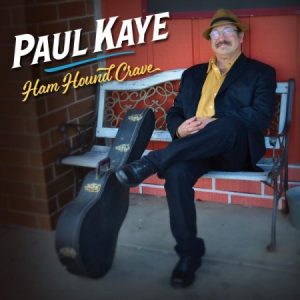
 Paul Kaye – Ham Hound Crave
Riverlark Music – 2023
13 tracks; 46 minutes
Paul Kaye’s album Ham Hound Crave (2023) is a heartfelt tribute to the foundational figures of early 20th-century acoustic blues, with a heavy emphasis on Piedmont, Delta, and gospel-blues traditions. The collection spans rural Mississippi bottleneck blues, East Coast ragtime picking, and gospel-rooted fingerstyle—each track serving as a study in regional character, historical depth, and personal reverence.
As musician and record owner Andy Cohen writes in the liner notes ““Paul Kaye plays the Blues, every variety and nuance,” a true student of the blues, also bolstered by supporting blues greats like Honeyboy Edwards and Junior Wells.
On display throughout the album is practiced, masterful guitarplaying, earnest vocals, and an authentic representation of eclectic American music.
Together, the songs form an intimate, reverent, and skillful homage to pre-war blues and the guitarists who laid its foundations—inviting both casual listeners and blues scholars into a rich and living tradition.
A brooding, moody guitar riff introduces the title track, “Ham Hound Crave”, featuring gentle, precise guitar picking as Kaye sings “Cocaine on my mind… I’m going to Chicago just to get my hame bone boiled”. Rube Lacy recorded a version of the song and Honeyboy Edwards played the tune frequently, including at all night jam sessions at his Southside Chicago apartment. Kaye’s voice is rough with hints of tenderness, the voice of a troubadour, as he pours forth a slow, patient, steamy blues. Like an earnest scoundrel, Kaye calls out “Let me be your little dog til your big dog come.”
Kaye said he has invested “a significant portion” of his “waking hours” to master Blind Blake’s guitar techniques. On “Hey, Hey Daddy Blues”, intricate finger picking creates a beautiful sound projecting a quiet sadness. Kaye sings “Lonesome as a man can be, ever since you went away. I’m like a ship lost at sea.” The guitar rhythm is hypnotizing, a foot-tapping beat both simple and authentic.
“Cypress Grove Blues” is a melancholy meditation bearing soul-shivering guitar riffs carrying death and mourn. Slow guitar notes are filled with weight as Kaye sings in a falsetto whisper “I would rather be buried in some Cypress grove… I’m going away now, going away to stay. I’d rather be dead Lord… than treated this old way.”
Kaye offers a gritty, bluesy version of the Black Spiritual “You Got to Move”, popularized by Mississippi Fred McDowell and the Rolling Stones. Hot, saucy slide guitar jumps out as Kaye cries out “You’ve got to move. When the Lord gets ready, you got to move.” Lyrically the song speaks of the inevitability of death and judgement of poor and rich alike. The guitar bursts with deep, low, guttural moans, like death coming surely. Kay achieves a growling, raspy vocal tone fitting for the track, but the guitar is the central feature of the track, with sophistication, authenticity, and power. Kaye said he learned the track from Honest Tom Pomposello, McDowell’s student and bass player throughout the 1960’s, who taught him the intricacies of McDowell’s style.
On “Louis Collins”, Kaye plays a Ramsey open back banjo that sounds like a clucking hen, producing a calm, peaceful sound carrying a tragic message. The Mississippi John Hurt track with Country leanings describes the fate of Louis Collins, shot down by the sheriff.
Delicate fingerpicking and earnest, soulful vocals characterize Kaye’s cover of “Shine on Harvest Moon”, recorded on a Martin New Yorker. In a deep, resonant voice Kaye sings of how “the moon refused to shine.”
On “Pay Day”, another Mississippi John Hurt interpretation, Kaye delivers one of the best guitar performances on the album. In the intricate guitar arrangement Kaye displays exciting slide guitar work, and plays a full bodied guitar, using the entire range of the instrument. Simply, the track is sophisticated and beautiful.
Kaye closes the album on a high note in his rendition of “Candy Man”, a track he learned from Peter Pickow, the folk musician. On this classic blues tune, Kaye achieves gorgeous, delicate fingerpicking. He sings in a deep, rich timbre, with a tenderness suited to the track. The sublime guitarwork achieves a quiet elegance, once again showing Kaye’s capability as a chameleon-like blues guitarist.
While the two instrumental tracks seemed sparse, and some of the tracks lacked a certain intensity found on other parts of the album, Ham Hound Crave is a fine collection of songs. Anyone who appreciates the blues, or American roots music for that, should cherish the varied and authentic blues reproductions Kaye captures here. Above all Kaye proves himself an eclectic, masterful guitar player and a true student of the blues.
