Issue 19 -25 June 19, 2025

Cover photo © 2025 Dru Saren


 In This Issue 

Mark Thompson has our feature interview with Bobby T. Torello. We have four Blues reviews for you this week including new music from Woody Crabapple, David Starr, D.K. Harrell and Tad Robinson. Scroll down and check it out!


 Featured Blues Review – 1 of 4 

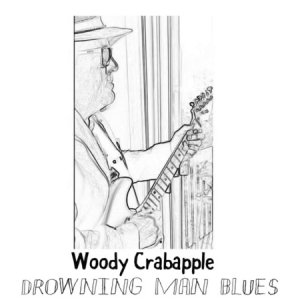
imageWoody Crabapple – Drowning Man Blues

Self-produced

www.woodycrabapple.com

8 songs – 24 minutes

Originally hailing from rural Big Flats, N.Y., and now based in the hills of central Connecticut, Woody Crabapple is a multi-instrumentalist who recently added harmonica to his playing arsenal of guitar, keys, bass and drums. And he debuts his new talent on this completely self-produced album.

Woody started out as a drummer at age nine, pounding out a beat along to his sister’s Monkees LPs. A self-described aficionado of popular music, he’s an avid reader on the subject who’s fascinated about the number of B-side recordings became major hits during the golden age of 45s.

And he’s influenced by a wide range of talents, including Rory Gallagher and Roy Buchanan, both of whom he witnessed live, the three Kings – B.B., Albert and Freddie, Muddy Waters, Johnny Winter, Robin Trower and others too numerous to name. Woody handled all aspects of production in his home studio on this one. The only outside help he received was from his wife, who helped out on handclaps.

Almost all of the numbers in this set would have fit comfortably in the 45s era, considering their playing time – with two exceptions – runs under three minutes. But Crabapple’s playing style runs in the contemporary-but-traditional blues vein. And the rhythm patterns that support the tunes occasionally come with a click-track feel.

“Mad Momma Blues” opens the action. It’s a steady-driving shuffle with an extended guitar solo, and Woody’s mid-range voice describes detail crawling back home after a night on the town and having to face his lady’s wrath before she lets him in again. It yields to the rock-steady “Pounding the Kraut,” which finds his missus in the kitchen and in the process of combining cabbage and salt to make sauerkraut and in no mood for company until she’s filled her jars and her work’s done.

The mood changes but the tempo remains the same for the straight-ahead blues, “The Past Is Gone.” It’s delivered from the standpoint of a man reflecting on a relationship and wondering what he could have done to change its negative outcome. Featuring another extended six-string solo, it’s the longest song in the set, tipping out at about four minutes.

The beat accelerates somewhat from the downbeat of “Mona Maria,” which describes a woman “that when you come around, she’s glad to see ya.” She’s no high-class lady, but she’s his lady. Guitar licks express his desire. Harmonica blasts open the minor-key ballad, “Drowning Man Blues,” which recounts someone losing his life despite the failed attempt of rescuers who’d all been drinking. The mood brightens with the uptempo rocker “Let’s Have a Party,” which advises not to sit around and let your hair grow gray.

The straight-ahead blues, “You Were Born to Die,” provides counterpoint to the song that precedes it. The song opens with the description of someone who ran around on the streets, acted like a clown and met his early demise, leaving loved ones to cry. The session closes with a cover of Amos Milburn’s ’50s stop-time pleaser, “Thinking and Drinking.”

Obviously a labor of love, Drowning Man Blues is available through Apple and other major download sights. It’s a pleasant listen despite its flaws. Woody’s vocals and guitar are solid, but a little outside help would have made his songs shine.

Blues Blast Magazine Senior writer Marty Gunther has lived a blessed life. Now based out of Mason, Ohio, his first experience with live music came at the feet of the first generation of blues legends at the Newport Folk Festivals in the 1960s. A former member of the Chicago blues community, he’s a professional journalist and blues harmonica player who co-founded the Nucklebusters, one of the hardest working bands in South Florida.


 Help Wanted – Writers 

Do you really know your Blues and enjoy telling others about it?

Join our team! Blues Blast Magazine is looking for a few good Blues writers. We are expanding our staff. We need experienced writers who know Blues and can write a minimum of 2 interviews a month. Our FREE weekly magazine has 45,000 subscribers and we get 120,000 monthly website visitors at www.BluesBlastMagazine.com.

These positions need a person who really loves the Blues and wants to spread the Blues word! Must have good writing and composition skills!

Experience with WordPress a plus! (If you are familiar with Microsoft Word, it is similar. Very easy to use!)

Experienced writers are encouraged to apply. Send an email to info@bluesblastmagazine.com and tell us about your Blues background. If possible send samples of previous work or links to it online.

Please be sure to include your phone number in your email reply.


 Featured Blues Review – 2 of 4 

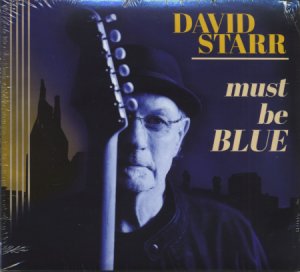
imageDavid Starr – must be BLUE

Quarto Valley Records

www.davidstarrmusic.com

10 songs time – 37:39

David Starr, the Arkansas native now based in Colorado has delivered a very professional and realized album supported by first rate musicians including his own vocal, guitar and co-producer skills. He wrote or co-wrote five of the ten songs. There are various guitarists and keyboard players that aren’t identified as to who plays what on which song, but it is all good. Reese Wynans on keyboards and John Oates on background vocals are special guests. The closest description of the music is Americana singer-songwriter with a bit of blues influence.

“Hole In The Page” is a slow and bluesy tale of lost love that includes some very tasteful blues-rock guitar. J.J. Cale’s “Bringing It Back” is about smuggling drugs out of Mexico. Nice slide guitar and organ. They do a tip of the hat to ZZ Top with a great version of their “Just Got Back From Baby’s” with more blazing guitars along with Pat Bergeson’s harmonica. David’s vocals are warm heartfelt as elsewhere throughout the proceedings. “Lonesome Train” chugs along (no pun intended) under the power of Eric Stucky’s energetic mandolin and delightful electric slide guitar.

More train references on “Listen To The Rain”. Bright guitar over a pillow of soothing organ flourishes. A good juxtaposition of mandolin, electric guitar and organ on the endearing “My Favorite Color”. Slow and deliberate is the mood of the original “Ezra Came To Call” with exquisite guitars. The Cate Brothers would be proud of his rendition of their “Time Is A Thief”. It falls nicely into the category of classic rockers. “I Wait For Mine” speaks of substance, reflection and waiting for redemption. The guys came up with a pretty faithful version of The Allman Brothers’ “Whipping Post”, although I would have preferred an original song to sum up the contents of the recording.

Here you have it sports fans, a totally perfected slice of solid music. This kind of music truly does my heart good and hopefully see it rise to the heights of public acceptance. Music of this quality deserves to be heard. David’s voice has that warm familiarity that you swear you have heard it before and surely you will want to hear it again and again.

Reviewer Greg “Bluesdog” Szalony hails from the New Jersey Delta.


image


 Featured Blues Review – 3 of 4 

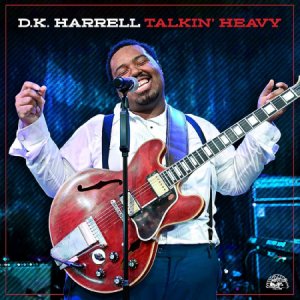
imageD.K. Harrell – Talkin’ Heavy

Alligator Records

http://www.dkblues.com

12 Tracks – 48 minutes

In 2024, D.K. Harrell won the Blues Music Award for Best Emerging Artist based on the release of his 2023 debut album The Right Man. D’Kieran “D.K.” Harrell was born in Ruston, Louisiana in 1998 and grew up without a father.  At age 2, he heard B.B. King and tried to sing along with him. He received his first guitar at age 12 and by age 16, he was already writing his own songs. At age 15 or 16, he sent videos, which he notes were not very good, to Bruce Iglauer, President and founder of Alligator Records. Bruce sent them back and offered encouragement and told him to keep at it. Now, at age 27, he is making his first Alligator album release.

As a boy he sang in the church choir. He brings this album to a close with the fervor of that recollection. As his direction moved to playing the blues, his classmates teased him for his interest in the blues rather than the more popular hip-hop. As recent as three years ago, D.K. was homeless, living out of his car and searching for day work. All of his experiences can be heard in the lyrics of many of his songs and are certainly fodder for the blues.

B.B King continued to be his inspiration. He studied every video he could find of B.B. to learn his tone, stagecraft and band leadership. In 2022, D.K. won the B.B. King of the Blues Award for Preserving Traditional Blues Heritage from the Jus Blues Music Foundation. Now, still a very young man, D.K. has toured across America and traveled into Canada and played in many European countries. In 2025, he has already played many concerts and festivals and more are scheduled. Along the way, he incorporated the sound and talents of many of the blues greats such as Albert King & Muddy Waters into his own sound.

D.K. plays lead guitar and sings all lead vocals. He is joined by Kid Andersen, who produced and co-wrote six of the songs with D.K., on rhythm guitar; Jim Pugh on organ and piano; and Andrew Moss on bass; and a long list of guest artists. All songs on the album are originals with D.K. penning four more, Jim Pugh writing one, and Jim and Kid joining D.K on one.

On the opening track, D.K. says he just wants a “A Little Taste” as he comes burning out with stinging guitar leads and exclaims “Quit playing hard to get when you are feeling just the same”. “The way you move just drives me insane” as Jim’s organ percolates behind his guitar before jumping into a lead and with Russ Bryant’s tenor sax rolling through. He states he is “Grown Now” noting “put me to the test, I have finally found success…Dreaming of tailored suits and suede Italian boots”. On the title song, he says “just take a look at the news, look all around you, heavy with the blues. Politicians talkin’ out of their heads, prices so high you can’t be fed, says we are all winners sure to get ahead”. “If we don’t do better, we will have nothing left”.

On “PTLD”, he discusses a man with “Post traumatic love disorder”, a person who used to be so much fun…now he just sits at the bar all alone”. “When I was a kid, my grandpa put me on his knee… and said if you listen here are a few of “Life’s Lesson”. “Lesson number one – be true to yourself. Lesson Number two – be kind to everyone else.” “One day you might be up, but next you might be down”.  The next song opens very quietly with Jim’s piano and D.K. quickly declaring “Things might not be what they seem” and the music shifts into a rousing roar as he identifies himself as a “Good Man”.

“Vibe With Me” is his modern appeal to young listeners speaking in today’s terms asking her “let’s have a good time and let love take the wheel. ” He declares “I can almost hear my heart thumping in my chest. I struggle to even sing or play in tune every time you walk “Into the Room”.  In a soulful croon, he sings “I have a roof over my head “No Thanks to You”. “I got here all on my own.”

He explains, “When I was a younger man, I wanted to go out real late at night, but my folks would say the only thing open this late at night is “Liquor Stores and Legs”. So now I am grown, and I think you know what I am going to do.” He tells her “Everything I say will come true; you can bet your bottom dollar I am going to show you “What Real Men Do”. He closes the album with “Praise the Blues” as he declares “the blues and the gospel are just the same” in a joyous spiritual backed by a choir and his guitar that will make you sing Hallelujah and clap your hands.

D.K. explains “The past gives a blueprint that you can add yourself to. I keep progressing by keeping all the genres in the mold. And I keep exposing my music to younger folks wherever I go. I am hell-bent on crossing the blues over to a new generation of fans.” Listening to D.K. you can hear the strands of B.B. King floating in his vocals and guitar work. His deep, clear voice honed in the church rings true and will draw everyone who listens into his messages. He is a young man with great growth potential and can be a beacon to draw others into the power of the blues.

Writer John Sacksteder is a retired civil engineer in Louisville, Kentucky who has a lifelong love of music, particularly the blues. He is currently the Editor of the Kentuckiana Blues Society’s monthly newsletter.


 Featured Blues Review – 4 of 4 

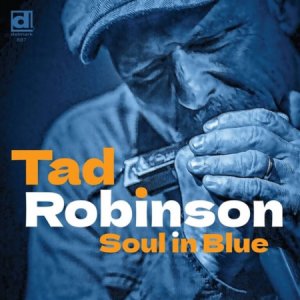
imageTad Robinson – Soul In Blue

Delmark Records

www.tadrobinson.com

10 Tracks – 43 minutes

Soul blues vocalist and harmonica player Tad Robinson makes his return to Delmark Records where he recorded his first two albums in 1994 & 1998. This is his eighth album and the first in six years. Tad was born in New York City. He attended the University of Indiana’s School of Music and graduated in 1980. In the 1970’s he played in a regional group, the Hesitation Blues Band, which released one album, Bring It in the Alley, in 1979. Upon graduation he moved to Chicago where he became the lead vocalist for Dave Specter and The Bluebirds. One 1994 studio album, Blueplicity, and two live recordings were released with Tad on vocals with that band. In 1994, Tad also released his first solo album, One to Infinity. Tad has been nominated for the Blues Foundation’s Blues Music Award ten times, five times each for Soul Blues Album of the Year and for Soul Blues Male Artist of the Year.

Tad plays harmonica and is the lead vocalist with band members Kevin Anker on keyboards, Paul Holdman on guitar, Brian Varde on drums, and David Murray on bass. The Delmark All-Stars consisting of Roosevelt Purefoy, Jr. on organ, Pooky Styx on drums, and Larry Williams on bass, support him on four tracks and with guitarists Carlos Showers and Mike Wheeler also playing on three tracks. A large number of other guests appear on individual cuts.

“Keep It in the Vault” is a tribute to his wife, Amy, who “keeps me out of trouble time after time”. “Nothing in the world would shake my love for you”. A smooth blues guitar by Paul Holman leads into the soulful “Out of Sight and Out of Mind” with Alberto Marisco co-writing the song and playing keyboards. Tad sings, “you never thought it would come to this, packed her clothes and gone, left you standing there with nothing going on”.  Alberto also co-wrote and plays keyboards on “Somewhere There’s a Train” “passing through the night…bringing my baby here, won’t be long before she is near”.

A cover of Wilson Pickett’s 1963 “(I’m) Down To My Last Heartbreak” follows with Tad putting his own spin on it with the Delmark Allstars providing the backing in a slightly funky take. On “Deeper Than You Think”, Tad says ” A good friend tried to help me through with all the right intentions…but I’ve seen a bit too much with these tired eyes of mine”. A cover of Arthur Adam’s 1969 “It’s Private Tonight” is next with Roosevelt Purifoy Jr’s organ sliding along through the song as Tad exclaims “close the door, dim the light, I don’t want to see anybody but my baby tonight”.

Dave Specter guests on guitar and Tad’s harmonica have a key run on “Keep Your Heart Open for Love” as Tad expresses concerns for immigrants in America today stating “I think I hear the thunder rolling down this old country road. I can see the lightning flashing, but I do not see another soul. Somebody tell me why it feels like this world is about to explode.  What can I learn from hatred. It’s just the other side of fear.” In a follow up social message dealing with concerns about today’s economy.  “Up In the Air” featuring Tad’s harmonica as he notes that “the rules of the game have broken down everything seems up in the air except for you and me. Day by day I keep pushing but it’s hard out here for the common man.” “All of the crazies seem to get their way in the end”.

He moves back into a more sentimental note as he says he will “Forgive and Forget”, “if you decide to come back home”. “I hope you will forgive me for the wrongs I do, and I will do the same for you”. The All-Stars shine on the sentimental closer “This Time” as he says, “I found me a new love and this time I know it’s real”.

This is an excellent recording to play for a nice romantic evening or if you simply want a nice quiet atmosphere. Tad’s voice drips in soul and the musicians support every drop.

Writer John Sacksteder is a retired civil engineer in Louisville, Kentucky who has a lifelong love of music, particularly the blues. He is currently the Editor of the Kentuckiana Blues Society’s monthly newsletter.


 Featured Interview – Bobby T. Torello 

imageWhile he may not be a household name, Bobby T. Torello has managed to fashion a career from behind his drum kit that has brought him some fame, travel, and close friendships. He also understands that life has a way of catching up with you.

“Two days ago I got news that a good friend of mine, guitarist Rick Derringer, just passed away not too long after the same heart surgery I had. The other night he reached for his pillow, felt something weird in his chest, went to the hospital and passed away. It’s sad and kind of scary. And now here I am complaining because I’m not a hundred percent yet. It takes a lot of energy to be me. I’m a really over- energized person, and the healing is not coming quick enough for me. But then when I heard the news about Rick, I’m like, okay, relax, be calm, go easy.”

Born in 1951, the drummer grew up in New Haven, Connecticut. As a youngster, Torello had two neighbors that were a bit older, and both played drums. He started getting interested when one of them let him play a bit. Then came the moment of revelation.

“After seeing Ringo Starr and the Beatles on the Ed Sullivan TV show, I knew I really had to do this. I started on a snare drum that we had rented while taking lessons in the school, which didn’t do anything for me. For my 13th birthday, my parents bought me a very inexpensive set of drums, which I dove into headfirst . Within six months I knew that was what I was going do for the rest of my life.

“I just really, really, really practiced, Every night after school, I came home and practiced until my dad got home from work. Then I’d have to stop because I would drive him crazy. Every morning he’d leave at 5:30 am and I’d get up to practice. I’d listen to records by Buddy Rich and Gene Krupa for inspiration. But seeing Ringo up there was the final story.

“The first band I put together was Little Bobby and The Impacts. I still think that’s a cool name. I got my first gig maybe a year after I started playing. I had a paper route, saved my money, and was able to buy another little set of drums. I got the band together from the kids in the neighborhood, whoever had instruments. First gig, we made $8 a piece. I was like, all right, this is great. I’d like to make $8 now! I pushed it really hard, had my brother for a singer. Once we went into the recording studio, he really wasn’t cutting it. That’s when I realized, do I want to be a big fish in a little pond? I decided, no, I want be a small fish in the big pond.”

Around the age of 17 years old, the drummer got a call asking him to consider joining David and the Giants, a band working the area from Mississippi down to New Orleans. But Torello needed to finish school. Several years later, he got another call.

“So I flew down to New Orleans to meet the band. I had already listened to Johnny Winter’s records and in the back of my mind I said, I’m going play with this guy. Johnny was in the mental institution in New Orleans called River Oaks. They didn’t have rehab for people back then. If you were addicted to drugs, they put you in a nuthouse. So I went down south with this David & the Giants and now I’m hanging out in New Orleans. On weekends, Johnny would get out to go jam with this other band called the Paper Steamboat.

“I got to know those guys. We did a jam together. Anyway, long story short, we sent him the tapes. Johnny said, you get that drummer, maybe another guitar player, put a band together and I’ll produce a record. So within eight months of me being down south, we flew up to New York City and I met Johnny Winter. The band became Thunderhead.

image“We went on the road, played a lot, toured a lot. We were in Louisville, Kentucky, and the manager wanted more of a percentage because he saw the band was starting to do really well. We didn’t agree, so he had us arrested for stealing our own equipment with the help of a very crooked judge out of Louisiana. If you know anything about Louisiana, I think the whole place is crooked. They put us in jail for the night.

“We jumped to another manager who took us over to the guy who owned a studio in the country in Bogalusa, Louisiana. The band started really working hard and Johnny came down for a month to produce the Thunderhead album. Our manager shopped it out in California to all these record companies. Finally, ABC/Dunhill Records was interested but they wanted to redo the whole album with their producer. That’s the music business.

“Johnny put in all this time and effort, and we had to can that album, which almost made us enemies. So we did the album all over again, doing it their way, this really slick, modern recording. We liked the raw sound of the album we did with Johnny. The ABC version got released and we went on the road to support it, but they never coordinated a tour for the release of the album with a major act. We were being bounced around from like Lakeland, Florida to Lansing, Michigan to Louisville, Kentucky, down to Lafayette, Louisiana, giving you a day to get to places that it would take two days to get to. For a year they dragged our asses all over the United States.

“I should have read the contract more thoroughly before I signed it, but everybody was signing. The record company had the publishing rights to our songs and everything, which was screwed.. At the end of the year, I fired the management, the booking agency, and the record company. I took the whole band up to my parents’ house here in New Haven, Connecticut. We tried to get another deal out of New York City, which didn’t work out. We were playing out on Long Island, where the club owners are telling us to learn some cover songs. That’s not why we started the band. No one was going to tell us what volume or songs to play. I couldn’t do it anymore, so I left the band.”

With time on his hands, Torello picked up some gigs with another New Haven musician, Michael Bolotin, who later changed his name to Michael Bolton. A connection from his past soon sent the drummer in a different direction. While he was with David & the Giants, they had opened some shows for Black Oak Arkansas. Their road manager had played bass in a band with Torello before Thunderhead.

“I get the call from Black Oak Arkansas saying, we remember you opening up for us and everybody says you’d be the perfect fill-in for Tommy Aldridge, who left the band. It was only two or three weeks after I left Thunderhead. I fly down to Memphis, then to Arkansas to start rehearsing with the new version of Black Oak Arkansas, which was basically the Hot Dogs, a band out of Memphis. We’re opening up for Gary Wright, did a bunch of shows with the Electric Light Orchestra all through the South as a support act. Anyhow, they hand me my contract that they want me to sign. In the meantime, I had  smoothed over everything with Johnny Winter and we’ve become very tight, very tight friends.

“Johnny said, fly back, use my lawyer, and see if their contract’s up to snuff. If not, I’ll give you $50 grand to join my band. See if they can match that. Johnny’s lawyer went crazy when he read the contract. His eyeballs were hanging out. He said, “This is 1950s music stuff. You cannot, by any means, sign this.” I flew back, got my drums and told them I was done. They literally threw me out of Arkansas. But my dream of playing with Johnny finally came true.”

In short order, Torello is on a major tour all around the United States in Winter’s band, and 38 Special as the opening act for most of the tour, which lasted a year, the last Colosseum tour Johnny Winter did. After the tour, they headed into the studio.

“We were looking for a bass player, and finally I found the guy, Jon Paris, who was a monster bass player, harmonica player, one of those guys that plays everything. And he knew the blues inside and out. We went on what I called “the three hour tour” because we played clubs and it was Johnny’s first time doing clubs since the sixties. We hit the major clubs, doing two and three nights in every club that we played. The band was great and we’d play two and a half, three hours every night. Then we did an album called White, Hot and Blue, followed by Raisin’ Cain, with a major tour that took us to Europe, Canada, and back to Europe.”

After the tour came a break, during which Torello was contacted by singer Grace Slick, of Jefferson Airplane fame. She wanted him to play on what would be her next solo album, Welcome To The Wrecking Ball. He signed up for the project, recorded in Miami, and then came a big tour. But right before Christmas, the tour was canceled as Slick rejoined Jefferson Starship.

image“I quit Johnny Winter and went to Grace Slick, and now I’m out of a job. I was living in New York for about a year before I told Johnny, could I please get my job back? And he gave me the job back, for a year and a half, almost two years. Then I did the MTV video with Michael, who was now Michael Bolton. He had the album recorded and they put us on a major tour opening for Bob Seger. I thought, you know, I’ve got to take this job, because Johnny always told me, if you think you could do better, go get another job and do what you have to do. He also said, even though I love having you play in the band, people come to see Johnny Winter.

“So I left again. Strike three. It worked out until CBS told Bolton you can’t do rock music anymore. You should only do ballads. Anyhow, that was the end of me playing with Michael. I tried asking Johnny for my job back again. He said, “come on Bobby, I can’t do it again.” After taking a year off, I moved to Miami and I hung out for a while. Then I saw Black Oak, Arkansas had a gig and they asked me to go back on the road with them. This is the second time.

So I go back on the road in 1985 with Black Oak Arkansas, but at this point they were really struggling as their popularity fell way off. The styles of music had changed. In 1985 you needed to be a metal band. I ended up moving to Chicago in 1988 or 1989, trying to make a living with a blues band, which is almost impossible. I lived there for two years. I played with blues bands, my own blues band, bouncing around, whatever I could do, and that’s when it became really tough.

“During that period, I got to be good friends with Robin Zander from Cheap Trick. While I was living in Chicago, I’d go up to Rockford, Illinois to hung out with him and write some songs. Robin was adamant that I needed to write my own material for my own band. I started working very hard on writing. Then I got married and had a child seven years later.”

After the turn of the century, Torello was part of a project with Florida guitarist Sean Chambers, released in 2004 as Humble Spirits.

“I enjoyed playing with Sean. He was a big Johnny Winter freak, so the music was cool. I was still living up here and I wasn’t planning on moving down to Florida to be part of his band. I guess things might have changed if the record had taken off, but, like everything else, it was very slow moving. I’m still real close friends with Sean. Now he’s playing with the last rhythm section that the band Savoy Brown had up to the passing of the group’s founder, Kim Simmonds.”

In recent years, Torello has worked with a number of bands, including the Name Droppers He has spent significant time backing guitarist Jay Willie, with the latest release being the fifth title they have done together as the Jay Willie Blues Band.

“I got to know Jay after one of the gigs when I was with Johnny Winter, and as I got to know him a little bit better, we started hanging out. I did a spot gig with him, then he asked me to do a record. Now four albums later, we’re doing this tribute, Raisin’ Cane, to Johnny Winter. It’s really a good record. Jay has a good singing voice and he’s a good songwriter. He gets the job done and we have some really cool songs.

image“He’s got me as a special guest in a way because I’m doing a lot of the singing. We did songs that Jay and I felt that Johnny would have done if he had recorded another album. I don’t know if Johnny would be happy or sad about my singing, but I’m doing the very best Bobby T can do to make this thing sound real and soulful. I’m not trying to fool anybody. I gave it a hundred percent. There’s some cool drumming in it, but it’s really about the feel of the overall album, which I thought came out really good.

“Jay is a really good guitar player. I mean, really good. He has never gotten the recognition. He’s really a Johnny Winter clone in a way. He plays so much like him. When I played with Johnny, he had the ability to go to 11. Not a lot of people have that quality. If you can get to 10, you’re doing business. Back when he was really playing, Johnny had that ability to go to 11. I always put him one notch above a lot of people.

In 2017, Torello was inducted into the Classic Drummer Magazine Hall of Fame. He was also honored by the New England Music Hall of Fame in 2020.

When asked to describe his drumming style, Torello paused for a few beats before providing a in-depth response.

“When I played with Johnny, I felt like another guitar player, as I would feed off of what he played. I was a very busy player, but also very musical, with a very intense plan. Powerful. Speed, of course, is important.

“I am an ambassador for the WFLIII drum company, which is Bill Ludwig’s new firm. In July, I’m doing a clinic in Nashville at the Music City Drum show. I’m one of the clinicians out of six major drummers, a really a cool thing. I just hope that my stamina is good enough. What an opportunity and an honor to do something like that.

“After I got with Johnny, he said to me, okay, now you need to learn how to play the blues. This is back in 1976. I said, what do you mean? I know how to play the blues. He told me I didn’t know anything, saying you may know the Allman Brothers, but you don’t know how to play the blues. I went with him to his penthouse apartment in New York City for a month so he could play me real blues records.

“I had no idea they even made records like that. I never heard any of that stuff growing up. There was no blues in Connecticut. It was R&B, but as far as blues goes, I’d never heard it. The most I had heard of blues was B.B. King, “The Thrill Is Gone.” Johnny played stuff like Lightnin’ Hopkins, who would change time whenever he felt like it. I said, well, that doesn’t make sense. Johnny’s response was, that’s where he wanted to change, so it’s right. I said that’s easy if you’re playing guitar by yourself. Johnny stressed that you’ve got to pay attention. He really drilled me to learn how to play the blues, but it was a lot more intense than the way the old guys did it. They didn’t have any drums or bass player.

“I really thought a lot of Johnny. We became great friends and he was one of the nicest people, smartest people, and probably the most honest person in all of the music business that I ever met. So that meant a lot to me. Honesty. You don’t find that much in this business. A lot of years have gone by. My mind hasn’t changed much, but like I told you, my body needs to get back in shape after that heart surgery. I plan on doing this for many more years, and I’d like to thank everyone for all of your interest.”

Blues Blast Magazine Senior writer Mark Thompson lives in Florida, where he is enjoying the sun and retirement. He is the past President of the Board of Directors for the Suncoast Blues Society and a former member of the Board of Directors for the Blues Foundation. Music has been a huge part of his life for the past fifty years – just ask his wife!


image


BB logo

© 2025 Blues Blast Magazine 116 Espenscheid Court, Creve Coeur, IL 61610 (309) 267-4425

Please follow and like us:
0