|

Cover photo © 2025 Jim Hartzell
In This Issue
Mark Thompson has our feature interview with Chris Vitarello. We have six Blues reviews for you this week including new music from Brandon Santini, Lynn Taylor And The Barflies, Jim Brewer with Special Guest Dan Smith, Harvey Mandel, Dee Robinson and The Christopher Dean Band. Scroll down and check it out!
From The Editor’s Desk

Hey Blue Fans,
Album and video submissions for the 2025 Blues Blast Music Awards end this Saturday, May 31st, 2025. Hurry to get your music submitted and considered by the nominators.
The Blues Blast Music Awards are open to albums and videos from labels or from independent artists. Albums and videos released between June 1, 2024 and May 31, 2025 are eligible.
Complete info and submission forms available on our website at:
www.bluesblastmagazine.com/blues-blast-awards-submission-information
Wishing you health, happiness and lots of Blues music!
Bob Kieser

Featured Blues Review – 1 of 6
|
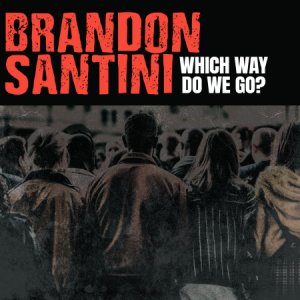 Brandon Santini – Which Way Do We Go? Brandon Santini – Which Way Do We Go?
Momojo Records
www.brandonsantini.com
11 Tracks – 43 minutes
Brandon Santini was born in Chapel Hill, North Carolina and now resides in Springfield, Illinois. But in between, he got his schooling in the blues when he moved to Memphis in 2003. He became a fan favorite on Beale Street with many performances at the Rum Boogie Cafe & Blues Hall Club. His band, Delta Highway, received a Blues Music Award nomination for Best New Artist in 2009. But that group disbanded shortly thereafter, and Brandon launched his solo career. He released his debut album, Songs of Love, Money, and Misery, in 2011. Multiple releases since have resulted in four more Blues Music Award nominations, including for Best Instrumentalist – Harmonica and Contemporary Blues Album of the year for his 2013 album, This Time Another Year and in 2016 for Live and Extended.
In 2019, he joined guitarist and vocalist Jeff Jensen for his band and album, Tennessee Redemption. Brandon played harmonica for the group and shared lead vocal responsibilities. When it became time to record this new album, Brandon chose to return to Memphis for the sessions and engaged Jeff to produce the album. Jeff co-wrote one song, “See That Pony”, with Brandon and adds electric and acoustic guitar on three tracks and backing vocals on the opening song. The additional band members are Timo Arthur on guitars, Cliff Moore on bass, and Ron James on drums. Jesse James Davis also provides backing vocals on four tracks.
Let’s just establish up front that every song feature Brandon’s fantastic work on the harp. The title track opens the album with the announcement, “People are dying, my brother, and people are crying, my dear mother. The world keeps turning with or without us. Young hearts yearning, broken chains of trust. What I want to know, brothers and sisters, which way we do we go?” He continues his expression of concern with “The War Ain’t Over” citing “Brothers and sisters, the fight is on”. expressing concern about “gun fire in the night”. On “See That Pony”, he says “Wake up mama, I am Alabama bound, nothing left to lose”. and questions “Who is that person in the picture with you?”
On “Ain’t Turning Back”, he declares “I am a natural born loner” and heading “down that road with danger in hand”. He then proclaims, “if you gonna have to do it, “Do What Comes Naturally”. Timo launches into a terrific guitar riff on this one. On “Mile After Mile” he contemplates “my mind gets worried, and my feet get tired. It’s a never-ending journey, but one worthwhile”. He finds himself “Working on a Mystery” “when I first laid eyes upon her, I knew I was a goner”. “I’m working on a mystery that I can’t seem to understand”. “What a shame I didn’t even catch her name.” Jeff provides a rousing guitar on this song.
Brandon identifies that “your telephone rings, got the devil on the line” and demands “Trouble Stay Away” “from me”. Next, he has got the “Blues So Bad” “I can’t help myself, don’t care about nothing and no one else”. “I ain’t felt so lost since I don’t know when, lost my soul down in New Orleans.” “Baby’s Got Soul” perhaps is identifying his saving from the previous song as he states, “My baby’s got soul in so many ways, reaches her hand out to me, takes me down to the river to wash my troubles away”. He continues that story and ends the album with a very upbeat tune, as he further says, “She Got the Way”. “I want the world to know my baby’s so fine”.
Brandon adds this note to his release information, “These deeply personal songs were written during the pandemic and its aftermath, and the album features the raw power that this band takes with them wherever we go. This is a moment of reckoning. If we don’t find our way with love and compassion, I fear what lies ahead”.
Brandon’s deep, melodious vocals ring with truth and sincerity with tightly written and expressive lyrics delivering his messages and concerns. As stated previously, his harmonica work places him in the current pinnacle of performers of that instrument and his band provides excellent complementary backing to him throughout the album.
Writer John Sacksteder is a retired civil engineer in Louisville, Kentucky who has a lifelong love of music, particularly the blues. He is currently the Editor of the Kentuckiana Blues Society’s monthly newsletter.
|
|
Blues Blast Music Awards Submissions

Submissions from artists and labels for the 18th Annual Blues Blast Music Awards are open until May 31st, 2025.
Fees increase on May 1st so please get your music submitted NOW!
Albums and videos released between June 1. 2024 and May 31, 2025 are eligible this year.
Submit your music now. Click this link: www.bluesblastmagazine.com/blues-blast-awards-submission-information
|
Featured Blues Review – 2 of 6
|
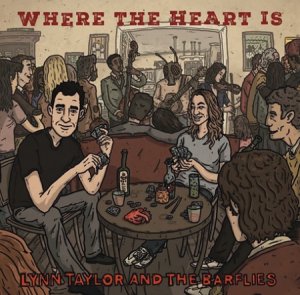 Lynn Taylor And The Barflies – Where The Heart Is Lynn Taylor And The Barflies – Where The Heart Is
Self-Release – 2025
www.lynntaylormusic.com
11 tracks; 46 minutes
Nashville-based songwriter Lynn Taylor lost his wife in 2016 and had to put his musical career on hold to raise his young children. Now able to resume his musical career, this is his first release for seven years and finds him exploring themes that are mainly personal, drawn from passions and experience. Lynn wrote all the material, with assistance from band members on four, sings and plays guitar and banjo; other members of The Barflies are Dave Coleman on guitar and organ, Larry O’Brien on piano and banjo, Tom Mason on slide guitar and trombone, Jennifer Halenar on fiddle, Parker Hawkins on bass and Reid Cummings on drums; most of the band add B/V’s, assisted by Graham Gray on two songs and by Lynn’s daughters Piper Daly-Taylor and Bella Daly-Taylor on one.
As one might guess from the instrumentation there is a healthy dose of country in the music here, fiddle and banjos at the heart of many songs. However, the use of slide on opener “Carnival In Hell” gives the tune a blues element as Lynn sings about one of his favourite cities, New Orleans, the lyrics inspired by a book he read that explored the seedier side of Southern culture. The title track follows, a song about what actually constitutes love, the sentimental lyrics underlined by the fiddle,with a fast-paced solo towards the end. Lynn’s raspy voice asks “Who Says No To Love” on a slower tune with plenty of fiddle and banjo while “Donna Lee” comes from a suggestion by Larry that they should write a song about the lady who gave her name to one of Charlie Parker’s most famous tunes. However, Lynn did not know about the Parker connection and drafted a song inspired by a place he was working on (he is a landscaper by trade), resulting in a murder ballad that is something of an outlier on this record, alongside the longest track, “The Twilight Years Of Florence And Ebenezer” which has some heavier guitar work behind the saga.
“When I Think About You” is more like a 60’s pop record, the chorus bringing The Everly Brothers to mind, Lynn reflecting on someone he loves but who is far away. In similar vein lyrically “Feel Love Again” celebrates the fact that one can find love again, even after tragedy, a quiet and reflective song, and “648 Miles” explores a similar theme, a song about a long distance relationship with a definite country feel. Larry and Lynn had been working on “Country Song” for years but had never managed to finish it to their satisfaction until Lynn’s daughter Bella helped him complete it. The result is a semi-acoustic tune with good harmonies, the fiddle adding a mournful feel.
“Muse” is the first time that Lynn and fiddle player Jennifer have written a song together: “Gonna dance with my muse this evening, even let her take the lead; I love her so much, even when she’s laughing at me.” Lynn states in the notes that he feels that the song reminds him of Dylan’s Desire and there is some truth in that. The last track here is “Time To Change” which returns to New Orleans with the trombone in the background.
It is sometimes said that the blues is a broad church, but this is an album that fits best into the Americana category and the actual blues content is quite low.
Blues Blast Magazine Senior writer John Mitchell is a blues enthusiast based in the UK who enjoys a wide variety of blues and roots music, especially anything in the ‘soul/blues’ category. Favorites include contemporary artists such as Curtis Salgado, Tad Robinson, Albert Castiglia and Doug Deming and classic artists including Bobby Bland, Howling Wolf and the three ‘Kings’. He gets over to the States as often as he can to see live blues.
|

Featured Blues Review – 3 of 6
|
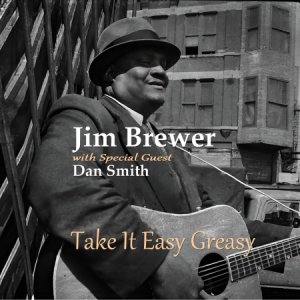 Jim Brewer with Special Guest Dan Smith – Take It Easy Greasy Jim Brewer with Special Guest Dan Smith – Take It Easy Greasy
Earwig Music / Riverlark Music
https://earwigmusic.com
16 Tracks – 56 minutes
Jim Brewer was born in Brookhaven, Mississippi on October 3, 1920. Born visually impaired, his parents could not afford to send him to a school for the blind. Instead, they trained him to play guitar. He learned by listening to records and the local players and traveling bluesmen. He then became capable of creating his own music. In 1940, his family moved to Chicago. Jim quickly became part of the Maxwell Street scene playing with Robert Nighthawk, and Arthur “Big Boy” Crudup among others. He also had a standing show playing with energetic preacher Sister Carrie every Sunday until his death on June 3, 1988. In the early 60’s as blues artists became recognized, he played in many clubs and events such as the University of Chicago Folk Festival. Jim released his first self-named album in 1974 on Philo Records. A second album, Tough Luck, was released by Earwig Records in 1983.
The Reverend Dan Smith was born on January 23, 1911. His family circumstances required him to start working at age 4. In 1943, he moved to Tarrytown, New York to get regular wages at the Chrysler Factory. Unfortunately, that work ultimately cost him his eyesight following an industrial accident. He became an itinerant harmonica player but played and preached everywhere he went making friends along the way including with Pete Seeger performing at many folk festivals until his death on November 16th, 1994. He also joined Seeger in the protest demanding the cleanup of the Hudson River. In 1992, he released a gospel blues album, Just Keep Goin’ On, on Glasshouse Records produced by Buddy Miller and featuring Buddy’s wife, Julie, and Victoria Williams.
Andy Cohen from Riverlark Music met Jim in 1965 and Dan in 1970. Michael Frank of Earwig Records met Jim in 1972. Together in 1984, Andy and Michael decided to pair the two in their Traveling Blues Revue. Independent of those two, a Northwestern student, Bill Fonvielle, in 1966 decided to throw a rent party with Brewer as the performer. Bill used his portable tape deck and two microphones to record Jim’s two sets. In 2021, Bill told Gary Leopold, a veteran in the music industry about the tape. Gary contacted Michael who became excited about the recording. Working with Andy, this album features six tracks from Bill’s recordings, plus five tracks from a 1984 concert at the University of Wisconsin, three tracks recorded at a 1980 club date, and two studio recordings from 1978. Promotional notes says that five more of Bill’s recordings are on the digital release of the album.
The album’s title comes from one of Jim’s favorite sayings, “Take it easy, greasy, we got a long way to slide.” And slide we do into “Jim’s Highway 61”, the first of the studio recordings as he cites if that Greyhound (bus) don’t run, “there’s gonna be some walkin’ done”. The next five tracks are from the University of Wisconsin concert. The Mississippi Sheik’s “Corrina Corrina” is next with Jim’s smooth vocals and expert guitar work. “Crawdad Hole” is an old-time song about catching crawdads and eating them. The deep-voiced “Dan Smith” first shows up on “The Train” as his harmonica gets the train moving down the tracks.
Dan grew up with the notion that “Cotton Needs Pickin'” but Jim played guitar, so he did not have to. Some variety of the song was sung by many of the pickers in the field. Dan continues on the vocals and brings gospel to the session on “Babylon is Falling Down” as he states the song is a bout “a man who thought he had it made, but didn’t have it started”. The traditional “Step Up and Go” gets Jim’s guitar and vocals back to the front.
The next five songs are from Bill’s recordings starting with a cover of Jimmy Rogers’ “That’s All Right”, a song he performed because it was popular in the neighborhoods where he played. His version is a lean, stripped-down version. “Must I Go or Stay” is noted as a possible original from Jim and may have even been improvised during the show. A cover of Pine Top Smith’s “Oak Top Boogie” is Jim’s guitar-oriented version of Pine Top’s piano boogie-woogie that Jim played on a dare. “Jim’s Talking Blues” is Jim telling an old joke while continuing to play the guitar.
The next three songs were recorded at the Gentry Remedy Company in Bloomington, Indiana. Tampa Red’s “Don’t You Lie to Me” is the next cover and Jim even calls out Red’s name as he moves into the instrumental. The Harlem Hamfats’ “What You Gonna Do” recorded in 1936 is a simple song Jim learned when he was young “Oh Red, went to bed, fell out of the bed, bumped his head, then he dropped dead.” Tampa Red wrote the song “It Hurts Me Too”. Elmore James also recorded the song but changed some of the verses. Jim’s version changes the words from either of those versions.
The second studio song is Jim’s version of Ma Rainey’s 1924 “See See Rider”. A cover of Washboard Sam Brown’s “Tell Me Mama” is the final song from Bill’s recordings and the concluding song to the album.
Jim Brewer demonstrates a guitar mastery that was certainly overlooked during his lifetime. This album deserves to be heard by everyone that has in interest in the pure, traditional blues. Jim’s vocals are warm, comfortable and appealing. Dan’s short stint on the middle songs displayed a talented harmonica player and strong, deep voiced vocalist. I was not familiar with either artist prior to this album but want to thank Andy and Michael for giving me the opportunity to hear these classic players.
Writer John Sacksteder is a retired civil engineer in Louisville, Kentucky who has a lifelong love of music, particularly the blues. He is currently the Editor of the Kentuckiana Blues Society’s monthly newsletter.
|

Featured Blues Review – 4 of 6
|
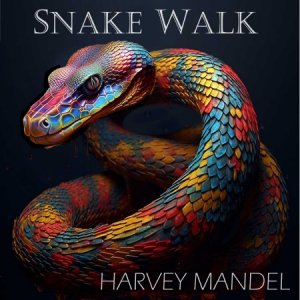 Harvey Mandel – Snake Walk Harvey Mandel – Snake Walk
Earwig Music
www.harveymandel.net
10 Tracks – 34 minutes
Harvey “The Snake” Mandel was born in Detroit on March 11, 1945, and grew up in Morton Grove, Illinois, a town just outside of Chicago. he started playing guitar as a youth, and with resulting from his location, became heavily influenced by the Chicago blues artists. But over the course of his career, he has crossed many musical genres with his innovative approach to guitar.
His first recording occurred in 1966 with the release of Stand Back! Here Comes Charley Musselwhite’s Southside Band. Charlie gave Harvey his nickname, The Snake, as Charlie was enamored with the way Harvey’s hands “snaked” their way up and down the frets. Harvey has continued to use that nickname ever since with many “snake” titled albums since. Harvey released his first solo album, Cristo Redentor, in 1968. he continued releasing solo albums, but in 1969 fate had him in the dressing room at the Fillmore West the night Henry Vestine quit Canned Heat. Harvey joined the group on stage for the second set of their performance. Harvey stayed with the group, touring for a year including their performance at Woodstock and recorded on three albums with them. Harvey and Canned Heat’s bassist, Larry Taylor, left the group and joined John Mayall’s band, touring for two years and releasing two albums. In 2009, Harvey joined with Larry Taylor and Fito de la Perra in a Canned Heat reunion tour.
When Mick Taylor left The Rolling Stones, Harvey was invited to audition as his replacement. While not getting the permanent position, he did record the lead guitar on the song “Hot Stuff” and backing guitar on “Memory Motel” on the Stones’ album Black and Blue. Over the years, Harvey has continued to play with many other great musicians Barry Goldberg, Mike Bloomfield, Jimmy Witherspoon and even briefly with the guitar oriented 60’s band, The Ventures.
His catalog shows approximately 30 solo albums released over the years. Harvey has never been a singer, instead preferring to let his guitar speak for him. Harvey went through some medical issues and was languishing in his bed when his co-producer challenged him to write new music. He said, “That was the spark that got me up to make music again. I must admit that technically, playing-wise, it is definitely some of the best I have ever played. I’ve recorded ten songs all imagined in my head during my medical nightmare”. The result is this new release from Harvey.
“Weather The Storm” opens the album with a jazzy, fuzzed romp with Dan Fischer on keyboards, Steve Nevets on bass, Joel Treadwell on drums with additional guitars by Steve Hausheer and Steve Torries. David Allen on keyboards, Nick Kitsos on drums and Klem on bass joins Harvey for the next three songs and again on track 6. “Puppy Love” moves into a mix of psychedelia and electronics. “I’m Back Boogie” places him squarely into modern blues rock with David’s organ sailing along side of his guitar.
Harvey has his guitar crying on “World News Blues” and perhaps with a brief wail. “Eye of the Snake” is an upbeat number with Pete Sears on keyboards and Dick Bright on violin and Harvey playing on all other instruments. That group also plays on the final three songs on the album. Dick’s violin brings another world presence to the sound. “Pumpin'” moves back into a jazz mode with Nick Kitsos’s pounding out a rhythm.
The first song’s group returns for the title song, “Snake Walk”. Harvey’s guitar slithers through the music with Dan’s keyboards quietly falling in behind the sound. “Freak of Dawn” jumps out with a blazing guitar with Pete’s keyboards penetrating the music. “Never Die” continues his sound fusion with Dick’s violin cascading in and out. The album concludes with “Cashmere”, another swirling array of guitar blasts punctuated by Pete’s keyboards and Dick’s violin.
Harvey has made a career of innovative and pioneering guitar techniques. He has not backed off his direction with this latest album. It is filled with progressive rock and jazz continuing his exploration of original sounds with the previously mentioned psychedelia blended into many of the songs. Comparison to albums by Joe Satriani and Steve Vai come to mind.
Writer John Sacksteder is a retired civil engineer in Louisville, Kentucky who has a lifelong love of music, particularly the blues. He is currently the Editor of the Kentuckiana Blues Society’s monthly newsletter.
|

Featured Interview – Chris Vitarello
|
 There are plenty of musicians who fashion lengthy, successful careers providing stellar accompaniment for other artists. When it comes to blues guitar players, names like Hubert Sumlin, Luther Tucker, Wayne Bennett, and Clarence Hollimon come to mind. Based on a quick scan of the list of artists he has played guitar for, one could certainly add Chris Vitarello to the list, although he early on envisioned a different career path. There are plenty of musicians who fashion lengthy, successful careers providing stellar accompaniment for other artists. When it comes to blues guitar players, names like Hubert Sumlin, Luther Tucker, Wayne Bennett, and Clarence Hollimon come to mind. Based on a quick scan of the list of artists he has played guitar for, one could certainly add Chris Vitarello to the list, although he early on envisioned a different career path.
“Around my junior year, senior year of high school, I didn’t really think about playing guitar much. I loved to play with my friends, but I was more into baseball then. I thought I was going be a baseball player. And senior year I was going start at second base and thinking about going to college. Then I caught mono and I couldn’t play my senior year. It was devastating. So I just dove into guitar and eventually came around to thinking about doing it for a living.
“That senior year when I had Mono, I was sick and out of school for three weeks. I had tickets for Johnny Winter at the Beacon Theater with Dr. John. Buddy Guy, Albert Collins, and Johnny Copeland. I snuck out of the house, got in the car with friends, and took off for the show that Johnny Winter headlined. I think that night I turned my friends onto blues music. Unfortunately I didn’t get the chance to see Stevie Ray Vaughan. He had died my senior year.”
Vitarello’s father had an acoustic Epiphone guitar. After he served in Viet Nam with the U.S. Navy, he used G.I. Bill credits to go to school, including a music secondary school where he took guitar for a year. Then life got in the way, and his father stopped playing. But the guitar was laying around, so Vitarello started tinkering with it when he was seven years old. Fast forward to age 15 years, when he would go to a friend’s house where he would sit and watch the friend’s band practice.
“One of my friends showed me how to play “Jumping Jack Flash” on the guitar. I immediately got serious. My father gave me his acoustic, then bought me an electric Fender Stratocaster- style guitar. I started out playing metal music because I was born in 1971, listening to MTV and the hair metal bands. I still love AC/DC. Angus Young was probably my first influence. Then I started getting into heavy metal like Slayer and Metallica because that’s what all the kids listening to.
“Eventually I veered over to the bluesier side because of a teacher that I had in high school. I had a teacher, his name was Mr. Phil Dollard at New Rochelle High School. He used to bring his guitar to school. Once he found out that I played, he made me copies of Johnny Winter’s Second Winter album, and the Duane Allman anthology. It all started with my English teacher turning me on to the blues. But I didn’t think I was going be a blues player for a living until I went to Berklee.”
Attending the renowned Berklee College of Music for two years, the guitarist wanted to learn to read music properly. He quickly became a frequent visitor of the nearby three story Tower Records store. One visit led to another revelation.
“They were advertising the first House of Blues that opened up in Harvard Square in Cambridge. Dan Aykroyd was part owner. The Blues Brothers Mobile, the cop car, was going around Berkeley to turn kids to this new blues club. So I went to Tower Records and grabbed a copy of a local music magazine. Ronnie Earl was on the cover. I read the article and went right to the CD section and bought Ronnie Earl and the Broadcasters Test Of Time, a retrospective of his albums on Black Top Records. He was playing at House of Blues that weekend.
“I got to see Ronnie when he started to play as an instrumental band, with Rod Carey on bass, Bruce Katz on keyboards, and Per Hansen on drums. When I saw that show I knew that was what I wanted to do, play blues guitar on the a jazzier side. I literally focused on playing that kind of style. Years later, I ended up playing with Bruce Katz and Rod Carey in a band. When I left Berkeley, I met my wife, we were dating and we used to go see Ronnie Ear all the time.”
 Leaving Berklee in 1993, the guitarist started his own band, embarking down the music-as-a-career path. He would eventually receive a bachelor’s degree in music from Western Connecticut State University. Leaving Berklee in 1993, the guitarist started his own band, embarking down the music-as-a-career path. He would eventually receive a bachelor’s degree in music from Western Connecticut State University.
“At that time Berklee was a very big jazz school. I really wasn’t the greatest reader and jazz player. The school got me into playing jazz, but I wasn’t good enough to be in all the ensembles, so that was part of why I left. I’m didn’t blame the school. It’s literally the best music school in the world. I have friends that teach, like Dave Limina who is the piano chair there.
“I just wasn’t really fitting in and figured I would get more gigs if I left the school. It was hard to do gigs in Berkeley because there was so many great players. I think I was young and naive. But I ended up playing four or five nights a week, got really inspired to get off my ass and be a professional. I wasn’t good enough yet. And I was too young to realize that I probably should have finished.”
The lessons he did learn at Berklee paid off. Working in an jazz organ trio, Vitarello impressed a guy named Sal, who was booking organ players like Joey DeFrancesco, Rueben Wilson, and Jimmy McGriff, one of the giants of jazz organ.
“Oh man, I got to play with Jimmy the last part of his playing life. Sal took a liking to me, partly because we’re both Italian. He told me he booked Jimmy McGriff, and asked if I’d like to audition. Of course, I said yes! I love the organ trios. It is my number one favorite thing to play. I’m known as a blues player and an organ trio, soul jazz player. I had been playing in a band with my friend Jeremy Baum on keyboards, and we were doing a Jimmy McGriff song called “Peanuts.”
“”Peanuts” was a song written by Wayne Boyd, who was Jimmy’s guitar player for many, many years. His son’s nickname was Peanut. I had never met Jimmy. I had just talked to his wife, Margaret, on the phone. Sal told me to just show up at the Lennox Lounge in Harlem, that I was on the gig for the evening, like a little audition. I asked what tunes we were going play. Sal replied, just show up.
“So here I am with my guitar in Harlem, and Jimmy looked at me and he says, Hey man, you know, Sal’s been talking you up. What song would you like to open up with? And I looked at him and said, “Peanuts”. Jimmy and the band got all teary eyed. He’s like, are you kidding me? Wayne had just died about a month before and they were still grieving their buddy, and I didn’t even realize that song would touch them, you know?
“Jimmy looks at me and says, man, you call that tune, you got the gig. Never even heard me play. So it was hysterical. We played the tune and I did okay. It was a beautiful thing the first two years. Jimmy was fine, but you could tell that he had multiple sclerosis. We got to play with the real Jimmy, and then the last year he was starting to get sick. Then the band surrounded him and helped him out. I got to play with him until he couldn’t play anymore. I got to play with an icon and finish his career off. I recorded one record with him, called Live At Smoke .”
After his stint with McGriff, Vitarello started to feel like life was passing him by as far as music was concerned.
 “I was driving one time in Massachusetts, feeling down on myself because all my buddies had touring gigs, playing with really good players while I was just playing locally and teaching guitar lessons. I said a little prayer in my head. I’m like, God, I would love to play in the Bruce Katz band. I love this music. “I was driving one time in Massachusetts, feeling down on myself because all my buddies had touring gigs, playing with really good players while I was just playing locally and teaching guitar lessons. I said a little prayer in my head. I’m like, God, I would love to play in the Bruce Katz band. I love this music.
“Two months later, I don’t know if you believe in God or prayer, but Bruce called me and it was a surreal thing. It was almost like I thought it was a joke because my friends knew that I loved him. Bruce called me because of my time with Jimmy McGriff. He had just moved to New York from Boston, and wanted to meet me. I went to his house, we jammed, and a month later I was in his band. It’s funny how things work out sometimes.
“That gig came at the right time because I had auditioned for Sugar Ray and the Blue Tones. I thought I was going to get the gig. I don’t know if they didn’t like me or they just never called me back, or maybe they forgot about me. I was very down on myself when Sugar Ray didn’t call me back, I was even thinking about quitting, wasn’t sure if I was good at the music thing anymore
“Then Bruce called me and that was a really nice blessing to be able to feel like now I’m stepping up a level. Bruce is one of the best musicians I’ve ever met, a genius musically. His tunes are amazing. We’re best friends, done hundreds and hundreds of shows, traveled around the Europe and the world. I became a better musician playing with Bruce. he loved that I was the blues player and the jazz player combined. He gave me so much space and I started singing in his band because we needed a singer when Rod Carey hurt his back and we became a trio. I gained a lot of confidence in that band.”
Over the years, Vitarello has played, toured, and recorded with many notable artists, too many to mention in this article, despite his best attempts to give everyone a mention.
He counts Dennis Gruenling, one of the finest blues harmonica players, as a real friend. “I played with Dennis for five years, before I was with Bruce. He held both of my newborn kids in his lap. In 1997, my wife was pregnant with our son Danny. I was reading Blues Revue magazine. Dennis and Steve Guyger were on the cover. His email was there. That was when e-mail was brand new. My wife & I shared the same address. We used her name, Christine. I sent Dennis a message to introduce myself.
“Later I sent him like a demo CD of me playing blues guitar. Because my email was” Christine”, he thought I was a woman. I went to meet him at a gig he had in New Jersey. Dennis invited me to come and sit in, as he was possibly going to need a guitar player. I showed up with my wife who was eight months pregnant. Of course, Dennis thought she was me. I explained that we share the e-mail, and he had a good laugh. We just hit it off instantly. He turned me onto a lot of the swing guitar stuff, the older stuff with Bill Jennings on guitar.”
Another high profile gig started with Katz trying to get Vitarello an audition for the guitar player slot in Gregg Allman’s band, which ultimately went to Scott Sharrard, a fine slide player. A few years down the road, a different opportunity came knocking.
“Butch Trucks, one of the original drummers for the Allman Brothers Band, was putting together his Freight Train band. His son, Vaylor, was playing guitar. Vaylor is the young boy on the cover of ABB classic album Brother and Sisters. It was nice that he got hang with his dad, but he had to stop playing because he had a real job. He is a really great at computer programming.
“Bruce Katz got me an audition gig with the band. I played the gig. At the end of the first show, Butch grabbed me, put his arm around me and said, “Chris, I, I love your playing. You sound great. But if you want to be in this band, you’ve got to play long guitar solos!” He told me to start the solo off, build it, and then bring it back down, then build it again.
 “That was another great experience. I got to play with Butch in his last days. He ended up passing away while we were on the road. That was devastating. I was playing with a Rock & Roll Hall of Famer, and the band was really starting to click. One of the most memorable moment of my life was playing at the Butch Truck’s Memorial in Macon, Georgia. It was completely surreal, basically his funeral. The Allman Brothers go up there, do their three songs, then the Freight Train Band goes up there and plays, with me looking around like I don’t really belong here. I’m honored to be a tiny bit part of the that family.” “That was another great experience. I got to play with Butch in his last days. He ended up passing away while we were on the road. That was devastating. I was playing with a Rock & Roll Hall of Famer, and the band was really starting to click. One of the most memorable moment of my life was playing at the Butch Truck’s Memorial in Macon, Georgia. It was completely surreal, basically his funeral. The Allman Brothers go up there, do their three songs, then the Freight Train Band goes up there and plays, with me looking around like I don’t really belong here. I’m honored to be a tiny bit part of the that family.”
Vitarello did a lengthy stint with singer Chris O’Leary, appearing on the band leader’s first three albums. They had been playing together for a spell when destiny came around the corner.
“ I love Chris’s singing and harmonica playing. We were doing gigs on our own. Levon Helm was just starting to make his comeback after his first bout with cancer. Levon heard some demos that we had recorded that Pete Kanaras, guitarist for the Nighthawks at the time, was producing. Levon wanted to hire the band, take us to New Orleans to play at his Storyville club in New Orleans.
“I kind of got ousted out of the band, which was good because I had just gotten married and I just started going to Westcott to get my degree in music, which would’ve meant I would have had to leave school. I probably would’ve got divorced too, because I was literally a newlywed.
“So Chris went off and did his thing with Levon. That became the start of Levon’s Midnight Ramble. When the club ended up closing down, Chris stopped playing for a few years due to problems with his voice. One day he called me and he’s like, man, I really miss playing, and I want to start a band with you. So we started the Chris O’Leary band. Our first gig was in Woodstock and from that gig, we went on to record our real first record, which ended up getting nominated for the Blues Music Award for Best New Artist Debut. And then the band just blew up.”
Not one to let grass grow under his feet, the guitarist next got connected with another artist who was rapidly capturing the attention of the blues community.
“It’s funny how things happen. I met Vanessa Collier when she opened up for the Bruce Katz band on her very first gig ever under her own name. Ever since then, she was trying to get me to do gigs with her. I was never available because I was playing with Bruce, Chris O’Leary, and Butch Trucks. Then one day, we made it happen. Ever since then, I’ve been one of her guitar players.
“Laura Chavez is number one. Arthur Neilson, who was one of my mentors growing up and plays with Shemekia Copeland, he’s number two. I don’t get called as often because I have my teaching job and my music director job at the church. But Vanessa usually saves the summer for me. I love playing with her. She’s taken me to the coolest places, probably the biggest blues festivals I’ve ever played have been with her.”
Other heroes that Vitarello has backed include the outstanding singer Tad Robinson, with Bruce Katz and in Robinson’s band. More recently, he has been touring in support of another fine vocalist, Darrell Nulisch, with some help from his very good friend, bass player Mike Law. Both singers mix soul and blues influences, keeping Vitarello on his toes.
At the end of May, he will be joining Jeremy Baum and drummer Michael “Leroy” Bram for a Chris Vitarello Power Trio show.
 “We’re going to do a night of Grateful Dead Music as an organ trio. We’re calling it “Organizing the Dead”. The guy at the club called it the Chris Vitarello Power Trio. I didn’t really want him to call it that, but he did. We played there a couple months ago and sold out two shows, which is awesome. I’ve been playing with Mike and Jeremy for over 20 years, 25 years. They are my music buddies.” “We’re going to do a night of Grateful Dead Music as an organ trio. We’re calling it “Organizing the Dead”. The guy at the club called it the Chris Vitarello Power Trio. I didn’t really want him to call it that, but he did. We played there a couple months ago and sold out two shows, which is awesome. I’ve been playing with Mike and Jeremy for over 20 years, 25 years. They are my music buddies.”
In his spare time, Vitarello teaches at the Brunswick School in Greenwich, Connecticut, an all boys private school that is shared with the sister school, Greenwich Academy. He directs a 35 member boys choir, works with 32 guitar students, three guitar classes, and also teaches an improv band.
“I was teaching fifth grade, had to learn how to play saxophone, flute, and clarinet. For five years, I taught the fifth grade for one class at the end of the day, Monday through Thursday. That really rocked my world and changed my life. We made it through COVID. I had work when the world shut down and all the musicians had no gigs.
“Now I get to teach, to give back and inspire the kids. The funny thing is I’m still playing as many gigs as I did when I was doing it for a living, but I’m just not doing it on the road as much. Everybody knows I’ve got to get back for work and I never ever called in sick in six plus years. It’s nice to have a salary, traveling around is tough. It was important to be here for my son. My daughter got to go to the school for free and it really changed her life. I spent three years with her every day. She ended up getting a scholarship to college. Teaching has opened me up to being a way better musician and having more patience for people.
“It’s a really good job, allowing us to buy a home in Ridgefield, Connecticut that has a separate building that we turned into a studio for our son, a drummer and a producer. He didn’t really want to go to college, so my wife and I said, why don’t we invest money in this studio? Selfishly, I get to have my own studio, but it’s really my son’s. Chris O’Leary’s Alligator Records debut, The Hard Line, was recorded at my house by Danny, our son. A proud moment for me.”
Recently the guitarist added another role to his lengthy resume. He had been an associate music director before being named Director of Worship for the Walnut Hill Community Church.
“I had that job as I was touring, doing all the scheduling for five campuses. There are about 90 musicians that I’m responsible for. I used to be in Europe touring, and in the middle of the night doing scheduling or filling a spot where somebody couldn’t do it. Mostly I’m at the Bay Campus now that fits about a thousand people. It’s a part-time job where I’m training people to be leaders and musicians. So it’s another great job. Honestly, I don’t have to gig now if I don’t want to, but that’s what I really love to do. I’m a teacher second and a musician first. I’m a musician that teaches, and I have to keep playing.
“I’m really grateful for the Blues fans that I’ve met throughout the years. I don’t think any of us would be able to do any of this stuff without them. At a blues festival, you hang out with people who love your music. That makes it that much more beautiful to play for them. I’m very grateful to be accepted in this community of blues fans. I don’t have a thousand fans. I literally have a thousand friends. Most importantly, none of it is possible without the support of my wife Christine and our two children, Danny and Allegra.
“I really feel that it is important to let people know that they make it possible for us to be able to play. I’ve done all kinds of gigs. I’ve played in wedding bands, pop gigs, country, done so much stuff, church music, Christian rock, contemporary stuff. In the end, I guess I am a blues guitar player that aspires to be a jazz guitar player, but I always get pulled back into just the straight up blues.”
Blues Blast Magazine Senior writer Mark Thompson lives in Florida, where he is enjoying the sun and retirement. He is the past President of the Board of Directors for the Suncoast Blues Society and a former member of the Board of Directors for the Blues Foundation. Music has been a huge part of his life for the past fifty years – just ask his wife!
|

Featured Blues Review – 5 of 6
|
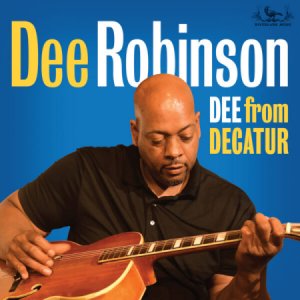 Dee Robinson – Dee from Decatur Dee Robinson – Dee from Decatur
Riverlark Music
http://www.riverlarkmusic.com
21 Tracks – 38 minutes
Dee leaves no uncertainty about where he is from with the title of his album. But that location does not relate to the rich family history that leads to Dee’s excursion into playing music. His great grandfather, John Dotson, was born around 1890 and raised near Clarksdale. He was known to be great entertainer who could be play anything with strings on it, starting with the banjo and shifting later to the guitar. His great grandmother was born in Clarksdale in 1900 and also played guitar. They had ten children. Two great uncles, Therman and Roy Dotson, became piano players, and his great uncle Brazil was a guitarist who favored Memphis Minnie style blues. Another great-great uncle on his great-grandmother’s side. John Cook, born around the turn of the century was also a known guitarist.
Dee’s father, one of ten children, was born in New Madrid, Missouri in 1942. He played guitar, bass and piano. After shuffling around for a while, the family ended up in Decatur where Dee was born in 1975. As might be expected, he and other family members all got involved in playing music. Dee played with his cousins and other family members in family gatherings and also had the opportunity to play with his great grandfather.
With his musical background and heritage looking backwards over 100 years, Dee chose to focus his style on the music of the past and keeping alive the tradition and sounds of the early players of the blues. His focus is on the Piedmont style of picking. He studied recordings and found YouTube videos of players like Mississippi John Hurt, Etta Baker, and Elisabeth Cotten but drew a major interest in Rev. Gary Davis among many other pre- WWII blues players. For a while, Dee was the administrator of the Mississippi John Hurt Foundation Facebook page.
Dee does not sing preferring to focus on the guitar parts of the songs presented. At 21 songs in 38 minutes, the music is rapid fire and consists solely of covers of the early blues musicians. He opens with Blind Lemon Jefferson’s 1927. “One Dime Blues”. He then moves to Mississippi John Hurt’s “Monday Morning Blues”, the first of many Hurt songs on the album including “Candy Man” “Let the Mermaids Flirt with Me”, “Shake That Thing”, “Spider, Spider”, “Spike Driver Blues”, “Big Leg Blues” , “Tender Virgins” and ending the album with “First Shot Missed Him”. He also does a Mississippi John Hurt arrangement of the traditional “Stack O Lee”. Most of the songs in that list were recorded in 1928.
In between, Etta Baker is represented with “Carolina Breakdown and “Railroad Bill” and a traditional song, “Bully of the Town” which is based on a Baker arrangement. Elisabeth Cotten’s songs are “Freight Train” and “Washington Blues”. Rev. Gary Davis’ “Crucifixion”, Lead Belly’s “Good Night Irene”, Big Bill Broonzy’s “Joe Turner Blues”, a John Jackson arrangement of the traditional “Boat’s Up the River”, and the traditional “Since I Laid My Burden Down” complete the album.
Dee is certainly a talented guitarist presenting a distinctive, ringing sound in every song that captures the essence of the original performers. The album is a very pleasant listen that should appeal to any blues lover with an interest int he history of the music or those who just enjoy hearing well-played acoustic guitar.
Writer John Sacksteder is a retired civil engineer in Louisville, Kentucky who has a lifelong love of music, particularly the blues. He is currently the Editor of the Kentuckiana Blues Society’s monthly newsletter.
|

Featured Blues Review – 6 of 6
|
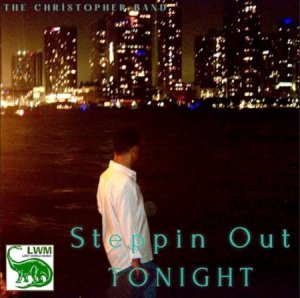 The Christopher Dean Band – Steppin’ Out Tonight The Christopher Dean Band – Steppin’ Out Tonight
Lost World Music
www.christopherdeanband.com
14 Tracks – 60 minutes
New Jersey born Christopher Dean now lives in Havre De Grace, Maryland. He started playing guitar at age 15 and cites his guitar influences as Charlie Patton, B.B. King, and Magic Sam and vocal influences as David Ruffin, Al Green, and Sarah Vaughn. He first formed The Christopher Dean Band in 1995 but became a member of Big Jack Johnson’s touring band in 1997. He toured with Johnson for three years and recorded two albums with Big Jack during that time.
He re-started his own band in 2000. This album is the sixth release for the band. Chris performs all guitars and vocals with Carl Snyder on piano & organ; Arcellus Sykes, Rob Fraser, and Joshua Colon alternating on bass; Steve Lombardelli on horns, backing vocals, and keyboards; and Dave Hollingsworth on drums.
The album opens with Sam Collin’s 1931 blues song “My Road is Ruff and Rocky”. The song, seemingly autobiographical, is a tale of Collins being pursued by bloodhounds and shot at with “pistol balls zoomin’ by my head. I believe to my soul they gonna kill me dead”. Christopher gives it a slight country recital. He follows that with John Lee Hooker’s “It Serves Me Right to Suffer” based on a version by Jimmy Johnson from 1978 that featured Carl Snyder on piano, which he repeats here. This song moves deeply into the blues with Chris’ guitar work standing out. Chris’ original “Here with Me” deals with the emotional problem of having two women and weighs the pros and cons of both.
He shifts back to another cover with Robert Cray’s 1990 soulful “Walk Around Time” citing the need to have personal time away from her and to not being constantly tied down citing “love can be easy but the trust is hard to find”. He then shifts back to an original with him perhaps in a better state of mind declaring “You Are the Reason” in a soulful love song. T-Bone Walker’s 1949 “That Old Feeling Is Gone” captures T-Bones’ guitar sound perfectly in a song that moves him back in time as he cites I”I used to love you baby”. Carl’s piano and the mix of horns definitely takes the song back into its original presentation.
A slow R&B number with Melvin Waiters’ 2000 “Running Stop Lights” follows as he “cannot wait to see you”. He stays with more current R&B with T.K. Soul’s 2007 “Party Like Back in The Day” which invites everyone to get up and dance. He shifts back to 1962 but keeps the R&B going with the calypso-accented Curtis Mayfield penned ” I’m The One Who Loves You” originally recorded by Jerry Butler. He shifts his voice into a falsetto for much of this song. Another original “Save Us” is a quiet song continuing his falsetto approach with a love song about trying to keep his love together.
He then tells her “We Can Trust Each Other” and if we can’t “what’s the use of being together”. He shifts back into a slow dance mode with “Thank You for Letting Me Know”. He returns to the blues with a cover of Furry Lewis’ 1927 classic “Everybody’s Blues” with Carl’s piano and Dick Lourie guesting on cornet providing a ragtime feel before finishing with his guitar. He closes out with Hound Dog Taylor’s 1971 song “She’s Gone” shifting into a bit of boogie.
Christopher music is definitely focused on the soul and R&B mode. Even the bluesier old-time numbers still maintains that soul sound. His guitar work stands out on many tracks as does Carl’s organ and piano.
Writer John Sacksteder is a retired civil engineer in Louisville, Kentucky who has a lifelong love of music, particularly the blues. He is currently the Editor of the Kentuckiana Blues Society’s monthly newsletter.
|

© 2025 Blues Blast Magazine 116 Espenscheid Court, Creve Coeur, IL 61610 (309) 267-4425
|


